

How do thermoset powder coating processes ensure uniform finish and adherence to industrial standards for your specific applications?
Thermoset powder coating processes achieve a uniform finish through controlled surface preparation, consistent powder application and carefully managed curing, which allows the coating to bond correctly and develop its intended properties. Process checks against the application’s specification—such as coverage, film thickness, adhesion and visual consistency—help ensure coated components meet the required industrial quality standards.
Thermoset powder coating achieves a consistent, standards-compliant result by treating the coating operation as a controlled manufacturing process rather than a single spraying stage. The required finish is defined before production, then linked to the substrate, powder specification, component geometry, application settings, curing conditions and inspection records. This creates a repeatable process that can be assessed against the technical requirements of the specific part and its working environment.
Start with a clear coating specification
Uniformity cannot be judged properly until the acceptance criteria have been agreed. A coating specification may define the powder type, colour, gloss level, texture, film-build range, corrosion-resistance requirement, adhesion performance and areas that must remain uncoated. It should also identify the service conditions, including exposure to weather, chemicals, abrasion, heat or moisture.
Where a recognised standard applies, the specification should state which parts of that standard are relevant. Standards can cover powder materials, coating performance, corrosion protection, test methods or visual assessment, but they do not replace an application-specific requirement. A coating suitable for an indoor fabricated component may not be suitable for an exterior structural item or an automotive part exposed to fluids and repeated temperature changes.
Control the component before it enters the booth
Part design and handling affect finish consistency. Weld spatter, sharp edges, deep recesses, narrow gaps and trapped contaminants can cause local defects or make it difficult to achieve an even film. Drainage and venting holes may be needed on hollow fabrications so that cleaning stages and curing can be completed safely and consistently.
Racking is also important. Contact points must provide a reliable electrical path for electrostatic application without damaging visible faces. The hanging position should expose as much of the component as possible and reduce shadowing between adjacent parts. Consistent loading helps keep the distance from the spray equipment and the number of passes more predictable from one batch to the next.
Match powder and equipment to the application
Thermoset powders are formulated for particular performance requirements. Polyester systems are commonly selected where exterior durability is required, while epoxy-based or hybrid systems may be appropriate for different indoor or protective applications. The choice must also consider the metal substrate, intended film build, appearance and curing window. The powder manufacturer’s technical data should be used as the reference for storage, application and cure conditions.
Electrostatic application charges the powder particles so they are attracted to the earthed component. Consistent results depend on clean and stable earthing, suitable gun settings, controlled powder flow and an appropriate spray distance. Operators must account for the component’s shape: flat areas, corners, recesses and Faraday cage effects do not attract powder in the same way. Gun movement, overlap and access strategy therefore need to be adjusted for the geometry rather than applying an identical pattern to every part.
Powder recovery and reclaim controls can also influence consistency. Recovered material must be managed according to the powder system and the agreed quality requirements. Uncontrolled mixing of colours, formulations or particle sizes can affect appearance and performance, so production controls should define when material may be reused and when fresh powder is required.
Use a validated curing profile
A thermoset coating develops its final properties when the resin and curing agent react under heat. The relevant temperature is the temperature of the metal component, not simply the air temperature displayed by the oven. Components with different thicknesses, masses or loading arrangements may heat at different rates, so the cure schedule must be suitable for the actual workpiece.
Process validation can involve recording the temperature reached by representative components and comparing the result with the powder manufacturer’s cure schedule. Oven temperature uniformity, conveyor speed, loading pattern and component orientation should be controlled because changes in any of these can produce under-cured or over-cured areas. Under-cure may lead to poor hardness, adhesion or chemical resistance; excessive heat or dwell time may affect colour, gloss or the coating’s physical properties.
Inspect against objective criteria
Inspection should combine visual checks with measurements and performance tests appropriate to the specification. Typical controls include:
- visual examination for runs, pinholes, craters, inclusions, bare areas, colour variation and unacceptable texture;
- film-thickness measurement at agreed locations, taking component geometry into account;
- adhesion testing where required by the specification or relevant test method;
- gloss or colour assessment when appearance is a controlled requirement;
- cure or solvent-resistance checks where confirmation of the coating condition is needed; and
- corrosion or durability testing when the application demands evidence beyond routine production inspection.
Measurements need defined sampling points and acceptance limits. A thick coating is not automatically a better coating: excessive build can affect edge coverage, flexibility, appearance and fit, while insufficient build may reduce protection. Testing should therefore confirm compliance with the agreed range rather than rely on visual judgement alone.
Maintain traceability throughout production
Batch records connect the finished components to the materials and conditions used to coat them. Useful records may include the powder identification, substrate or job reference, preparation route, equipment settings, oven profile, inspection results, non-conformities and any approved rework. This information supports investigation if a defect appears and helps establish whether a process change has affected repeatability.
Non-conforming parts should be segregated and assessed before rework. Recoating is not automatically suitable: it may alter dimensions, obscure defects or affect adhesion between layers. The correct action depends on the coating system, defect type, component function and customer specification.
For manufacturers, fabricators, construction firms and automotive businesses, the most reliable approach is to provide drawings, material details, service conditions, finish requirements and any applicable standard before production begins. A powder coating provider can then determine the appropriate process controls and inspection plan for the component, including collection and delivery arrangements where required across the Midlands and surrounding areas.
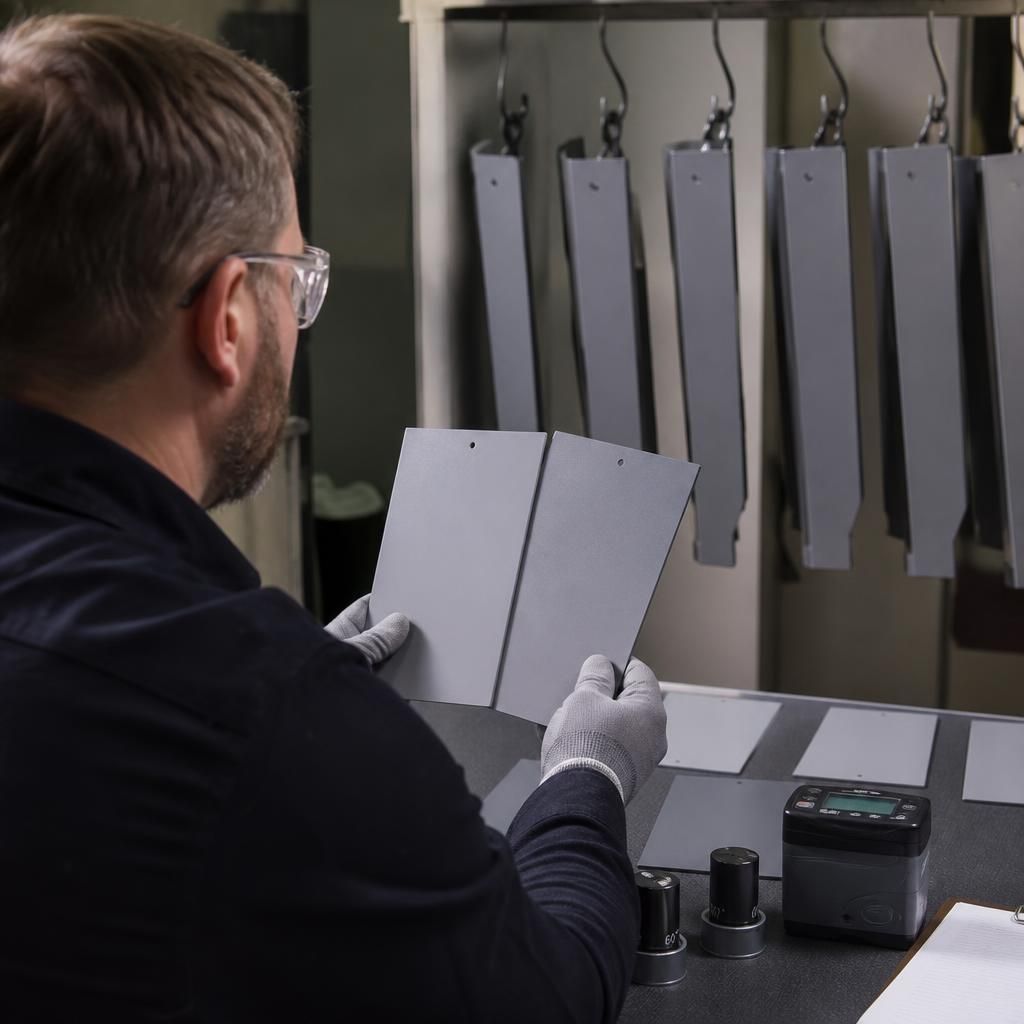
Visual uniformity is assessed against a defined reference, not by comparing components under changing conditions. Colour, gloss and texture can appear different depending on lighting, viewing angle and surrounding surfaces, so an inspection method should specify how coated parts are presented and compared.
For repeat production, an approved sample or documented finish reference can help distinguish acceptable batch-to-batch variation from a genuine defect. Inspectors can then assess visible faces, edges and transitions consistently, while measurements are used where appearance alone cannot confirm coating performance. This approach makes the acceptance decision more objective and supports consistent finishes across components supplied for the same application.
Discuss Your Thermoset Powder Coating Requirements
Discuss your thermoset powder coating requirements with the team to identify a suitable process for your component, finish and service conditions. Share your drawings, material details and specification so the coating approach can be assessed for your application.