

Can thermoset powder coatings be applied to all types of metal components?
No. Thermoset powder coatings can be applied to many conductive metal components, including steel and aluminium, but suitability depends on the metal’s heat resistance, surface condition, geometry and compatibility with the required pretreatment and curing process.
Some components may need a specialist coating system or alternative finish where the substrate cannot tolerate curing temperatures, contains contaminants, or requires a different level of corrosion protection.
No. Thermoset powder coating is suitable for a broad range of metal components, but the correct system depends on the substrate, the component’s design and the conditions in which it will be used. Steel and aluminium are commonly coated, while galvanised steel, stainless steel, castings and other non-ferrous metals may require a more carefully controlled preparation and coating specification.
The metal must be able to withstand the complete coating cycle. This includes preparation, application and oven curing. Thermoset powder is applied as a dry powder and then heated so that it melts, flows and chemically cross-links into a permanent film. A component that distorts, softens, releases contaminants or otherwise changes during this process may not be suitable for a conventional thermoset system.
- Mild and carbon steel: These are generally well suited to thermoset powder coating. The required preparation will depend on the existing scale, rust, oil, weld residues and the level of corrosion protection required.
- Stainless steel: Stainless components can be coated, although their smooth, chemically resistant surface may need specific cleaning and mechanical or chemical preparation to achieve reliable adhesion.
- Aluminium: Aluminium is commonly powder coated, but its oxide layer, thermal expansion and susceptibility to certain pretreatment chemicals must be considered. Cast aluminium may also require attention to porosity and trapped gases.
- Galvanised or zinc-coated steel: These components can often be coated, but the zinc surface needs suitable preparation. Gases held within the coating or substrate can cause pinholes, blisters or other surface defects during curing if the process is not adjusted appropriately.
- Cast iron and other cast metals: Coating is possible where the casting is clean and stable. Porosity, mould-release residues and embedded contaminants can affect appearance and adhesion, making pre-treatment and inspection particularly important.
- Copper, brass and other non-ferrous metals: These may be suitable for specialist applications, provided the surface is prepared correctly and the chosen coating system is compatible with the metal and the intended service environment.
Some metals are unsuitable for a standard process because their melting point, dimensional stability or surface chemistry conflicts with the curing conditions. Low-melting alloys, heat-sensitive assemblies and components containing heat-sensitive inserts may need an alternative coating method, a different formulation or a design change. Suitability cannot be judged from the metal name alone: alloy composition, thickness, previous treatment and the way the part is assembled can all affect the result.
Component geometry is equally important. Deep recesses, narrow channels and enclosed sections can restrict powder penetration or create areas that are difficult to clean. Sharp edges may receive less coating coverage than broad faces, while recesses can collect excess powder. Hollow fabrications need appropriate vent and drain arrangements where gases, cleaning fluid or moisture could otherwise remain trapped. Threads, bearing seats, electrical contact points and close-tolerance faces may need masking because even a sound coating can interfere with fit or function.
Electrical conductivity also affects application. Powder coating relies on the component being properly earthed so that charged particles are attracted to the surface. Poor contact caused by oxide, existing coatings, contamination or an unsuitable hanging point can lead to uneven deposition. Non-conductive areas, insulated components and assemblies containing dissimilar metals may therefore need a modified application method or masking arrangement.
The required performance should be agreed before the coating is selected. An indoor decorative finish has different requirements from a coating exposed to moisture, chemicals, abrasion, road contaminants or outdoor weather. The specification may need to address corrosion resistance, impact resistance, flexibility, chemical exposure, colour retention, gloss and texture. A coating that is appropriate for a steel enclosure may not be the best choice for a frequently handled machine part or a component exposed to aggressive industrial conditions.
Preparation is central to the result. Oil, grease, rust, mill scale, welding residues and old paint must be removed, and the surface may require blasting, degreasing, conversion treatment or another approved pre-treatment. The preparation should be compatible with both the metal and the coating system. Coating over contamination or an unstable existing finish can produce poor adhesion, lifting, blistering or premature corrosion regardless of how well the powder is applied.
For an unfamiliar alloy, complex fabrication or demanding operating environment, a technical review and trial component are sensible before committing to a full batch. The review should confirm the metal composition, dimensions, maximum heat exposure, masking requirements, pre-treatment, coating type, colour and performance expectations. It can also identify defects such as porosity, trapped contaminants or unsuitable weld details before they affect production parts.
A specialist powder coater can therefore assess more than whether a component is made from metal. The practical decision is whether that particular substrate and design can accept the preparation and curing process, and whether the selected thermoset system will provide the required adhesion, protection and appearance in service.
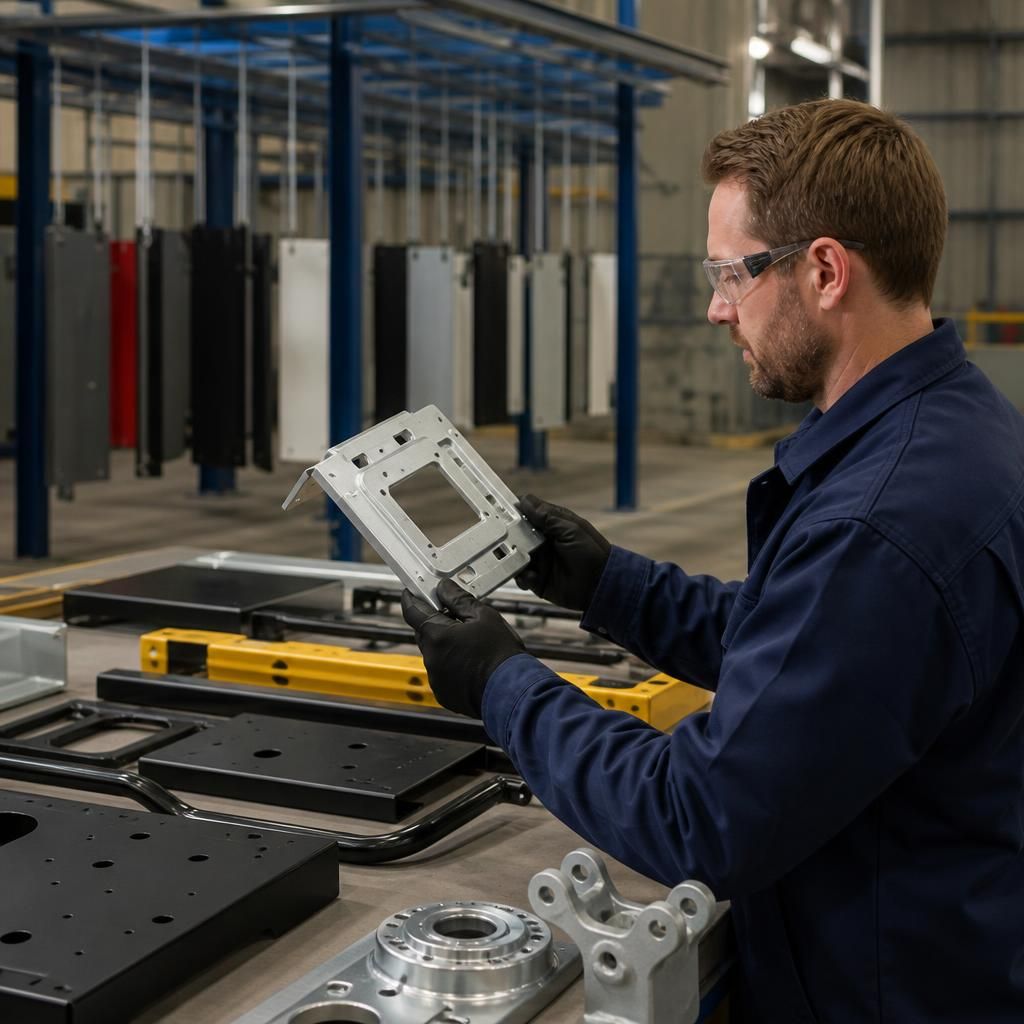
Thermoset powder coating is not one universal formulation. The resin system must be matched to the component’s service environment as well as its metal substrate. For example, epoxy-based systems can provide strong adhesion and resistance to many industrial chemicals, while polyester-based systems are commonly selected where outdoor weathering and colour retention are important. Hybrid systems may be appropriate for certain indoor applications.
This means that two components made from the same metal may require different thermoset powders if one is used indoors and the other is exposed to sunlight, moisture, abrasion or chemicals. The coating specification should therefore identify the substrate, operating conditions and required finish before the material is approved.
Discuss Your Component’s Thermoset Powder Coating Requirements
Share your component drawings, substrate details and intended service conditions with Powder-coatings.co.uk to discuss whether a thermoset powder coating system is suitable. The team can help identify the relevant coating requirements and any preparation or masking considerations before production.