

What are the key components of a powder coating system that ensure efficiency and high-quality results?
A powder coating system relies on coordinated components: surface preparation and pretreatment equipment, a controlled spray booth, powder application guns, a curing oven, and conveyor and control systems. Together, these manage cleanliness, powder coverage, temperature, curing time and handling so finished metal parts receive a consistent, durable coating.
A high-performing powder coating system is an integrated production line in which each stage is matched to the component, powder and required finish. Efficiency and quality depend not on one machine alone, but on accurate process control, suitable material handling, reliable filtration, correct electrical grounding, and documented inspection.
Key supporting components include:
- Air movement and filtration equipment: Controlled airflow within the application area helps contain overspray and supports consistent powder deposition. Filters must be correctly selected, fitted and maintained so that extracted air does not carry excessive powder into the wider working environment or interfere with application conditions.
- Powder recovery and reclaim equipment: A recovery arrangement separates usable overspray from waste where the powder and finish requirements permit it. Sieving or separation equipment helps remove contaminants and agglomerated particles before recovered powder is considered for reuse. Reclaim should be controlled carefully, particularly where colour, gloss, texture or coating specification must remain consistent.
- Grounding and electrical controls: Effective earthing of the workpieces, racks and line equipment is essential for electrostatic transfer. Poor grounding can reduce powder attraction, increase overspray and create uneven coverage, especially on recessed areas. Contact points should remain clean and secure, with checks built into routine process control.
- Gun positioning and reciprocation equipment: Manual or automated gun movement must provide suitable access to faces, edges, cavities and complex profiles. Gun-to-part distance, spray angle, powder output and electrostatic settings need to be adjusted for the geometry of the component rather than applied as a universal setting. Reciprocators can improve repeatability on standardised work, while difficult shapes may still require carefully controlled manual application.
- Powder feed and conditioning equipment: Fluidised hoppers, pumps, hoses and powder lines must deliver a stable, clean supply to the guns. Moisture, contamination, blocked lines or inconsistent fluidisation can cause spitting, surging and uneven film build. Powder storage and transfer arrangements should protect the material from contamination and excessive humidity.
- Oven temperature monitoring: The oven control panel may show the air temperature, but that does not confirm that the metal itself has reached the required curing condition. Temperature probes and profiling equipment can be used to assess the part temperature through the oven and confirm that the specified combination of metal temperature and dwell time is being achieved. This is especially important where component thickness varies.
- Loading fixtures and part racking: Racks, hooks and jigs should support the component securely while exposing the surfaces that need coating. They must also provide dependable electrical contact and minimise shadowing. Suitable fixture design reduces handling damage, improves access for the guns and helps maintain a repeatable coating process across batches.
- Control and monitoring systems: A central control system can coordinate conveyor movement, booth functions, powder delivery, oven settings and safety interlocks. Recipe management is useful where different components or colours require separate settings, provided that operators verify the recipe against the current job and coating specification.
Efficiency also depends on how the system is configured for the production mix. Parts should be grouped logically by coating colour, powder type, size and curing requirements where this reduces cleaning, changeover and re-setting. The line must still allow adequate separation between incompatible materials and provide sufficient access for inspection and maintenance.
Quality control equipment forms a further part of the overall system. Depending on the specification, this can include dry-film thickness measurement, visual inspection lighting, gloss assessment, adhesion testing and checks for defects such as pinholes, orange peel, inclusions, runs or incomplete coverage. Inspection results should be linked to the relevant batch, powder and process settings so that variations can be investigated rather than treated as isolated faults.
Routine maintenance is necessary to preserve the performance of every component. Booth interiors, filters, guns, hoses, nozzles, hooks, oven sensors, conveyor parts and safety devices require inspection at suitable intervals. Powder build-up can alter airflow and electrical performance, while worn contacts or contaminated equipment can affect transfer and finish consistency. Maintenance records help identify recurring faults and support planned intervention before they disrupt production.
The correct specification of the system depends on the work being processed. Large or heavy fabrications may require stronger handling equipment and a line layout that accommodates their dimensions. Small repetitive parts may benefit from automated movement and controlled recipes, whereas complex components may need additional gun access, tailored racking or manual finishing stages. Specialist powders, including protective or nylon coatings, can impose different requirements for application, contamination control and curing.
In practice, a reliable powder coating system combines stable material delivery, controlled application conditions, suitable handling, verified curing and objective inspection. When these elements are selected around the component and coating specification, the line is better placed to produce consistent finishes without relying on repeated adjustment or excessive rework.
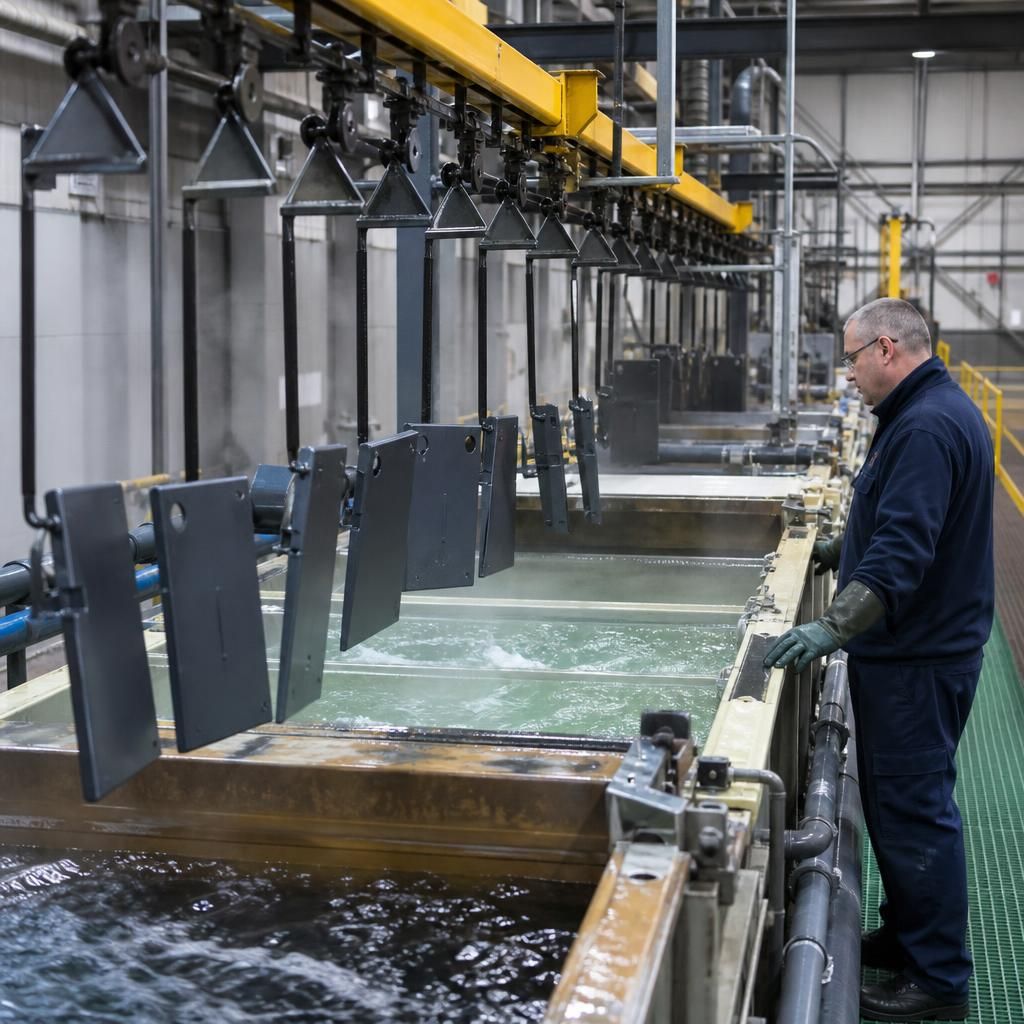
Pretreatment equipment prepares the metal surface so powder can adhere consistently and resist premature failure. It typically combines cleaning, rinsing and drying stages to remove oil, dirt, oxides and chemical residues before the component enters the spray booth.
Each stage must suit the metal type, component geometry and coating specification. Inadequate cleaning can cause adhesion loss, pinholes or surface contamination, while incomplete drying may introduce moisture into the application process. Controlled chemical concentration, rinse quality, spray coverage and drying conditions therefore form an important part of overall system performance.
Effective pretreatment also depends on how parts are presented to the equipment. Racking should allow solution access to relevant surfaces and provide drainage from recesses, seams and cavities. Regular checks of chemical condition, nozzles, tanks and drying equipment help keep surface preparation consistent between batches.