

What are the critical maintenance procedures to ensure longevity and performance of a powder coating system?
Critical powder coating system maintenance includes scheduled cleaning, inspection and calibration of spray guns, filters, air supplies, grounding points, curing ovens and conveyor components. Monitoring coating thickness and cure performance, replacing worn parts promptly, and keeping accurate maintenance records helps preserve finish quality, equipment reliability and process consistency.
Effective powder coating system maintenance is a planned preventive programme that controls powder handling, compressed air, extraction, electrical safety, curing and mechanical operation before faults affect production. The objective is not only to keep equipment running, but to maintain stable powder transfer, predictable film formation, safe working conditions and repeatable finished-part quality.
Use a maintenance schedule based on equipment function
Divide maintenance tasks into daily, weekly, monthly and condition-based activities, using the equipment supplier’s instructions and the system’s operating history to set appropriate intervals. Each task should identify the component, the inspection or service required, the person responsible and the acceptance criteria. A maintenance plan should also distinguish between production adjustments that operators can make and work requiring a competent technician or suitably qualified engineer.
Review the schedule when the system is changed, when a new powder type is introduced or when recurring defects appear. A line that processes abrasive, hygroscopic or specialist powders may require different controls from one handling a consistent standard powder range.
Control powder supply and recovery
Powder storage and transfer have a direct effect on application stability. Keep containers sealed and protected from moisture, excessive heat and contamination. Before loading, check that the powder is within its specified storage and use conditions and that different formulations or colours have not been mixed accidentally.
Recovery equipment also requires procedural control. Inspect cyclones, cartridge recovery units, sieves, collection containers and transfer lines for blockages, leaks or restricted airflow. Recovered powder should only be returned to production where the process is designed for reclaim use and the material’s condition and blend ratio are controlled. Uncontrolled reclaim can alter particle distribution, colour, gloss or curing behaviour.
When changing colour or coating type, follow a defined changeover sequence. Segregate waste, clean contact surfaces in the correct order and verify that no previous material remains in feed lines, hoppers or recovery equipment. This is particularly important where pale colours, textured finishes or specialist coatings are processed.
Maintain compressed-air quality and fluidisation
Powder coating systems depend on clean, dry and adequately regulated air. Drain receivers, separators and filters in line with the air-system maintenance plan, and investigate any oil or water carry-over rather than allowing it to reach the powder equipment. Moisture can cause poor fluidisation, pulsing, blockage and inconsistent transfer.
Check air hoses, regulators, connections and seals for deterioration or leakage. Confirm that fluidising plates and porous membranes are not damaged or blinded by powder. Powder should fluidise evenly without excessive bubbling or dead areas; an uneven bed can produce fluctuating feed rates even when the application equipment appears correctly adjusted.
Verify extraction and booth airflow
Booth extraction must remain sufficient to contain overspray without disturbing the applied powder cloud. Check airflow indicators, ducting, access doors, seals and collection equipment for conditions that could reduce containment or alter spray behaviour. A sudden change in airflow, unusual noise or increased powder escape should be treated as a fault indicator, not simply corrected by changing spray settings.
Keep extraction paths free from accumulated material and ensure that collection equipment is compatible with the powder being processed. Maintenance work should follow the system’s isolation, dust-control and fire-safety procedures, since powder deposits can present both hygiene and combustible-dust risks.
Check safety systems as part of planned maintenance
Test emergency stops, access-door switches, booth interlocks, oven shutdown controls, alarms and fire-protection interfaces at the intervals specified for the installation. Confirm that guards remain secure and that operators cannot reach moving, hot or electrically energised parts during normal operation.
Record each safety test and remove the system from service if a protective device does not operate as intended. Safety circuits should not be bypassed to keep production moving. Any electrical isolation, high-voltage work, burner servicing or modification to control equipment should be carried out by appropriately competent personnel.
Validate process conditions rather than relying only on set points
Control-panel readings show what the system is being instructed to do; they do not always prove that the condition exists at the component. Periodically compare displayed values with suitable reference instruments and investigate drift. This applies to air pressure, booth conditions, oven temperature and other critical process variables.
For curing, assess the metal part’s actual time and temperature profile using an appropriate profiling method, particularly after changes to line speed, load pattern, part thickness or oven settings. A consistent oven display does not guarantee that every part reaches the required cure condition. Keep the validated process window documented for each relevant product group.
Maintain the conveyor and loading system correctly
Inspect hooks, racks, carriers and contact points for damage, coating build-up or poor electrical continuity. Loading arrangements should prevent parts touching one another and should expose the required surfaces to both spray and heat. Excessively heavy or poorly balanced loads can increase mechanical strain and create uneven coating or curing.
Lubricate bearings, chains and drive components only with products suitable for the equipment and in quantities that cannot contaminate the coating process. Check conveyor alignment, tension, drive noise and movement for signs of wear. Any lubricant, debris or loose material near the coating zone should be controlled so that it cannot reach prepared parts.
Use condition monitoring and defect analysis
Trend useful indicators such as powder consumption, reclaim behaviour, air demand, pressure stability, oven energy demand, alarm frequency and recurring finish defects. A gradual change can identify a restriction, leak, wear problem or control fault before it becomes a visible quality failure.
When defects occur, record the part, powder batch, application conditions, loading arrangement and curing profile. Distinguish equipment-related causes from substrate preparation, material handling or powder-related causes. This prevents unnecessary adjustment of the system and helps identify faults that require specialist repair.
Manage maintenance records and spare parts
Keep service records that show the date, task, findings, replacement parts, measurements and follow-up action. Retain relevant manuals, electrical diagrams, risk assessments and calibration information in an accessible controlled system. Use the records to identify repeat failures and to plan maintenance during suitable production changeovers.
Hold critical consumables and replacement parts where a failure would otherwise leave the line unusable, but check stock condition and compatibility before fitting them. After maintenance, complete a controlled recommissioning check: remove tools and debris, reinstate guards, verify safety devices, confirm process settings and produce a test piece before returning to normal production.
These procedures work together. Powder control without reliable air, extraction without effective safety interlocks, or accurate oven settings without validated part temperature will not provide a dependable coating process. The most effective maintenance programme links equipment condition to coating results and uses documented evidence to decide when adjustment, component replacement or specialist engineering support is required.
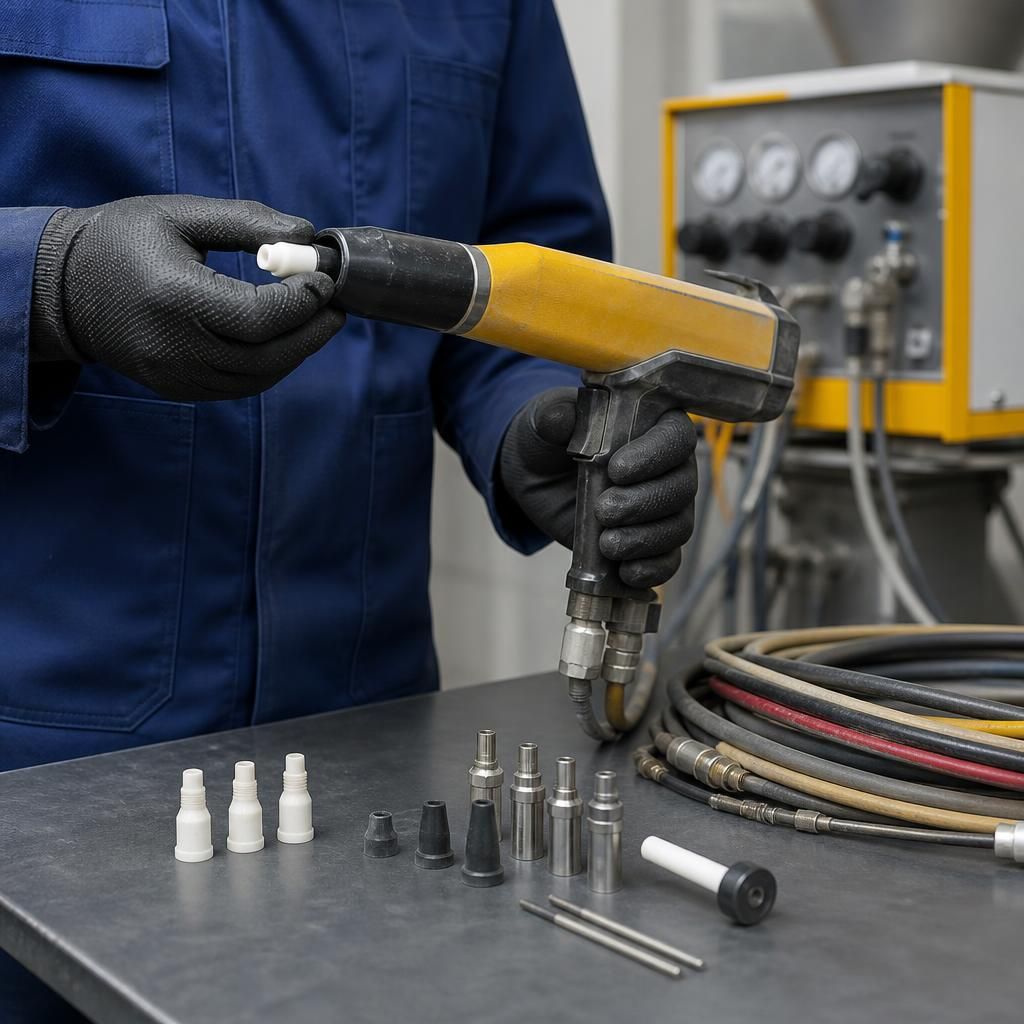
Spray gun and application equipment checks are essential because wear or contamination at the gun can change powder output, spray pattern and transfer efficiency before defects become obvious on finished parts. Include nozzles, deflectors, electrodes, powder hoses, pumps and connections in a dedicated inspection routine.
Remove accumulated powder using the equipment supplier’s approved method and check for damaged, worn or partially blocked components. Confirm that the gun produces a consistent pattern and that powder delivery, voltage and current remain within the documented operating range for the coating material. Compare readings and test-piece results with an established baseline rather than adjusting settings to compensate for a deteriorating component. Replace parts when wear affects application consistency, then verify the spray pattern and coating result before returning the system to normal production.