

What are the advantages of using a powder coating system with integrated robots compared to traditional manual application methods?
A powder coating system with integrated robots delivers more consistent, repeatable application than traditional manual spraying, particularly across large batches and complex components. Automated control can also improve production efficiency, reduce overspray and support more uniform film coverage while reducing reliance on operator technique.
A powder coating system with integrated robots combines programmed robotic arms, powder spray equipment, booth controls, part handling and, where required, conveyor and curing stages into one coordinated process. Compared with traditional manual application, its main advantages are greater control over spray movement, more predictable cycle management, improved access to difficult surfaces, better process records and safer allocation of operator time.
Controlled spray positioning: A robot can follow a defined route while maintaining a programmed relationship between the gun and the component. This allows the application parameters to be matched to the part’s geometry rather than relying on an operator to reproduce the same movement by hand. Gun angle, distance, speed and trigger points can be set for individual sections, which is particularly useful where a component has flanges, recesses, apertures or several faces that require different approaches.
Improved access to awkward areas: Robotic arms can be programmed to approach parts from positions that may be uncomfortable or impractical for a person to maintain repeatedly. With suitable fixturing and a correctly planned spray path, the system can reach around edges and into complex profiles without requiring the operator to work in an unsuitable posture. The part still needs to be presented consistently, as poor hanging or excessive variation in component dimensions can limit the benefit of automation.
More predictable production planning: A programmed sequence gives the coating line a defined operating routine. This can make it easier to estimate how long a batch will occupy the booth, coordinate part loading and unloading, and synchronise spraying with conveyor movement and curing. Manual application can be highly capable, but its cycle time may vary with part design, operator fatigue, inspection requirements and changes in technique. Automation reduces some of those variables, helping production teams plan work more systematically.
Better use of skilled personnel: Robots do not remove the need for experienced coating staff. Operators are still required to prepare components, select and verify programmes, set up fixtures, check equipment, inspect finished parts and respond to changes in the work. The difference is that personnel can spend less time carrying out repetitive spray movements and more time on preparation, quality checks, programme optimisation and problem solving. This can be valuable where manual spraying would otherwise involve prolonged repetitive work.
Reduced physical exposure: Moving the spray gun with a robot can reduce the amount of time personnel spend close to airborne powder and in repetitive or constrained positions. A properly designed installation should still include the necessary extraction, guarding, interlocks, personal protective equipment and cleaning procedures. Automation is therefore a risk-control measure within a wider safe-working system, not a replacement for it.
Process traceability: An integrated control system can record or manage settings such as programme selection, conveyor speed, gun movement and operating parameters. These records can support investigation when a finished part does not meet specification and can help a business reproduce an approved process for later batches. The value of this information depends on how the system is configured and whether staff use the records as part of documented quality control.
Potentially lower operating costs: The financial benefit comes from several factors rather than from the robot alone. More controlled operation can reduce rework, make labour allocation more efficient and support planned use of powder and energy. Against this, an automated cell requires capital investment, programming, maintenance, suitable fixturing and staff training. The business case should therefore consider batch volume, part repetition, product mix, changeover time and the cost of defects, rather than comparing equipment prices in isolation.
Greater repeatability between batches: Once a programme has been validated for a particular component and its hanging arrangement, it can be recalled for future production. This is useful for manufacturers and fabricators supplying parts to a defined specification over repeated orders. Programme control does not remove the need to check powder condition, component preparation, earthing, booth cleanliness and curing; those factors can still affect the finished coating.
Manual application remains useful for prototypes, one-off parts, frequent design changes and components whose dimensions or presentation vary significantly. A robot may need more time to programme and validate than a skilled operator needs to coat a single unusual item. For that reason, the most practical arrangement can be a combined system in which robots handle suitable repeat work while trained personnel deal with low-volume, variable or highly bespoke components.
When assessing an integrated robotic powder coating system, key questions include whether the robot’s reach suits the largest component, whether fixtures provide consistent presentation, how quickly programmes can be changed, how the system handles colour or powder changes, and what inspection and maintenance arrangements are required. These factors determine whether the equipment delivers a genuine improvement over manual application for the specific components, batch patterns and quality requirements involved.
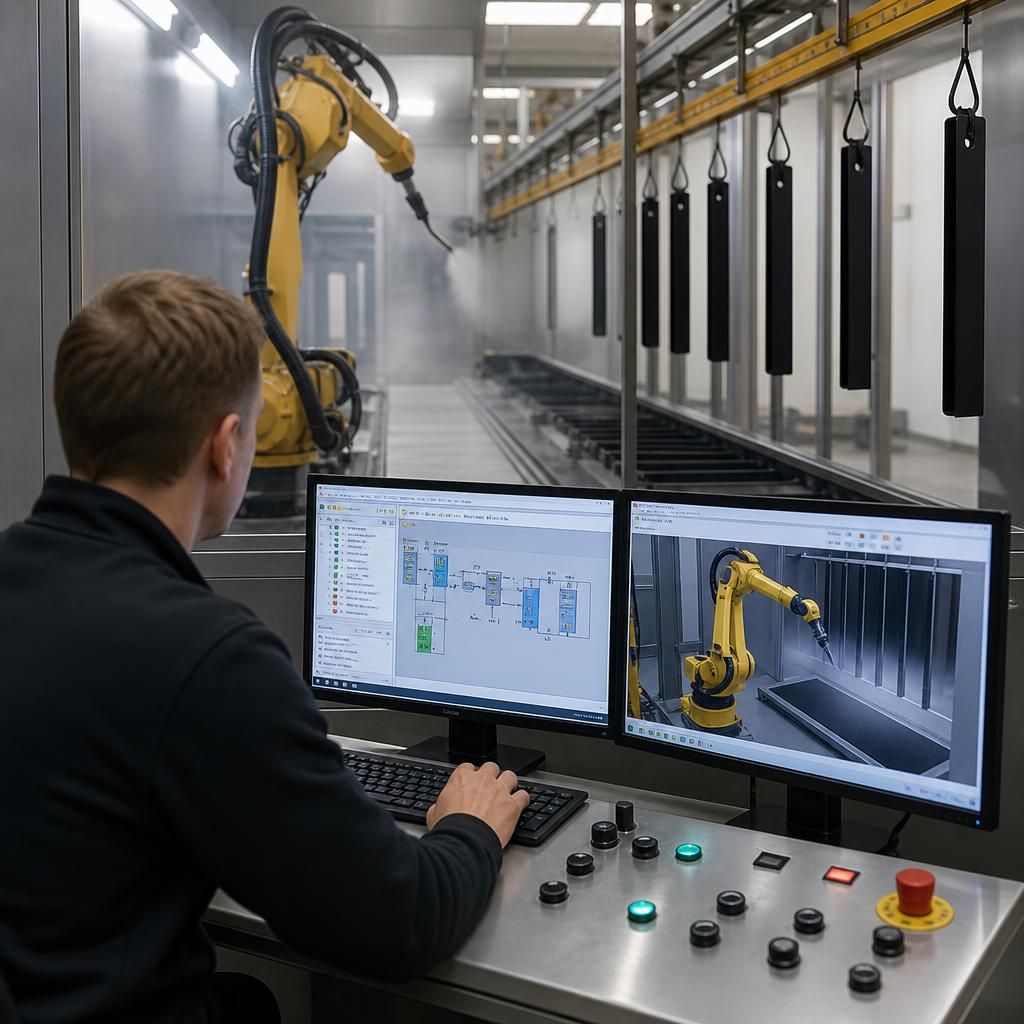
Integrated control improves coordination between application stages. When robotic spraying is linked with the booth, part handling and curing controls, each component can follow the same defined sequence rather than relying on separate manual hand-offs. This helps maintain the intended order of loading, coating and curing, reducing the risk of missed steps or inconsistent handling between operations. The benefit is greatest where parts move through a repeatable production route and the coating specification requires controlled treatment from preparation through to the finished finish.