

How can a powder coating system be tailored to accommodate both large-scale batch processing and specialist coatings for complex components?
A tailored powder coating system combines scalable handling, controlled preparation and curing capacity for consistent large-scale batch processing, while allowing adjustments for specialist finishes and complex component geometries. Configuration may include dedicated masking, racking, spray parameters, powder types and curing controls to suit each part and coating specification.
A tailored powder coating system uses a controlled combination of material flow, application equipment, process settings and inspection controls so that one production operation can handle both repeat batch work and components with demanding shapes or finish requirements. The aim is not to use identical settings for every job, but to create a repeatable process with enough flexibility to change between product families without compromising coating performance.
The first design decision is to separate the requirements of the parts being processed. Large batches of similar components usually benefit from a stable, repeatable route with consistent loading, application and curing conditions. Specialist components may require slower handling, additional inspection or a different application approach. A suitable system therefore defines standard process recipes for recurring work while retaining adjustable parameters for lower-volume or technically difficult items.
Part presentation has a major influence on coating consistency. Racks, hooks and fixtures should support the component securely while exposing the surfaces that require coating. They must also allow electrical continuity where electrostatic application is used and minimise contact marks or shadowed areas. For complex components, dedicated fixtures can control orientation and spacing, helping operators or automated equipment reach recesses, internal faces and awkward edges more reliably. Fixture design should be reviewed when a part changes, since a rack that works well for one geometry may create shielding or poor powder access on another.
Complex shapes require specific attention to electrostatic application. Recesses and enclosed angles can create the Faraday cage effect, in which the electric field encourages powder to accumulate on outer edges rather than entering the recessed area. This can be addressed through suitable gun positioning, controlled powder output, adjusted voltage and careful gun movement. Manual touch-up may be appropriate for some specialist work, whereas a programmed application path can provide greater repeatability for recurring complex components. The correct approach depends on the geometry, powder specification and required appearance.
A flexible system should also manage product changes without allowing one coating specification to contaminate another. This may involve planned cleaning of guns, hoses, booths and recovery equipment, along with clear segregation of powders and dedicated equipment where the finish is particularly sensitive. Colour, texture and chemistry changes should be scheduled logically to reduce cleaning demands and avoid unsuitable residue entering the next batch. Powder recovery is useful only where the recovered material remains suitable for the same approved application; specialist finishes may require stricter separation or fresh powder.
Curing needs to be matched to the actual metal temperature rather than relying solely on the oven air temperature or dwell time. Parts with different thicknesses, masses and geometries absorb heat at different rates, so a process developed for light components may not suit heavy fabrications. Profiling representative parts helps establish whether the specified cure has been reached across the load. For mixed batches, the system should identify the slowest-heating component and use a validated process window that does not over-cure more sensitive finishes.
Useful tailoring measures include:
- separate process recipes for standard batches and specialist components;
- adjustable conveyor speed, gun settings and application distances;
- interchangeable fixtures for different dimensions and loading orientations;
- controlled booth and equipment cleaning between incompatible finishes;
- oven profiling for changes in part thickness, mass and material;
- inspection points for film coverage, appearance, adhesion and cure;
- production records linking each batch to its powder, settings and inspection results.
Inspection should be built into the process rather than treated as a final visual check. Depending on the specification, checks may include surface cleanliness, coating coverage, film thickness, colour or texture consistency, adhesion and evidence of correct curing. Complex parts deserve particular attention at edges, recesses, joints and areas close to rack contact points. Recording deviations by component type can reveal whether a problem originates in preparation, application, handling or the oven.
For a business processing varied work, modular equipment is generally more practical than a system designed around one fixed component. Application capacity, fixtures, booth arrangements and control software can then be adapted as product ranges change. The important point is to validate every new combination of substrate, powder, component geometry and curing conditions before it becomes a routine production recipe. This preserves repeatability for large batches while giving specialist components the individual process control they require.
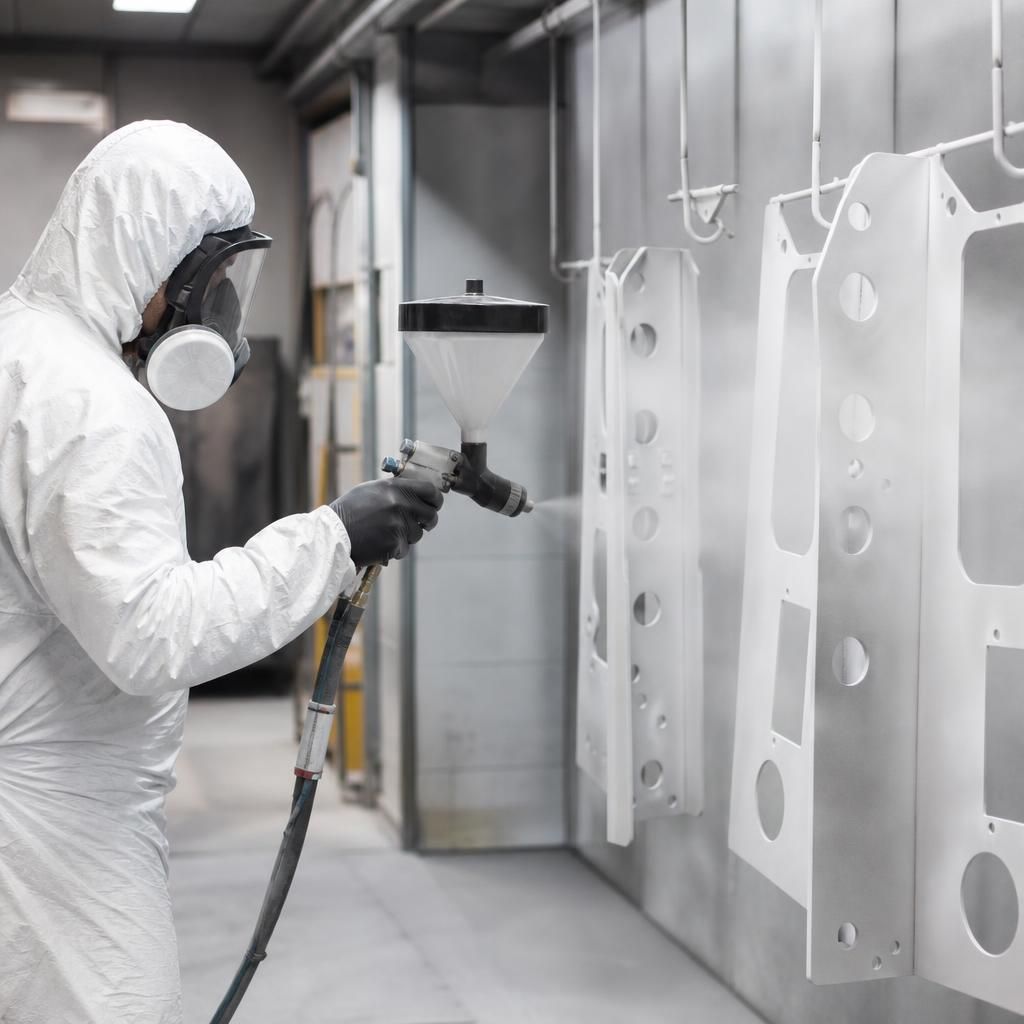
Specialist coatings may require a different application route from standard thermoset powder, so a tailored system should match the equipment and process controls to the coating chemistry as well as the component geometry. Nylon, protective and other specialist powders can differ in application method, required film build, heating behaviour and handling requirements.
For example, electrostatic spray may provide better control on a complex part where access, masking and film thickness are important. A thermoplastic coating such as nylon may instead require a process designed for a heavier, more protective layer, with closer control of substrate temperature and coating build. The selected method should be verified on representative components, particularly where the part includes recesses, sharp transitions or areas that must remain uncoated.
This approach also helps define when a dedicated booth, application setup or changeover procedure is appropriate. Separating incompatible powders and recording the approved settings for each specialist finish reduces the risk of residue, inconsistent appearance or unsuitable coating thickness when production moves between standard batches and technically demanding components.