

What are the main advantages of choosing polyester powder coating over epoxy powder coating for outdoor applications?
Polyester powder coating is generally preferable to epoxy for outdoor applications because it offers stronger resistance to ultraviolet radiation, weathering and colour fading. Unlike epoxy, which can chalk and deteriorate when exposed to prolonged sunlight, polyester is formulated to retain its protective and decorative finish in exterior conditions.
For outdoor applications, polyester powder coating is usually the more suitable choice than epoxy powder coating because it is formulated to withstand exterior exposure without the rapid surface degradation associated with standard epoxy finishes. Its main practical advantages are better retention of surface appearance, greater tolerance of changing outdoor conditions and a finish that is more appropriate for exposed metalwork.
Epoxy powder coating has strong adhesion and useful resistance to chemicals, moisture and corrosion. These properties make it effective for many indoor components and for situations where chemical performance is more important than exposure to sunlight. Outdoors, however, epoxy can lose gloss, chalk or become brittle as it is exposed to ultraviolet radiation. This can leave the surface looking worn and can reduce the effectiveness of the coating as a decorative finish. Polyester is normally selected as the external topcoat because its resin chemistry is better suited to prolonged exposure.
A key advantage of polyester is its ability to handle the repeated expansion and contraction that metal experiences as temperatures change. Exterior components may heat in direct sunlight, cool rapidly after sunset and be exposed to wind, rain and frost. A coating must remain attached while the substrate moves slightly. Polyester systems provide a useful balance of hardness and flexibility, helping the film resist cracking or loss of adhesion caused by normal thermal movement. The exact performance still depends on the formulation, application and the design of the component.
Polyester can also provide a more consistent finish on items where appearance is important. It is available in a broad range of colours, gloss levels and textures, allowing manufacturers and fabricators to specify a finish that suits the surrounding structure or product. This is particularly relevant to architectural metalwork, street furniture, fencing, frames, panels and exterior equipment, where surface condition is visible and a deteriorating coating would affect the perceived quality of the item.
Choosing polyester does not remove the need for proper corrosion control. Powder coating is only as reliable as the surface beneath it. Oil, grease, mill scale, rust, dust and other contaminants must be removed, and the metal should receive a suitable preparation and pretreatment for its composition. Steel, galvanised steel and aluminium may require different preparation methods. Poor cleaning or inadequate pretreatment can lead to blistering, peeling or corrosion developing beneath the film, regardless of whether polyester or epoxy has been used.
Component design also affects the result. Sharp edges, narrow recesses, welds, drilled holes and areas that trap water can be difficult to coat uniformly. Drainage, access for preparation and the avoidance of untreated crevices should be considered before finishing. Where a component has complex geometry or will be assembled outdoors, the specification should address edge coverage, contact points and areas that may be damaged during handling or installation.
Polyester is not automatically the best option for every exterior environment. Highly aggressive chemical exposure, continuous immersion, severe abrasion or unusual operating temperatures may require a specialist coating system or a multi-coat specification. In some cases, an epoxy primer may be used beneath a polyester topcoat: the epoxy can contribute adhesion or corrosion protection, while the polyester layer provides the exterior-facing finish. This is different from using an exposed epoxy coating as the final outdoor surface.
When comparing systems, the specification should therefore consider:
- the expected level of sunlight, moisture, pollution and salt exposure;
- the metal type and the preparation or pretreatment it requires;
- the required colour, gloss and texture;
- the likelihood of impact, abrasion and handling damage;
- thermal movement and the component’s shape;
- whether a primer, topcoat or multi-layer system is appropriate; and
- the maintenance and inspection requirements after installation.
For ordinary external metalwork, polyester powder coating offers the more balanced choice because it combines exterior suitability with useful mechanical performance and design flexibility. Epoxy remains valuable where its chemical and adhesion properties match the operating environment, but it is generally less appropriate as the exposed final finish for components that receive sustained outdoor exposure.
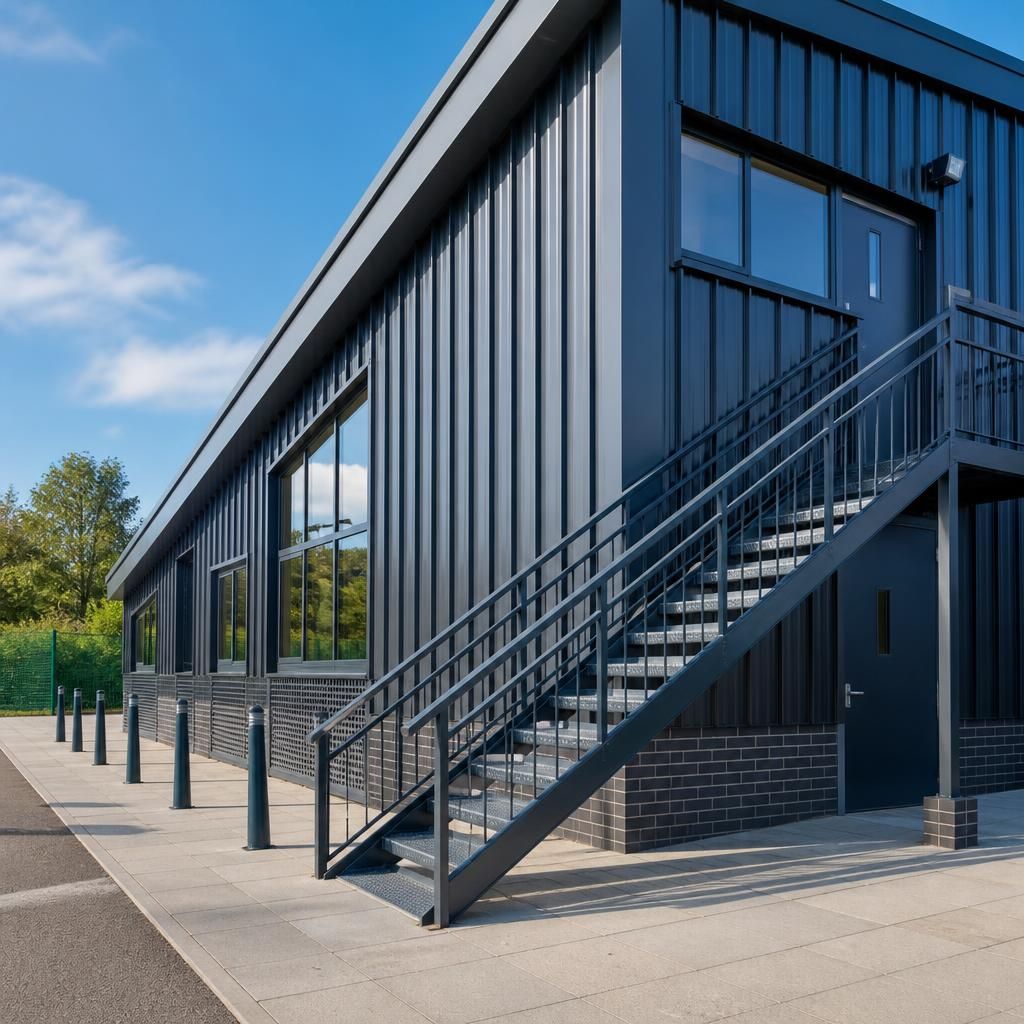
The key advantage of polyester powder coating outdoors is its suitability as the exposed finish, particularly where the coated metal remains in direct sunlight and must retain an acceptable appearance over time. Epoxy can still be useful beneath a polyester topcoat, but it is generally less suitable when left directly exposed to ultraviolet radiation.
Selection should be based on the component’s actual environment rather than on resin type alone. Sheltered architectural metalwork, exposed fencing and equipment subject to pollution or coastal air may require different formulations and preparation standards. A suitable exterior polyester specification should therefore consider the expected exposure, required colour and gloss, substrate, and any primer or additional protection needed.