

How does polyester powder coating ensure long-lasting protection for metal surfaces?
Polyester powder coating protects metal by curing into a continuous, strongly bonded film that helps resist moisture, ultraviolet exposure, corrosion and everyday abrasion. Its long-term performance depends on suitable metal preparation, correct coating thickness and curing, along with selecting a formulation appropriate to the component’s environment.
Polyester powder coating provides long-lasting protection by creating a hard, chemically crosslinked surface that remains stable as the metal component is exposed to weather, handling and normal service conditions. Unlike a simple decorative layer, it acts as a designed barrier between the substrate and the surrounding environment while retaining useful mechanical and visual properties over time.
A key advantage of polyester is its suitability for exterior service. The resin system is designed to withstand sunlight and changing weather without the rapid surface breakdown associated with less suitable coatings. This helps the finish retain its colour, gloss and uniform appearance, which is important on visible architectural, construction and fabricated components. Reduced surface degradation also helps preserve the protective function of the coating rather than leaving a progressively weaker outer layer.
The coating also protects by limiting the routes through which damaging agents can reach the metal. Water, airborne contaminants and salts can contribute to corrosion when they remain in contact with an exposed substrate. A well-formed polyester finish separates these agents from the metal and reduces the likelihood of localised attack. Protection is particularly valuable on items such as external frames, enclosures, brackets, street furniture, railings and equipment used in industrial environments.
Polyester’s performance is not limited to static exposure. Metal components may experience vibration, minor impacts, handling during installation and repeated expansion and contraction as temperatures change. The coating must remain sufficiently durable and well attached to tolerate these stresses without widespread flaking or loss of coverage. This combination of surface hardness and practical toughness helps the finish continue protecting the component after it has entered service.
Component design has an important effect on how protection is maintained. Sharp edges, narrow recesses, overlapping joints and areas that collect water are more vulnerable than broad, accessible faces because they can experience greater mechanical stress or prolonged contamination. Drainage, smooth transitions and sensible access for coating all support more consistent coverage. Where a component includes welds, fixings or cut edges, these areas should be considered as part of the overall corrosion-control design rather than treated as secondary details.
Polyester powder coating can also support longer service life by reducing routine deterioration of the underlying metal. When the surface remains intact, the component is less likely to require frequent stripping, recoating or replacement solely because of surface corrosion or weathering. The finish therefore contributes to both functional durability and the retention of an acceptable appearance, although the expected result still depends on the severity of the operating environment and the design of the coated item.
Long-term performance should be assessed against the conditions the component will face, including:
- Outdoor exposure and the intensity of sunlight.
- Contact with moisture, condensation, road salts, industrial dust or cleaning chemicals.
- Risk of impact, rubbing, vibration or repeated handling.
- Temperature changes and the possibility of water being trapped in joints or recesses.
- The visibility of the component, where colour and gloss retention are important as well as corrosion resistance.
Inspection remains useful even when a polyester finish has been selected for durability. Scratches, chips, blistering, staining around fixings and corrosion at joints can indicate that the protective system has been locally breached. Prompt attention to damaged areas limits the opportunity for corrosion to spread beneath the surrounding coating. Cleaning should use methods and products compatible with the finish, since aggressive chemicals or unsuitable abrasives can damage the surface unnecessarily.
For industrial buyers, the most reliable assessment is therefore not simply whether a component has been powder coated, but whether the polyester system suits its environment and its design. Correct specification, sound component detailing and sensible maintenance allow the coating to provide a durable protective finish across batches of manufactured or fabricated metal parts.
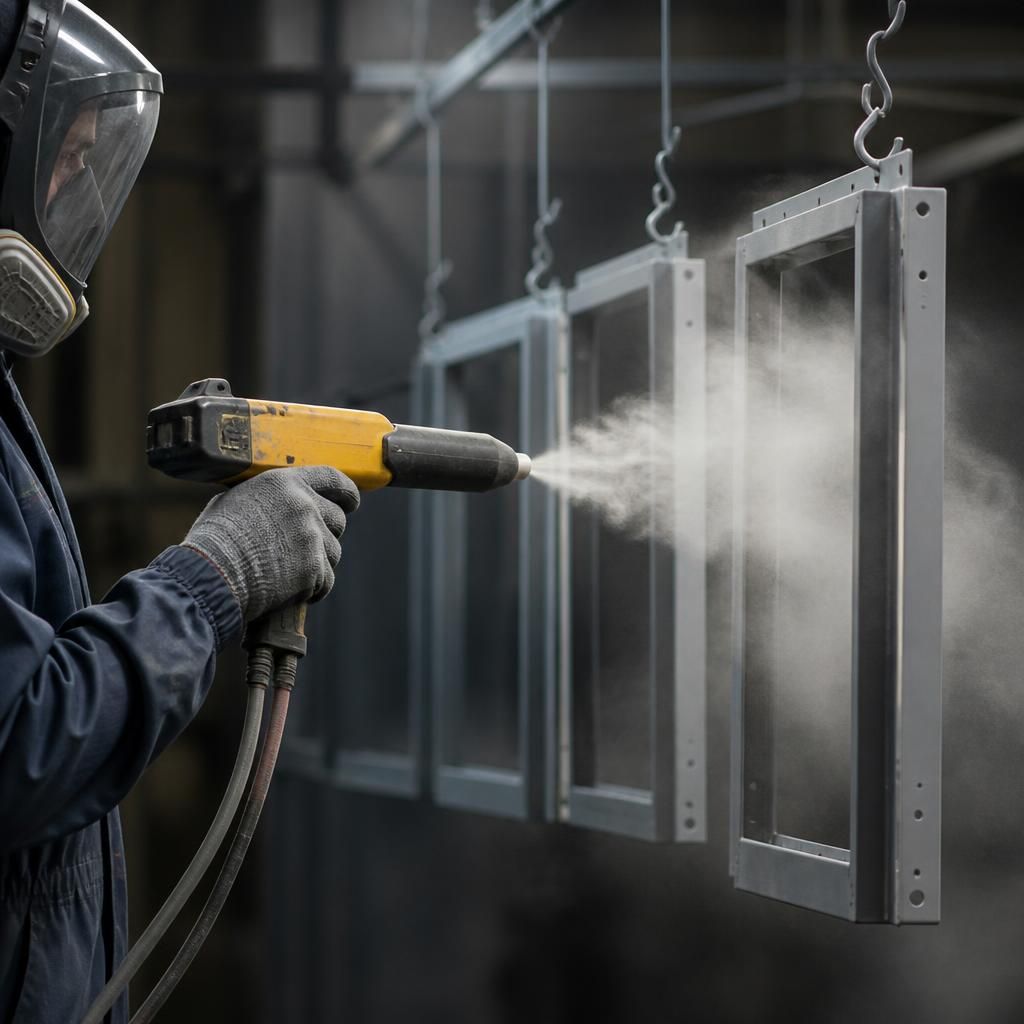
Polyester powder coating is a protective barrier, not a substitute for sound metalwork. It cannot restore section lost to corrosion, correct a poorly sealed joint or prevent water being retained by an unsuitable assembly. Long-lasting protection therefore depends on treating the coating as one part of the corrosion-control system: the component should be structurally sound, joints should be designed to avoid trapping moisture, and dissimilar metals should be considered where they meet. This prevents the coating from being expected to compensate for defects that originate beneath or behind the finished surface.
Discuss Your Polyester Powder Coating Requirements
Discuss your component’s substrate, dimensions, finish requirements and service environment with Powder-coatings.co.uk to assess whether polyester powder coating is suitable. The team can help clarify the information needed to plan an appropriate coating specification for your parts.