

How do polyester powder coatings compare in environmental impact to other coating methods?
Polyester powder coating generally has a lower environmental impact than solvent-based liquid paint because it is applied without liquid solvents and can allow unused overspray to be collected and reused, reducing material waste. However, it requires heat curing, so the overall impact also depends on oven energy use, coating thickness, application efficiency and the service life of the finished component.
Polyester powder coating often has a favourable environmental profile compared with solvent-borne liquid paint, but it is not impact-free. A meaningful comparison must consider the complete coating life cycle: raw materials, surface preparation, application, curing, maintenance, stripping and the eventual disposal or recycling of the coated metal.
Compared with conventional solvent-based paint, polyester powder coating avoids the routine release of many volatile organic compounds (VOCs) during application. Solvent-borne systems use liquid carriers that evaporate into the atmosphere, whereas powder is applied as a dry material. This can reduce air-emission concerns and the need to manage solvent vapours in the coating area. It also removes some of the environmental and occupational considerations associated with storing and disposing of solvent-containing residues.
Liquid paint can still be appropriate in situations where components cannot tolerate oven curing, where very large structures must be coated in place, or where a particular repair system is required. Water-based liquid coatings may reduce solvent emissions compared with solvent-borne alternatives, although they still contain resins, additives and, in some formulations, co-solvents. Their environmental performance therefore depends on the specific product rather than on the term “water-based” alone.
Powder application can use material efficiently because the coating is deposited directly onto the component rather than being carried in a liquid that subsequently evaporates. Proper collection and handling of suitable unused powder may allow it to be recovered, although the feasibility of reuse depends on colour, formulation, contamination and the equipment used. Mixed or contaminated powder is not automatically suitable for return to the process and must be managed responsibly.
Durability is another important part of the comparison. A polyester finish selected for the exposure conditions can resist weathering and help protect the underlying metal, reducing the frequency of recoating or replacement. Fewer major maintenance cycles may reduce the cumulative use of coating materials, transport and preparation products over the component’s life. This benefit should not be assumed for every polyester grade: exterior exposure, ultraviolet radiation, moisture, chemicals, abrasion and the design of the component all affect service performance.
Surface preparation can add environmental impact to any coating method. Degreasing, abrasive cleaning, chemical pretreatment and rinsing may generate wastewater, spent abrasive, sludge or other controlled residues. A powder coating should therefore be assessed alongside the preparation system, not in isolation. Good preparation improves adhesion and corrosion protection, helping to prevent premature stripping and recoating, while appropriate waste segregation supports compliant disposal or recovery.
Electroplating and other conversion or metallic finishing processes involve different environmental considerations. They may provide valuable corrosion, wear or electrical properties, but can require process chemicals, rinse stages and careful management of metal-bearing wastewater and sludge. Anodising also has a distinct chemical and energy profile and is generally limited to suitable metals and specified appearances. The most suitable method depends on the required performance, substrate and exposure; the finish with the lowest impact is not necessarily the one with the lowest impact at the application stage alone.
Energy use should be examined across the whole operation. Polyester powder requires an oven-curing stage, so oven design, loading, insulation, process control and the source of electricity or fuel influence its footprint. Conversely, liquid paint may need several coats, flash-off periods, drying space or additional handling. Comparing one coating by its application energy while ignoring these other stages can give a misleading result.
For an industrial project, useful environmental questions include:
- Does the selected coating provide the required corrosion, weathering, chemical and abrasion resistance?
- Can the component be coated efficiently with minimal overspray and consistent film thickness?
- What preparation chemicals, rinse water and waste streams will the process create?
- Can the metal component remain in service for a long period without stripping or replacement?
- What energy source and curing conditions will be used, and can parts be grouped efficiently?
- How will powder residues, packaging, spent preparation materials and rejected components be handled?
- Will the final component be easy to separate, refurbish or recycle at the end of its useful life?
In practical terms, polyester powder coating is commonly considered a lower-impact option than solvent-borne liquid paint where the parts are suitable for oven curing and the process is well controlled. Its strongest environmental case comes from combining low-solvent application with efficient material use, a durable finish and responsible management of preparation, energy and waste. A documented comparison based on the actual substrate, coating specification, production volume and intended service environment is more reliable than choosing a finish solely by its coating category.
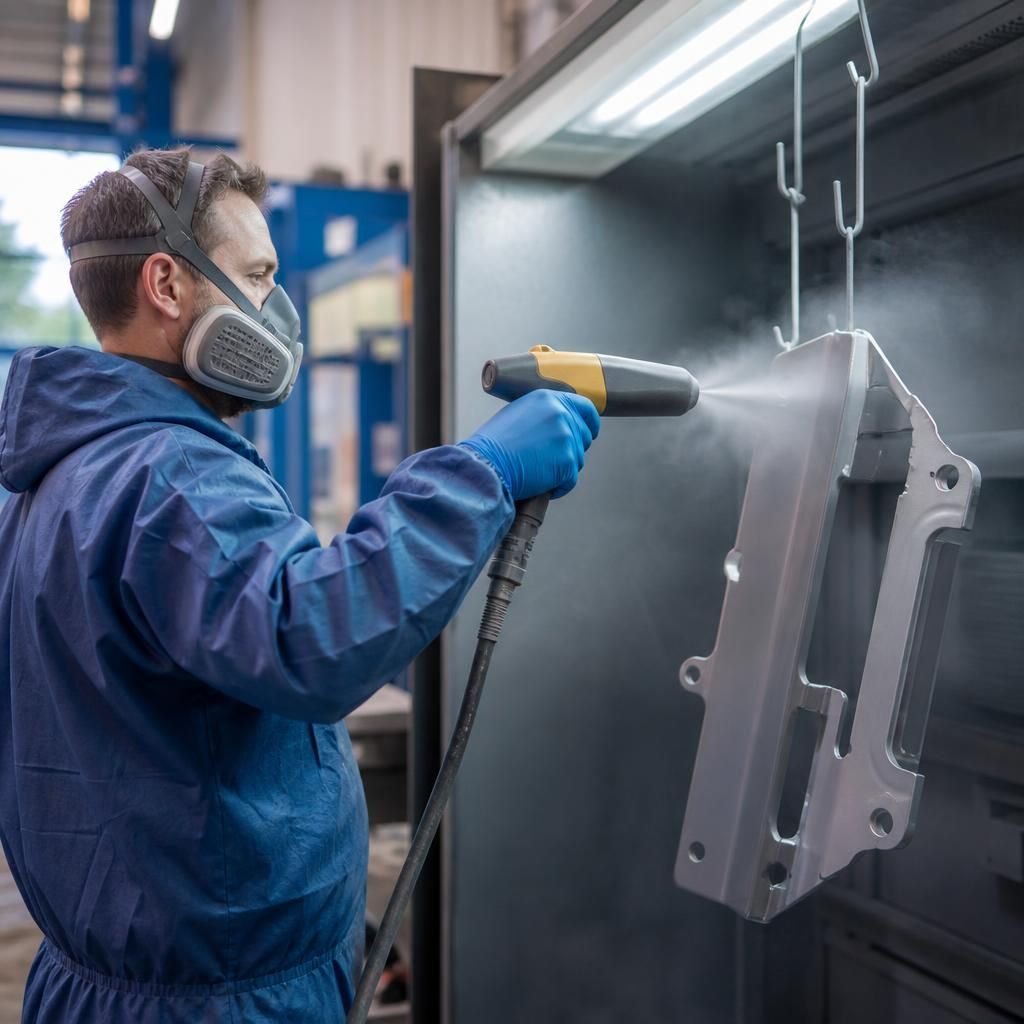
Repairability is an important part of comparing the environmental impact of polyester powder coating with other finishes. Powder coating is cured as a complete film, so repairing isolated damage may require careful preparation and a compatible repair coating rather than simply applying fresh powder to the affected area. If a component must be removed, stripped and fully recoated, the additional preparation materials, energy and waste can affect its overall environmental performance.
For components likely to suffer localised impact, abrasion or modification, the coating specification should therefore consider how damage will be inspected and repaired throughout the product’s life. A finish that supports practical local repairs may reduce unnecessary full recoating, while a powder-coated component designed for controlled factory refurbishment can still offer a sound life-cycle outcome. The appropriate comparison depends on the component’s access, exposure, expected maintenance and the repair system’s compatibility with the original finish.
Assess the environmental impact of your polyester powder coating project
Discuss your component, substrate and intended service environment with the powder-coating.co.uk team to assess whether polyester powder coating is an appropriate lower-impact option. Collection and delivery options are available for businesses across the Midlands and surrounding areas.