

What types of metal components benefit most from high heat and heat-resistant epoxy coatings?
High heat and heat-resistant epoxy coatings are most beneficial for metal components exposed to sustained or fluctuating elevated temperatures, such as furnace parts, heat shields, exhaust components and industrial machinery housings. They are particularly suitable where the component also needs protection from corrosion, chemicals, abrasion or repeated thermal cycling.
The metal components that benefit most from high heat and heat-resistant epoxy coatings are those whose performance depends on maintaining a protective, firmly bonded surface during elevated-temperature service. The strongest candidates are usually reusable industrial parts, fabricated assemblies and equipment enclosures where corrosion protection, cleanability, chemical resistance or surface durability are needed alongside temperature resistance.
Components commonly considered for these coatings include:
- Oven and process-heating equipment: racks, trays, doors, frames, internal supports and external panels may require a finish that remains serviceable near heated processes and withstands handling during loading and unloading.
- Kiln and furnace accessories: charging fixtures, baskets, rails, covers and non-contact support structures can benefit where the coating specification is suitable for the actual temperature reached by each part.
- Thermal-processing fixtures: jigs, hooks, brackets and positioning frames used to hold components during heating may need protection from oxidation, production residues and repeated heating and cooling.
- Industrial pipework and fittings: sections of pipe, elbows, flanges, valve bodies and support hardware can be suitable where the coating must tolerate heat alongside moisture, process chemicals or atmospheric contamination.
- Engine and process-system components: covers, guards, brackets, mounting plates and non-friction housings may benefit where heat and contaminants would otherwise accelerate surface deterioration.
- Electrical and control enclosures: metal cabinets, panels and protective covers located near heat-generating equipment may require a durable finish, provided the coating’s temperature capability is compatible with both the enclosure and its contents.
- Industrial tooling and handling equipment: reusable bins, carriers, frames and fabricated tools can be good candidates when they experience heat exposure, repeated cleaning or contact with oily and chemically contaminated production environments.
Parts with complex geometry can also be strong candidates, but their suitability depends on more than their overall size. Recesses, folded edges, welded joints, holes and enclosed corners can retain oils, salts or blasting media and may make it harder to achieve consistent coverage. These areas need particular attention during cleaning, preparation, masking and coating inspection. Drainage and venting should also be considered for hollow fabrications, since trapped moisture or process residue can undermine adhesion from beneath the finish.
Components with moving or close-fitting interfaces need a more selective approach. A heat-resistant coating may be appropriate for the surrounding body, guard or bracket, but not necessarily for bearing seats, sliding faces, threads, precision bores or other surfaces where even a small change in dimensions could affect assembly. Such areas generally need to be masked, machined after coating where appropriate, or excluded from the coating specification.
Thin sheet-metal parts and lightweight fabrications can benefit when the finish is required to protect a large exposed area, although distortion and heat input during manufacture should be assessed. Heavier castings and welded assemblies may present different preparation challenges, including porosity, weld spatter and residues trapped in joints. The coating system should therefore be selected with the component’s material, construction method and surface condition in mind rather than by temperature alone.
Temperature exposure should be assessed at the coating surface, not just by referring to the temperature of the surrounding process. A component may experience a lower or higher surface temperature depending on insulation, airflow, contact with other parts, radiant heat and the duration of each heating cycle. Continuous operating temperature, short-term peaks, cooling rate and the frequency of thermal cycling all affect the suitable specification. Where these conditions are uncertain, representative operating information or temperature measurements should be used before coating is selected.
Chemical exposure is another important distinction between apparently similar components. Parts exposed to oils, solvents, detergents, acids, alkalis, salts or process vapours may need a different coating formulation from a part exposed only to dry heat. The concentration, contact time and temperature of the chemical can change its effect on the coating. A component used in a wash-down or process area should therefore be assessed for its complete service environment, not simply described as heat-resistant.
High heat and heat-resistant epoxy coatings are generally most useful on components that remain accessible for proper preparation and inspection, have a defined service temperature, and do not rely on uncoated contact faces for movement or electrical continuity. They may be less suitable where the metal reaches temperatures beyond the coating system’s specified limit, where direct flame impingement occurs, or where severe abrasion and sliding contact are the dominant forms of wear. In those cases, the coating requirement should be reviewed alongside the component’s mechanical and thermal design.
Before a part is submitted for coating, useful information includes the metal type, dimensions, areas that must remain uncoated, expected continuous and peak temperatures, heating and cooling pattern, chemical contact, cleaning regime and any requirements for appearance or film build. For batch work, identifying which components share the same operating conditions can help separate suitable parts from those requiring a different treatment. A Midlands powder-coating specialist can use this information to assess preparation and handling requirements, with collection and delivery options available for business customers across the region and surrounding areas.
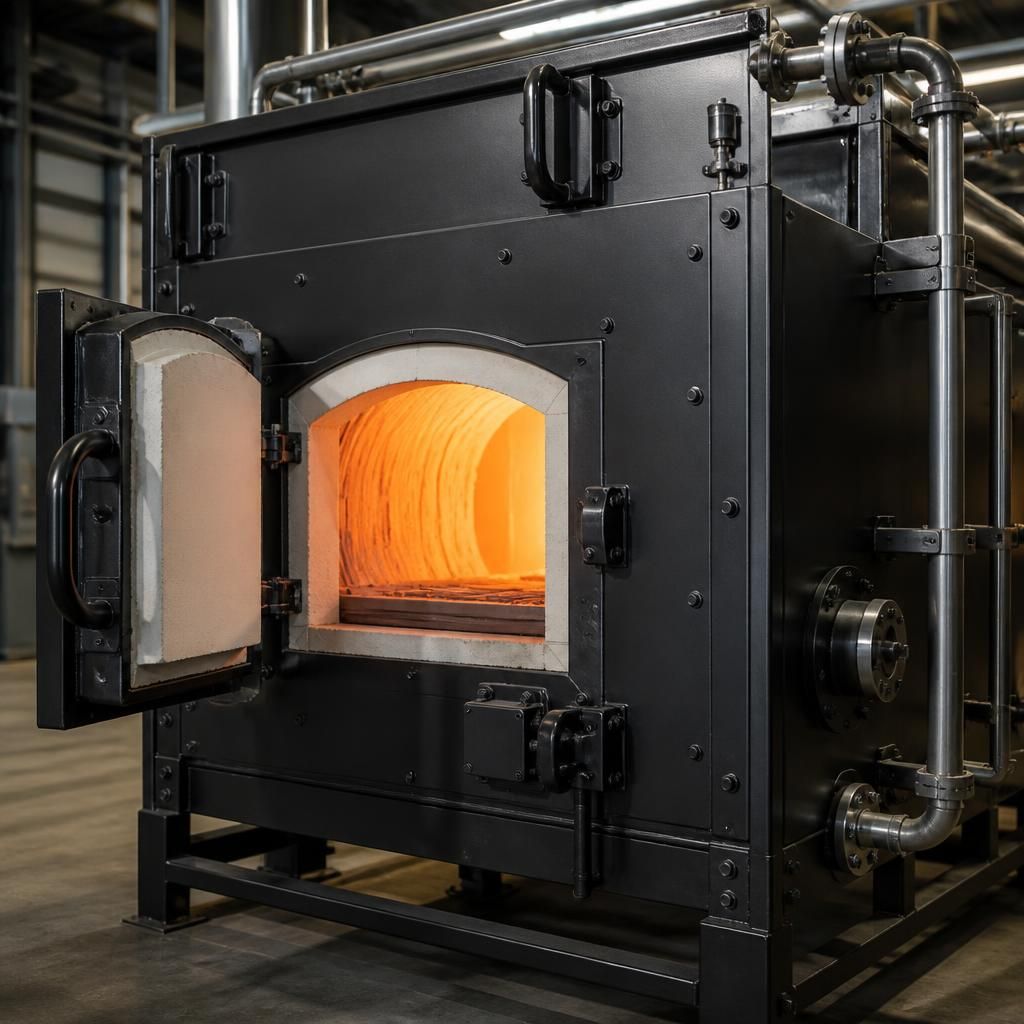
On many heated assemblies, the most suitable components are not the parts at the hottest point, but the cooler structural sections around them. Frames, outer panels, brackets, guards and access covers can benefit from heat-resistant epoxy where they are exposed to elevated temperatures, moisture, cleaning chemicals or production residues without direct flame contact.
This distinction matters because temperature can vary substantially across one assembly. A furnace door, for example, may require different treatment on its hot-facing surface, edge structure and external frame. Assessing each zone separately helps identify where a heat-resistant epoxy coating is appropriate and prevents the same specification being applied to components with materially different service conditions.
Discuss Your Component’s Heat-Resistant Coating Requirements
Discuss your component’s heat-resistant coating requirements with our team, providing details of the metal, operating conditions and areas requiring protection. We can help assess whether a suitable high heat epoxy specification is appropriate for the component.