

What are the specific heat resistance levels of your epoxy coatings, and how do they compare to other options on the market?
There is no single heat-resistance level for all epoxy coatings: the maximum continuous and intermittent service temperatures depend on the formulation, film thickness, substrate and exposure conditions, so the applicable technical data sheet should be checked. In general, epoxy provides moderate heat resistance, while specialist silicone or ceramic-based coatings are usually selected for higher-temperature service; polyester and hybrid powders may offer different balances of heat, weather and chemical resistance.
Epoxy coatings are generally suitable for moderate-temperature service, but their exact heat-resistance level must be taken from the technical data sheet for the specified product. The relevant information is usually given as a continuous service temperature and, where tested, a higher intermittent or peak temperature. These figures should not be treated as interchangeable: a coating may tolerate short exposure to a temperature that would cause deterioration if maintained continuously.
Heat resistance is also affected by how the component is used. A dry, stationary part may perform differently from one exposed to heat while under load, vibration, moisture, chemicals or repeated heating and cooling. The metal substrate, coating build, cure schedule, edge coverage and surface preparation can all influence adhesion and durability. For this reason, a quoted temperature limit describes a tested coating system rather than an absolute limit for every application.
When epoxy is heated beyond its intended range, the first changes may be softening, reduced hardness or loss of chemical resistance rather than immediate visible failure. Continued or repeated exposure can lead to discoloration, chalking, blistering, cracking or loss of adhesion. Thermal cycling is particularly important because the coating and metal expand and contract at different rates. A component that repeatedly moves between ambient and elevated temperatures therefore needs assessment based on the full cycle, not simply its highest recorded temperature.
Comparison with other coating types should focus on the complete performance requirement:
- Polyester powders: often provide a different balance of heat performance, exterior durability and colour retention. They may be more appropriate where weathering is as important as temperature exposure.
- Epoxy-polyester hybrids: can provide a compromise between epoxy characteristics and polyester properties, although their temperature capability remains product-specific.
- Silicone-based coatings: are commonly considered where service temperatures exceed the practical range of conventional epoxy. Their suitability still depends on the substrate, required film properties and exposure conditions.
- Ceramic-based systems: may be selected for particularly demanding high-temperature applications, especially where thermal stability is the primary requirement. They are not automatically the best choice where impact resistance, flexibility or chemical protection is equally important.
- Nylon coatings: are valued for wear, impact and chemical resistance in suitable applications, but should not be assumed to offer the same high-temperature capability as a specialist heat-resistant system.
The most useful comparison is therefore not a single maximum temperature. Review the continuous rating, intermittent rating, test duration, heating and cooling conditions, film thickness, gloss or colour change, adhesion results and any stated chemical limitations. It is also important to establish whether the published figure relates to dry heat, because hot water, steam, oils and aggressive chemicals can reduce performance at the same nominal temperature.
For a metal component, the specification should record the normal operating temperature, the highest occasional temperature, exposure duration, number of thermal cycles and any simultaneous chemical or mechanical stresses. If the coating is being applied to a fabricated or batch-produced part, the selected system should also be checked against the actual preparation and curing process. A technically suitable resin can underperform if the steel or other metal is contaminated, the film is uneven or the cure is incomplete.
Where the operating conditions fall within epoxy’s tested range, epoxy can be a practical choice when corrosion protection, adhesion and chemical resistance are also required. Where temperatures approach or exceed that range, a specialist alternative should be assessed rather than treating a standard epoxy specification as heat-resistant by default. A coating specialist can use the component’s service conditions and the manufacturer’s technical data to identify whether an epoxy system is suitable or whether another coating family is more appropriate.
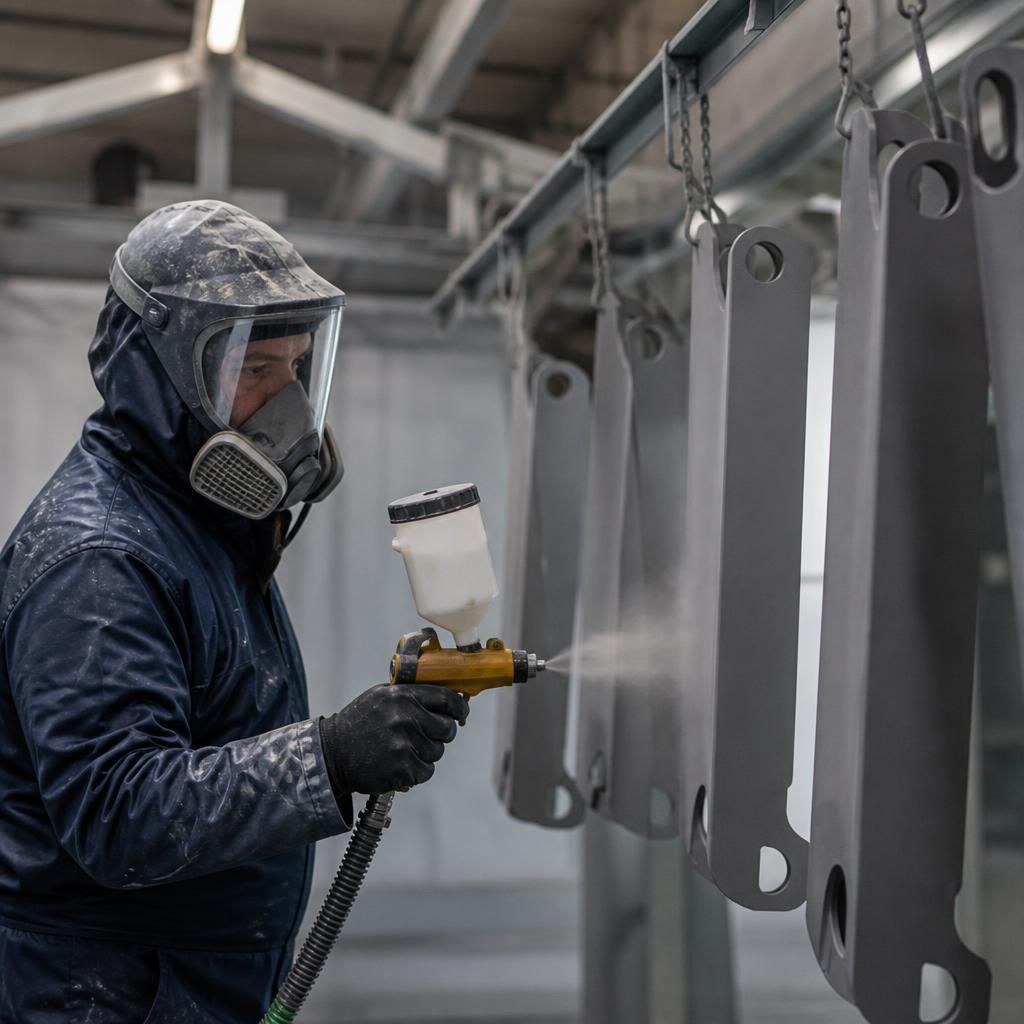
A coating’s glass transition temperature (Tg) should not be confused with its maximum service temperature. Tg is the point at which the cured epoxy begins to change from a hard, glass-like state towards a softer, more flexible state. It can help indicate how the film may behave as temperature rises, but it is not, by itself, a guarantee of continuous operating performance or coating failure.
When comparing epoxy systems, review the manufacturer’s stated service limits alongside any Tg data and consider the properties that matter for the component, such as hardness, flexibility, adhesion and chemical resistance at the working temperature. A system with a higher Tg is not automatically the best choice if the part also needs to withstand impact, movement or contact with other materials. The coating should therefore be selected against the actual combination of temperature and service conditions rather than a single headline rating.
Discuss Your Epoxy Coating Heat-Resistance Requirements
Discuss your component’s operating conditions and epoxy coating requirements with our team to identify a suitable specification. We can review the relevant technical details for your metal parts and advise whether epoxy is appropriate for the intended application.