

What are the application procedures for high heat and heat-resistant epoxy coatings?
High heat and heat-resistant epoxy coatings are applied through a controlled process of metal preparation, suitable coating application and specified curing. The component is cleaned and profiled to remove contaminants and promote adhesion, coated to achieve uniform coverage, then cured at the required temperature and time for the product and substrate.
Application of a high heat or heat-resistant epoxy coating is a controlled sequence in which the coating system, metal substrate, film thickness and cure schedule are matched to the component’s service conditions. The procedure normally includes specification review, detailed preparation, controlled powder application, measured curing and inspection before the finished part is released for use.
- Confirm the coating specification. Before work begins, the required operating temperature, likely temperature cycling, chemical exposure, expected film thickness, appearance and performance requirements should be established. The product’s technical information determines whether the coating is suitable for continuous or intermittent heat, the permitted substrate, the application method and the curing requirements. A coating intended for high temperature service should not be selected solely because it is described as heat resistant; the actual conditions of use must be compatible with the system.
- Assess the component and remove unsuitable material. Weld spatter, sharp projections, burrs, loose scale, rust, old coatings and fabrication residues can interfere with coverage and adhesion. These defects should be removed or corrected before coating. Drainage and vent holes may also be needed on hollow or enclosed fabrications, particularly where trapped air or moisture could affect heating or cause defects during curing. The component should be dry and free from oil, grease, salts, silicones and other contaminants.
- Prepare the metal surface. Degreasing removes soluble contamination, while abrasive cleaning creates a suitable surface profile for mechanical adhesion. The preparation standard and abrasive should be selected according to the substrate and the coating manufacturer’s instructions. After preparation, the surface should be protected from recontamination and checked for embedded debris, flash rust or remaining residues. Aluminium, galvanised steel and previously coated metal may require a different preparation approach from mild steel, so the substrate should be identified before processing.
- Mask areas that must remain uncoated. Threads, machined faces, electrical contact points, earth points, bearing seats and close-tolerance interfaces may need masking or temporary plugs. Masking must withstand the process temperature and must not leave adhesive or other contamination on the prepared metal. The masking plan should also account for powder build-up at edges and inside recesses.
- Apply the coating under controlled conditions. For powder application, the part is normally earthed and the powder is deposited using an electrostatic spray system or another method approved for the coating. Gun settings, powder flow, atomising air, part position and operator technique are adjusted to achieve consistent deposition. Recesses, corners, internal faces and Faraday areas require particular attention because electrostatic powder can be drawn towards exposed edges rather than difficult-to-reach areas. Where the component design permits, rotating or repositioning it can improve access and reduce uneven build.
- Control film thickness. The target dry film thickness comes from the coating specification. Excessive build can affect appearance, edge coverage, flexibility and heat transfer, while insufficient build may reduce protection and service performance. Thickness should be checked on representative areas after curing using a suitable calibrated gauge, with additional checks on edges, corners, flat faces and recessed sections. Complex parts may need a revised application sequence rather than simply applying more powder.
- Cure according to the measured part temperature. The oven must be capable of bringing the metal itself to the required curing temperature and holding it there for the specified time. Oven air temperature alone does not confirm that a heavy or thermally insulated component has cured correctly. The schedule should therefore take account of the component’s mass, geometry, loading arrangement and any variation between different sections. Under-curing can leave the coating with inadequate chemical and mechanical properties, whereas excessive heat exposure may affect the finish or the substrate.
- Allow controlled cooling and remove masking. Once the specified cure has been completed, the component should be handled in a way that avoids marking, contamination or distortion. Cooling requirements depend on the part, coating system and downstream process. Masking is removed carefully so that edges are not lifted and threaded or machined areas are not damaged. Parts should not be assembled or exposed to service conditions until they have cooled sufficiently for the intended handling and use.
- Inspect and document the finished coating. Inspection commonly covers visual uniformity, colour and gloss where specified, coverage of difficult areas, visible defects and cured film thickness. Adhesion or cure checks may be carried out where the specification requires them, using a method appropriate to the coating and substrate. Any blistering, pinholing, cratering, bare areas, runs, contamination or excessive build should be assessed before acceptance. Recording the preparation method, coating identification, application conditions, film thickness and cure information provides useful traceability for industrial components and future maintenance.
For parts exposed to extreme or fluctuating temperatures, application quality is only one part of the result. The substrate, joint design, weld quality, coating thickness, cure and service environment all influence performance. Components with heavy sections, enclosed cavities, complex profiles or mixed materials may require an agreed process trial or sample inspection before full batch production, particularly where the coating must remain consistent across both accessible and recessed surfaces.
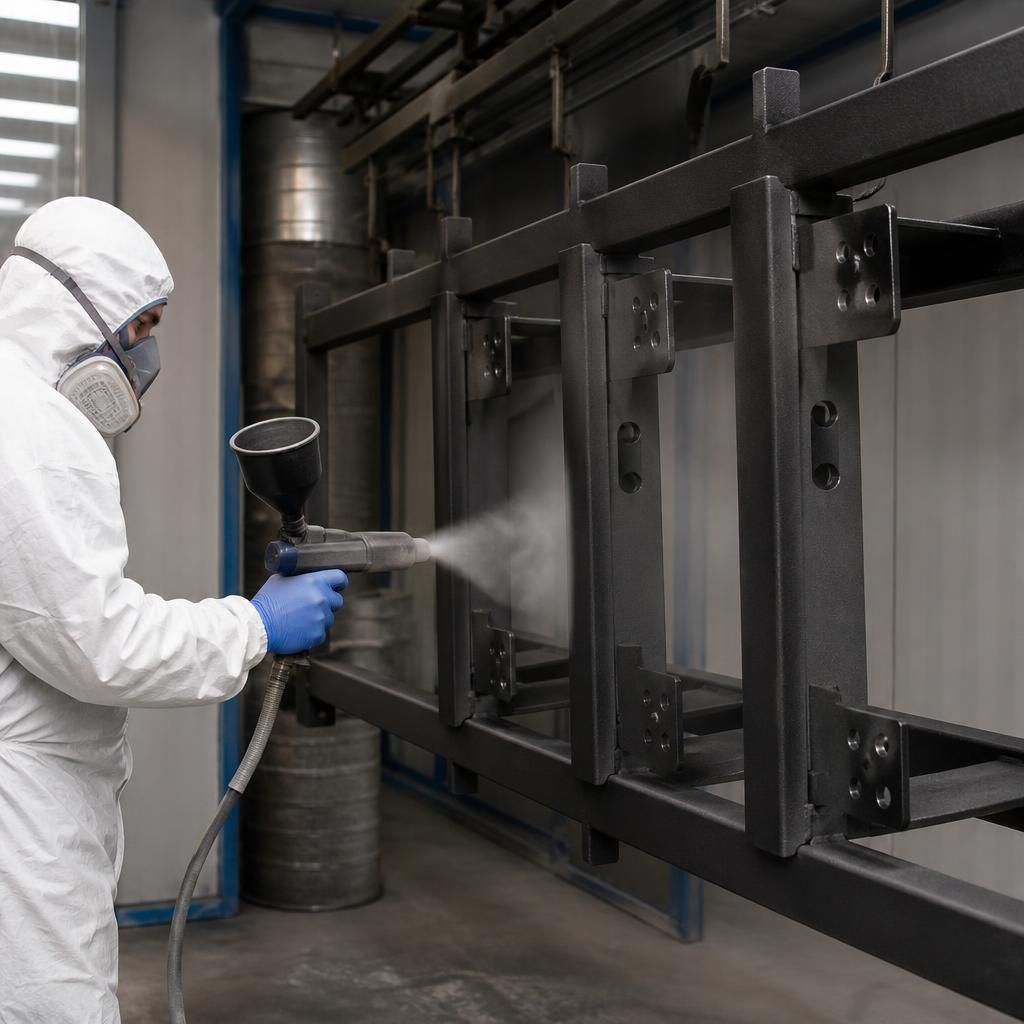
For fabricated assemblies, the application procedure should be planned around access to every surface that needs protection. Components that are already bolted, hinged or fitted together can create shadowed interfaces where powder cannot be deposited evenly, so coating suitable parts separately is often preferable to coating the completed assembly.
- Identify mating faces, hinge points, sliding surfaces and electrical contact areas that must remain free from coating.
- Confirm whether components can be coated individually and assembled afterwards without damaging the cured finish.
- Use suitable temporary fixtures to support parts without blocking spray access or leaving uncoated contact marks.
- Check that assembly tolerances allow for the specified coating build on both mating components.
This approach is particularly relevant to brackets, frames, guards and fabricated mechanisms with overlapping sections. The coating plan should be agreed before processing so that required protection is not compromised by inaccessible areas or by removing too much coating during final assembly.
Discuss Your High Heat Epoxy Coating Requirements
Discuss your high heat epoxy coating requirements with powder-coatings.co.uk, providing the component material, operating conditions, drawings and any access or masking constraints. This information can be reviewed to establish a suitable preparation, application and curing procedure for your parts.