

What surfaces or metals are best suited for epoxy polyester hybrid coatings to ensure maximum effectiveness?
Epoxy polyester hybrid coatings are best suited to properly prepared ferrous metal surfaces such as mild steel and galvanised steel, as well as aluminium where the substrate has been correctly pre-treated. They are particularly effective on indoor metal components and fabricated parts requiring a smooth, durable finish, but the coating specification should reflect the substrate and its exposure to moisture, chemicals, UV light and mechanical wear.
The most suitable surfaces for epoxy polyester hybrid powder coatings are clean, electrically conductive metal components used mainly indoors, where strong adhesion, surface coverage and resistance to everyday wear are more important than prolonged exposure to sunlight. The coating can perform well on several metal substrates, but the preparation method must be matched to the metal and the service conditions.
Mild and carbon steel are generally the most straightforward substrates. They are widely used for fabricated frames, brackets, cabinets, shelving, machine parts, furniture components and general engineering work. Their consistent conductivity allows the powder to be applied evenly, while suitable cleaning and pre-treatment help the coating bond to the surface and reduce the risk of corrosion developing beneath damaged areas.
Fabricated steel items are particularly well suited when they have been designed with coating in mind. Smooth faces, accessible recesses, rounded transitions and properly finished welds allow better powder coverage than narrow gaps, sharp edges or enclosed areas. Burrs, weld spatter, scale and grinding residue can create weak points, so the physical condition of the component is as important as the metal itself.
Galvanised and zinc-coated steel can also be suitable, especially for indoor components that need the underlying steel’s corrosion protection together with a coloured or decorative finish. These surfaces require careful cleaning and an appropriate pre-treatment because the zinc layer can be relatively smooth, chemically active or contaminated with storage residues. Excessive surface roughness or poorly prepared zinc can affect adhesion and may contribute to blistering or flaking.
The condition of galvanising should be assessed before coating. White corrosion products, oils, passivation residues and loose zinc deposits need to be removed without unnecessarily damaging the protective layer. Where the component has been freshly galvanised or has unusual surface chemistry, the preparation system should be confirmed before production coating begins.
Aluminium is another viable substrate for hybrid powder coating, particularly for indoor housings, fabricated sections, panels and light engineering components. Aluminium forms an oxide layer quickly, and that layer can interfere with adhesion if it is not properly treated. Degreasing, controlled abrasion or an aluminium-compatible chemical pre-treatment may therefore be required. Care is also needed with thin sections, as aggressive preparation or excessive curing heat can affect the component.
Stainless steel and other specialist alloys may be coated where there is a clear functional or visual reason to do so, but they are not automatically equivalent to mild steel. Their passive surface films, alloy composition and low-surface-energy contamination can make adhesion more demanding. A suitable preparation trial is advisable, particularly for components exposed to handling, cleaning agents or repeated mechanical contact.
For the best result, assess the following characteristics before selecting the coating system:
- Surface cleanliness: oil, grease, silicone, dirt, marking fluids, rust and manufacturing residues can prevent uniform adhesion.
- Surface profile: a controlled, clean profile can improve mechanical bonding, while excessive blasting or deep scratches may remain visible through the finish.
- Component design: sharp edges, deep recesses, overlapping joints and narrow cavities can produce thin coverage or trapped contamination.
- Electrical conductivity: powder application relies on the component accepting an electrostatic charge. Non-conductive areas, heavy oxide layers and isolated sections can interfere with transfer efficiency.
- Heat tolerance: the component must withstand the specified curing cycle without distortion, loss of temper, damage to assembled parts or changes to dimensional accuracy.
- Exposure conditions: indoor dry environments are usually more appropriate than locations subject to sustained sunlight, severe weathering, immersion or aggressive chemicals.
Epoxy polyester hybrids are often selected for indoor metalwork because they combine the surface hardness and chemical resistance associated with epoxy chemistry with the appearance and processing characteristics contributed by polyester. Typical applications include electrical enclosures, office and commercial equipment, storage systems, interior construction components, machine guards and general fabricated parts. They are also useful where a smooth, consistent finish is required across batches of similarly manufactured components.
They are less suitable where the coating will receive prolonged ultraviolet exposure or continuous external weathering. Epoxy content can lead to chalking or colour change when exposed to sunlight, even though the film may continue to provide some protection. External architectural components, exposed plant, coastal installations and parts subject to persistent moisture may require a different powder formulation or a different coating system altogether.
The substrate alone does not determine effectiveness. Two components made from the same metal can perform differently if one carries cutting fluid, has poorly finished welds, contains trapped moisture or has been stored in conditions that promote corrosion. A representative sample or test panel can help confirm adhesion, appearance, curing behaviour and compatibility with the proposed pre-treatment before a larger batch is processed.
In practical terms, the strongest candidates are well-designed, properly cleaned and pre-treated steel, zinc-coated steel or aluminium components intended for indoor use. Where the metal is unusual, already coated, heavily contaminated or destined for demanding exposure, the coating specification should be based on the actual substrate and operating environment rather than on the metal name alone.
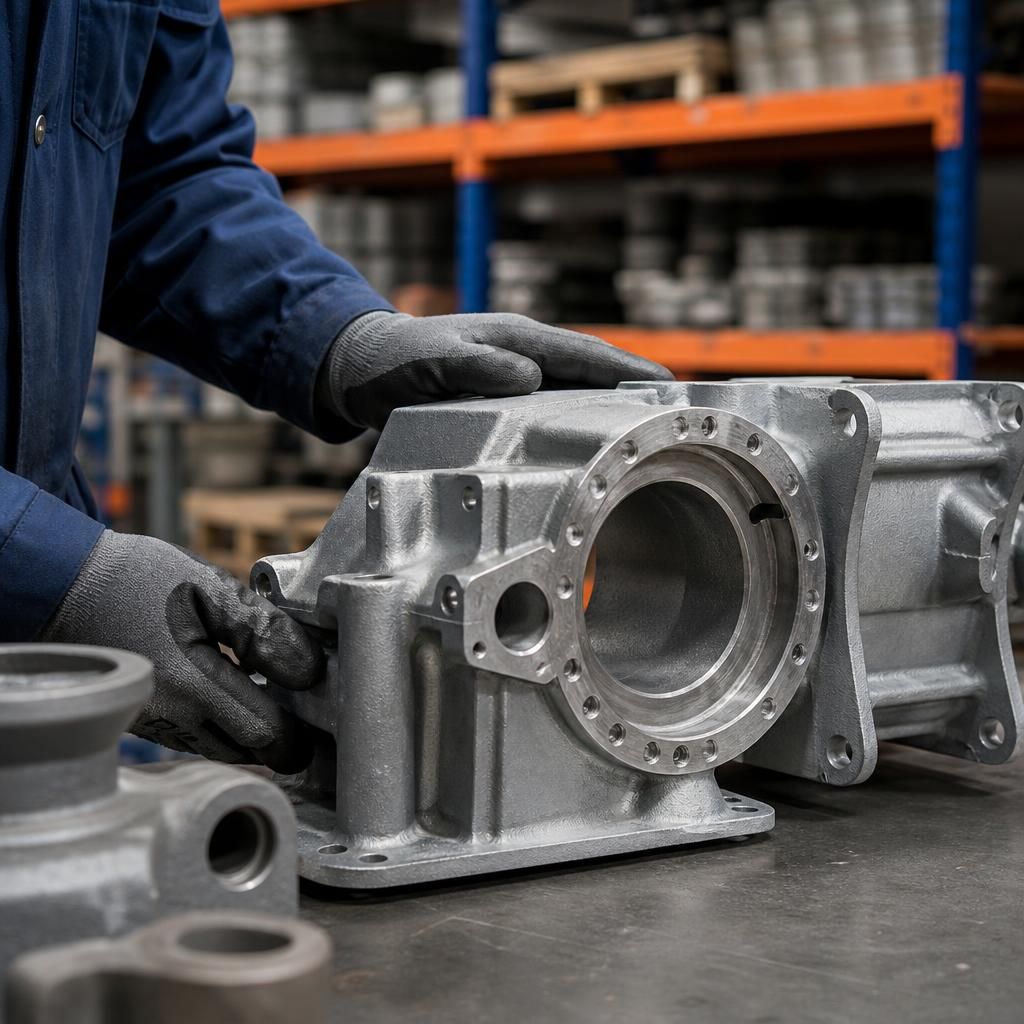
Cast metals can be coated with epoxy polyester hybrid powder, but their porosity makes them more demanding than rolled or fabricated sections. Cast iron and cast aluminium may retain moisture, machining fluids or air within surface pores, which can be released during curing and cause pinholes, bubbling or local loss of finish.
Before coating, cast components should be assessed for porosity and thoroughly cleaned. In some cases, controlled preheating or an outgassing stage is appropriate, followed by inspection before powder application. A trial component can help establish whether the casting, preparation method and curing cycle are compatible. This makes castings suitable candidates where their surface condition is understood, rather than automatically treating them like dense sheet or structural steel.
Discuss the Right Metal and Surface for Your Hybrid Coating
Discuss your component’s metal, intended use and required finish with the powder-coating team before specifying an epoxy polyester hybrid system. Providing a drawing, sample or representative part can help establish whether the substrate and coating specification are compatible.