

What industries benefit most from using epoxy polyester hybrid powder coatings?
Epoxy polyester hybrid powder coatings are particularly suited to manufacturing, metal fabrication, construction and automotive businesses that need durable, attractive finishes for components used in sheltered or indoor environments. They provide a practical balance of corrosion resistance, surface hardness, appearance and resistance to chemicals, making them useful for a wide range of production and structural metalwork.
The industries that benefit most from epoxy polyester hybrid powder coatings are those manufacturing or specifying metal components for controlled indoor or sheltered use, where a balance of finish quality, surface hardness, chemical resistance and corrosion protection is more important than maximum exterior weathering performance. The technology is particularly relevant to component manufacturers, fabricators, construction suppliers and automotive businesses with repeatable metal parts or assemblies.
Within manufacturing, hybrid coatings are commonly considered for:
- Electrical and control equipment: enclosures, cabinets, instrument housings and mounting panels can benefit from a consistent finish that resists routine handling, light abrasion and contact with common contaminants.
- Mechanical equipment and machinery: frames, guards, brackets, covers and fabricated machine parts may require protection during assembly, transport and service. A hybrid coating can provide a practical finish where the component is not exposed to prolonged outdoor weathering.
- Heating, ventilation and building-services equipment: grilles, supports, casings and associated metalwork often need an even decorative finish alongside resistance to handling and general indoor environmental conditions.
- Commercial furniture and storage systems: shelving, cabinets, metal frames, racking components and display equipment are frequently moved or handled, making surface hardness and appearance important considerations.
- Automotive components: brackets, housings, interior metal parts and workshop or production equipment can be suitable where the coating specification matches the part’s exposure, operating temperature and required appearance.
Construction-related manufacturers can also use hybrid coatings for internal steelwork, metal fixtures, panels, frames and fabricated accessories. The main benefit is the ability to specify a uniform finish across batches of related components, helping different parts of an installation appear consistent. The coating should be selected according to the building’s environment: internal plant areas, commercial interiors and sheltered applications are more typical uses than exposed façades or components subject to continuous ultraviolet radiation.
Metal fabricators and original equipment manufacturers often gain the greatest practical benefit when they produce repeat batches. Powder application is suited to defined coating specifications, repeatable colour requirements and components that can be prepared, coated and cured as a production process. This makes the coating relevant to contract fabrication as well as businesses producing their own standardised equipment.
Industry is only part of the decision. The suitability of an epoxy polyester hybrid also depends on:
- Exposure: assess humidity, condensation, chemicals, cleaning agents, abrasion and ultraviolet light rather than choosing a coating solely by sector.
- Part geometry: edges, recesses, welds, threaded areas and assembled components need appropriate preparation and masking.
- Service temperature: the expected operating and curing conditions must be compatible with the specified powder system.
- Appearance: colour, gloss, texture and batch consistency may be important for visible equipment or customer-facing products.
- Substrate and preparation: steel, galvanised metal and aluminium may require different cleaning, preparation and pretreatment arrangements.
Epoxy polyester hybrids are not automatically the best option for every industrial application. Parts exposed continuously to sunlight, severe exterior weathering, immersion or unusually aggressive chemicals may require another coating system or an additional specification review. Conversely, using a more specialised coating than necessary can add complexity without improving the part’s service performance.
For businesses assessing the process, the most useful approach is to match the hybrid formulation to the component’s real operating environment, not simply to its industry classification. Drawings, material details, expected handling, exposure conditions, finish requirements and batch quantities can then be used to determine whether an epoxy polyester hybrid is appropriate for the application.
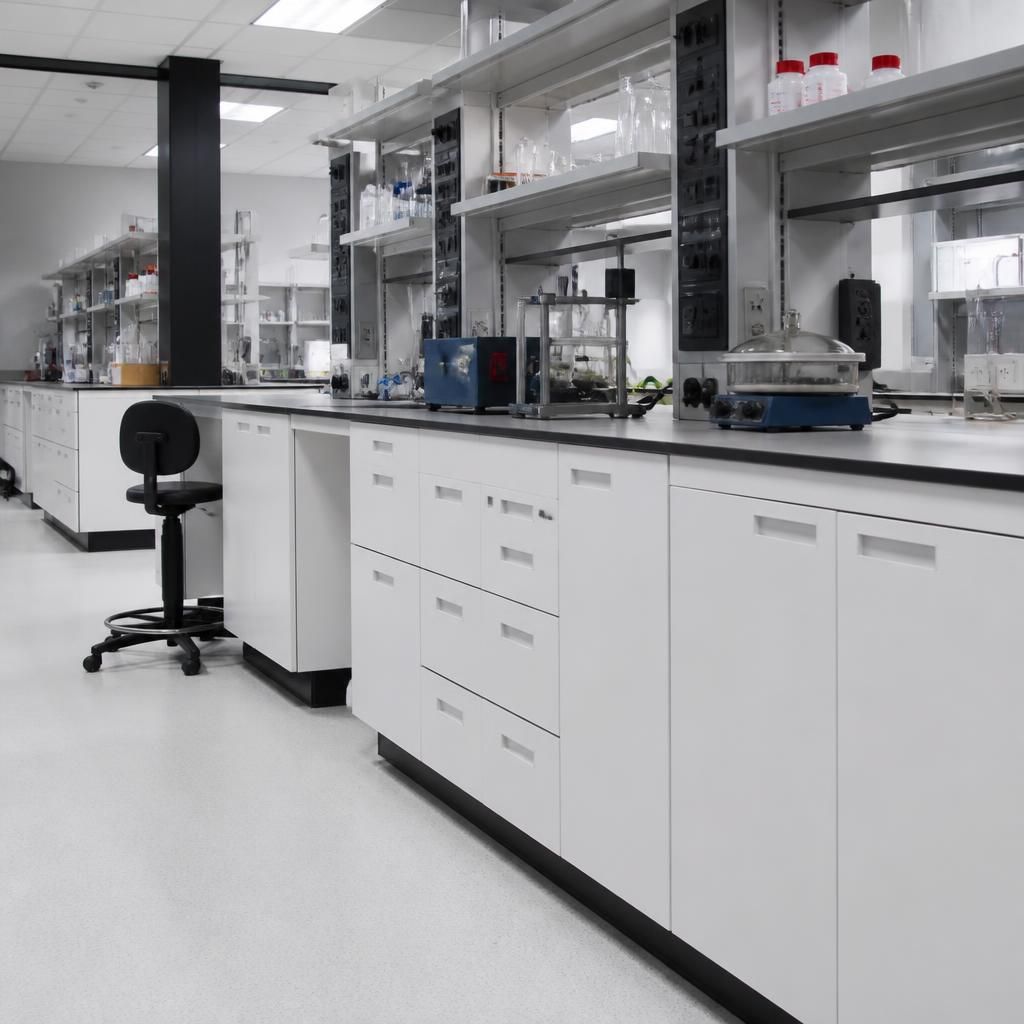
Industries producing visible metalwork for interior environments can also benefit from epoxy polyester hybrids, particularly where appearance must remain consistent across equipment supplied to different sites. Retail fixture manufacturers, office-fit-out suppliers and producers of laboratory or technical furniture may consider the coating for panels, frames and enclosed metal assemblies that are handled during installation but are not continuously exposed to outdoor weathering.
For these applications, the coating choice should be incorporated into the product specification rather than treated as a finishing decision at the end of manufacture. The required colour, gloss level, texture, cleaning regime and contact with surrounding materials should be agreed alongside the component design. This helps ensure that the selected hybrid system suits both the industry’s working environment and the finished product’s presentation requirements.