

What are the specific application methods for epoxy polyester hybrid coatings on metal components?
Epoxy polyester hybrid coatings are typically applied to prepared metal components using electrostatic spray equipment, which charges the powder so it adheres evenly before curing in an oven. For suitable smaller or geometrically appropriate parts, fluidised-bed application may also be used, followed by controlled heating to melt and cross-link the coating into a continuous finish.
The specific application method for an epoxy polyester hybrid coating is selected according to the component’s size, shape, surface area, required film build and production volume. In practice, the process involves controlled powder deposition, careful handling of difficult features, and a defined curing cycle rather than simply applying powder uniformly to every part.
Manual spray application is suitable for low-volume work, complex components and batches containing several different shapes. The operator can vary gun distance, angle and powder output as the part changes, helping to reach recesses, internal faces and edges. Several light passes are generally preferable to one heavy pass because excessive powder can cause runs, uneven texture or problems during curing.
Automatic spray application is used where components are consistent in size and geometry or where a repeatable batch process is required. Reciprocating guns or fixed gun arrangements can provide consistent coverage across a run of parts, while manual spraying can be used for areas that automatic equipment cannot reach. The combination of automatic and manual application is particularly useful for fabricated components with both broad panels and awkward brackets, corners or enclosed sections.
Electrostatic spray systems may use either corona charging or triboelectric charging. Corona systems charge the powder as it leaves the gun and are widely adaptable. Tribo systems charge particles through friction within the equipment and can be useful where a different deposition pattern is needed. The choice depends on the powder formulation, component geometry, required finish and the coater’s equipment.
Racking and grounding are essential parts of the application method. Components are hung or supported so that the coating equipment can reach the required faces without excessive contact between parts. The metal must have a reliable electrical path so that charged powder is attracted to the component. Contact points should be kept as small as practical, while still supporting the component securely. Poor contact can lead to weak powder attraction, uneven coverage and increased overspray.
Spray technique for difficult geometries needs particular care. Recesses, internal corners and narrow channels can create a Faraday cage effect, in which the electric field makes it difficult for powder to enter the area. An operator may reduce the electrostatic effect, change the gun angle, move closer to the feature and use controlled powder output. Edges and external corners may also attract more powder than recessed faces, so the application sequence is adjusted to prevent excessive build-up.
Masking and plugging are used where coating is not wanted. High-temperature masking materials can protect threaded holes, machined faces, bearing seats, electrical contact areas and identification surfaces. Plugs, caps and purpose-made fixtures are selected to withstand the curing temperature and to avoid damaging the coating when removed. Masking design should be agreed before coating because it affects racking, coverage and the amount of post-coating cleaning or machining required.
For components requiring a heavier protective build, the applicator must control the amount of powder deposited rather than assuming that additional powder will improve performance. Excessive thickness can affect appearance, adhesion and cure behaviour, while insufficient coverage may leave vulnerable areas at edges, welds or corners. The required coating specification should therefore identify acceptable film thickness and the areas that must remain free from coating.
Batch application requires consistent loading and repeatable settings. Parts are normally grouped by compatible material, geometry, colour and coating requirement. Similar components can be arranged together so that gun movement, powder output and curing conditions remain consistent. When parts differ significantly, separate application settings or separate batches may be necessary to avoid uneven results.
After deposition, the coated components are transferred carefully to the curing stage. The curing schedule must allow the metal itself to reach the specified temperature for the required time; the oven air temperature alone does not confirm that the coating has cured correctly. Component thickness, mass, material and loading arrangement can all affect heat-up time. Overloading an oven or placing large and small parts together without considering their heat-up characteristics can produce inconsistent curing.
Process checks commonly include visual examination for missed areas, contamination, pinholes, impact marks, excessive build and uneven texture. Depending on the specification, film thickness, adhesion and cure may also be checked using suitable inspection methods. Particular attention is given to masked areas, welds, edges, recesses and contact points because these are common locations for defects or incomplete coverage.
The most suitable method is therefore determined by the component and its production requirements:
- Manual application: flexible for varied, irregular or lower-volume components.
- Automatic application: repeatable for consistent parts and larger production runs.
- Combined automatic and manual application: useful where broad surfaces and intricate details occur on the same component.
- Specialist charging techniques: selected to improve deposition on particular geometries or with particular powder formulations.
- Careful masking and racking: used to preserve machined surfaces, holes, threads and electrical contact areas.
For industrial metal components, a sound application method is one that gives consistent coverage without compromising dimensional tolerances, functional surfaces or the curing requirements of the epoxy polyester hybrid formulation.
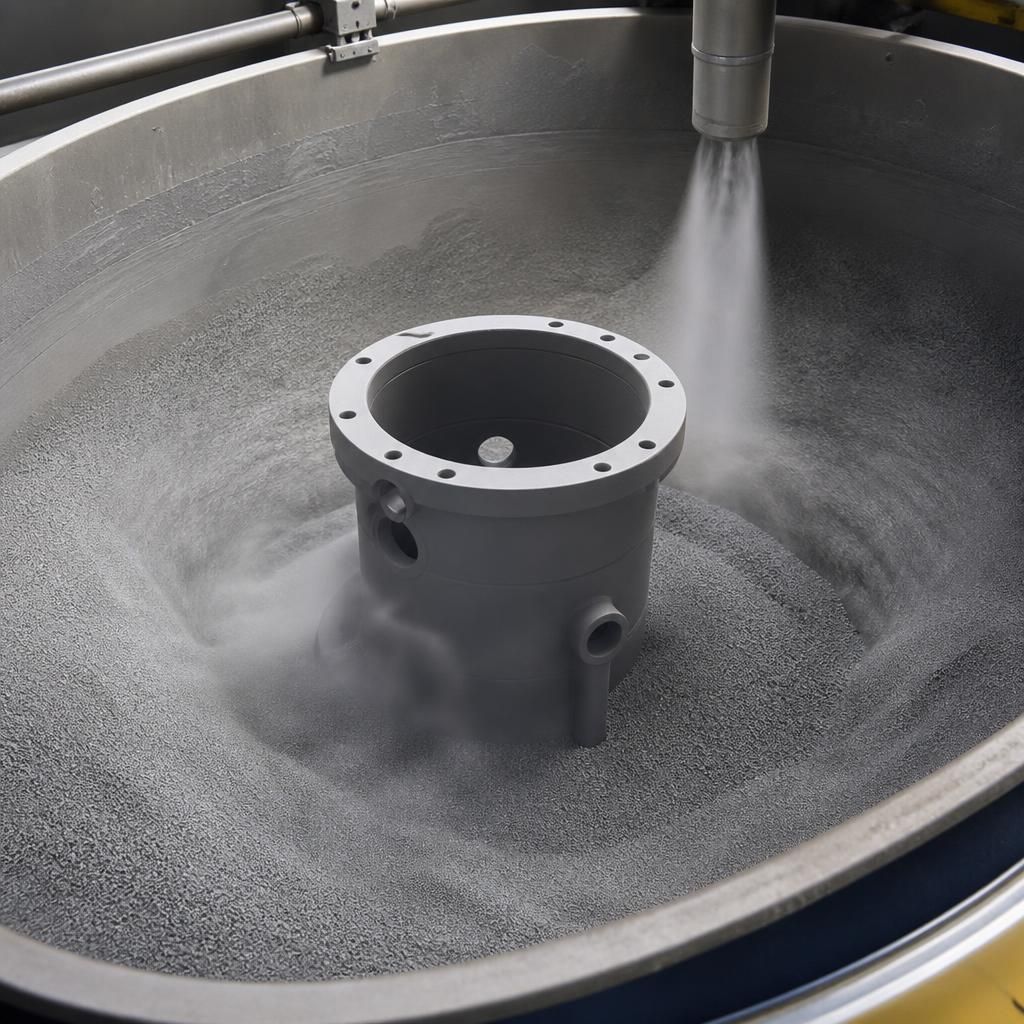
Fluidised-bed application is an alternative method for suitable epoxy polyester hybrid-coated components. The metal part is preheated and immersed in a bed of powder kept suspended by an air stream. Powder particles contact the hot surface, melt and form a continuous layer before the component undergoes the specified cure.
This method is most appropriate where a relatively substantial, even coating is required on compact components with straightforward geometry. It is less suitable for thin sections, intricate recesses, tight dimensional tolerances or areas that must remain precisely free from coating, because the molten powder can build around edges and openings. The component temperature, immersion time and powder condition therefore need to be controlled against the required film specification.