

What are the key environmental and mechanical factors that epoxy polyester hybrid coatings protect against?
Epoxy polyester hybrid coatings help protect metal components from environmental exposure such as moisture, humidity and corrosion, as well as contact with many chemicals. Mechanically, their cured film provides resistance to impact, abrasion, scratching and general wear, helping maintain the finish where parts are handled, assembled or exposed to friction.
Epoxy polyester hybrid powder coatings protect metal by forming a continuous, adherent film that limits exposure to damaging conditions and absorbs routine physical stresses. Their main protective role is against moisture ingress, chemical contact, temperature variation, handling damage and surface deterioration, although the level of protection depends on the coating specification, substrate preparation, film thickness and service environment.
Environmental factors
- Humidity and condensation: A properly cured coating acts as a barrier between the metal and humid air or intermittent condensation. This is particularly important where components move between different temperatures, as repeated condensation can attack exposed steel or aluminium.
- Salt and atmospheric contaminants: Salt deposits and industrial pollutants can make a metal surface more conductive and chemically aggressive. The coating reduces direct contact with the substrate, but damaged areas, uncoated edges and poor pretreatment can still become routes for underfilm corrosion.
- Chemical exposure: Hybrid coatings can resist contact with many commonly encountered oils, greases, cleaning agents and mild industrial chemicals. Resistance is not universal: concentration, temperature, contact time and whether the exposure is occasional or continuous all affect performance. Strong solvents, concentrated acids and alkalis may require a different coating system.
- Ultraviolet radiation: Epoxy polyester hybrids generally offer better light stability than straight epoxy coatings, but they are not automatically suitable for prolonged direct sunlight. Extended ultraviolet exposure can cause colour change, loss of gloss or surface chalking. For exposed external components, the specification should be checked against the expected level of sunlight and weathering.
- Temperature cycling: Repeated heating and cooling can make the metal and coating expand or contract at different rates. A soundly bonded film helps tolerate ordinary thermal movement, while unsuitable curing, excessive film thickness or sharp substrate defects can increase the risk of cracking or loss of adhesion.
- Water and contaminants at joints: Crevices, seams, threaded areas and overlapping parts can retain moisture or process residues. Powder coating improves the protected surface around these areas, but it cannot replace suitable component design, drainage or sealing where water can remain trapped.
Mechanical factors
- Flexing and vibration: Components that move, vibrate or experience repeated assembly loads need a coating with sufficient adhesion and flexibility. The hybrid formulation can accommodate limited movement, but severe bending or deformation of the underlying metal may fracture any cured coating.
- Indentation and localised loading: Contact with clamps, fasteners, tools or stacked parts creates concentrated pressure. A correctly selected and cured film helps resist marking, but sharp loads can still dent the coating or expose the substrate, especially at edges and corners.
- Friction and sliding contact: Coated surfaces can withstand routine rubbing during handling and service, but powder coating is not a substitute for a specialist bearing, low-friction or heavy-duty wear coating where continuous sliding is expected.
- Edge and corner damage: Edges receive less uniform powder coverage than broad flat faces and are common starting points for chipping or corrosion. Edge radiusing, suitable pretreatment and controlled application are therefore important to the protective result.
- Assembly and handling stresses: Drilling, cutting, pressing, bolting and forced fitting can damage a finished film. Components should be designed and handled so that coated areas are not used as bearing surfaces where the assembly process could gouge or crush them.
- Adhesion under service load: Mechanical protection depends on the coating remaining attached to the substrate. Oil, mill scale, rust, moisture or inadequate preparation can weaken the bond, allowing lifting or flaking when the part is struck or flexed.
These factors interact rather than occurring separately. For example, a small chip caused by assembly can allow moisture and contaminants to reach the metal, while thermal cycling or vibration may enlarge the damaged area. The most reliable specification therefore considers the substrate, part geometry, expected chemical and weathering exposure, operating temperature, loading pattern and cleaning regime together.
Epoxy polyester hybrid coatings are usually most appropriate where a component needs a balance of adhesion, barrier protection, finish quality and resistance to ordinary handling and service stresses. They should not be treated as universal protection against severe ultraviolet exposure, immersion, extreme temperatures, continuous abrasion or aggressive chemicals. The coating system and pretreatment should be selected around the actual operating conditions, with attention to curing and coverage as well as the powder formulation itself.
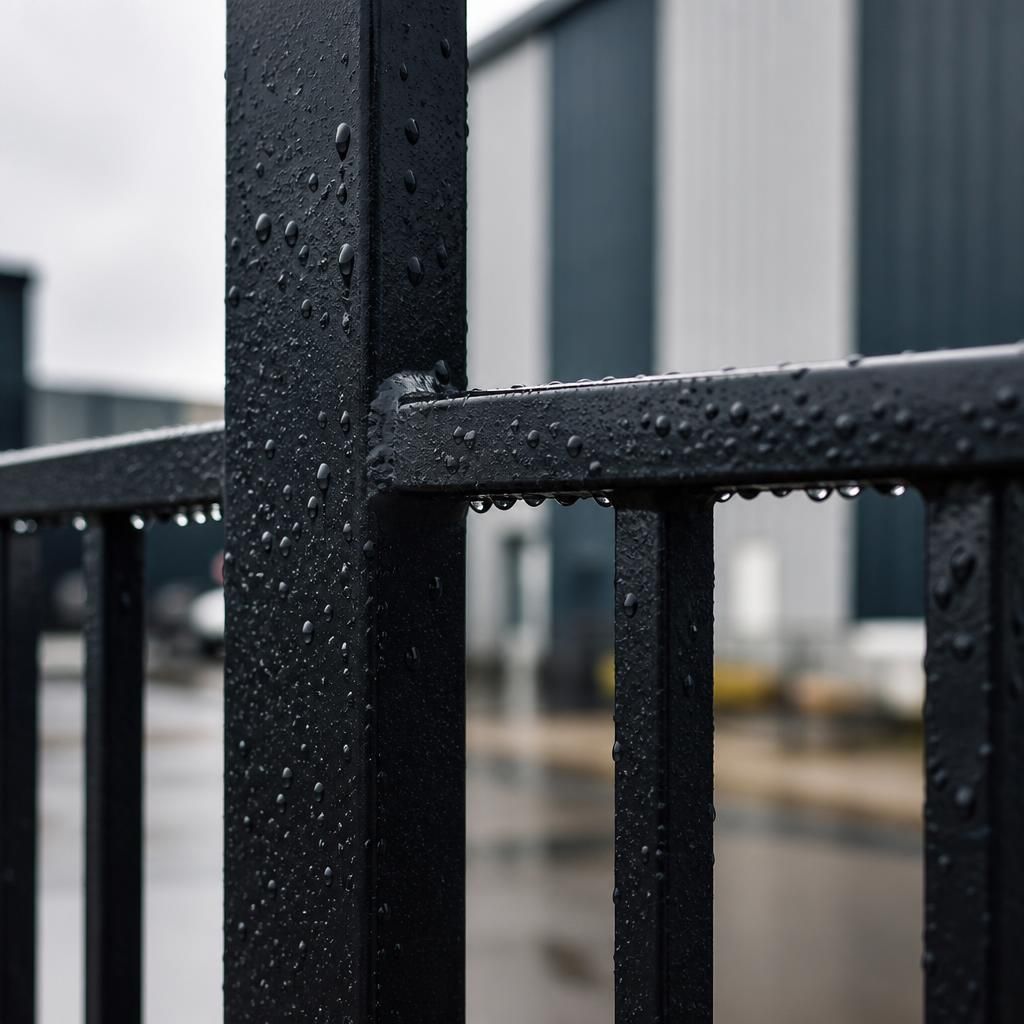
Protection depends not only on whether moisture reaches the coating, but on how long the metal remains wet beneath or around it. An intact epoxy polyester film slows the movement of water vapour and liquid water, reducing the time available for electrochemical corrosion to develop. Repeated wetting and drying can be more damaging than brief contact because retained moisture at interfaces, joints or coating defects may concentrate contaminants.
For this reason, the expected exposure should be described in terms of duration as well as substance: occasional splashing, persistent condensation, immersion and outdoor weathering place different demands on the coating system. This distinction helps determine whether a standard hybrid formulation is suitable or whether a more specialised protective system is needed.