

What are the recommended maintenance practices for epoxy powder coated surfaces?
Maintain epoxy powder coated surfaces by cleaning them with a mild detergent and soft cloth, removing contaminants promptly and avoiding abrasive tools or harsh chemicals that could damage the finish. Inspect regularly for chips, scratches, blistering or corrosion, and arrange suitable cleaning, touch-up or recoating work if defects expose the underlying metal.
Effective maintenance of epoxy powder coated surfaces combines controlled cleaning, careful handling, exposure management, routine condition checks and correctly specified repairs. The aim is to preserve the coating film, prevent moisture reaching the substrate and identify changes before they develop into widespread coating failure or corrosion.
Use a maintenance schedule based on service conditions. Components exposed indoors in a clean, dry environment generally require less frequent attention than those used outdoors or in areas affected by humidity, salt, process dust, oils or chemical vapours. The schedule should reflect the actual operating environment, the importance of the component and the consequences of coating failure. High-risk items may need condition checks as part of planned maintenance, while less exposed parts can be reviewed during normal equipment inspections.
- Record the component identity, location, coating specification and date of installation or recoating.
- Note areas exposed to water, condensation, impact, heat, chemicals or repeated handling.
- Record any change in appearance or condition, together with the action taken.
- Review the frequency of checks if a recurring defect is found in the same location.
Control water retention and condensation. Epoxy coatings provide a barrier, but prolonged wetting can place stress on edges, joints and any small discontinuity in the film. Components should be positioned so that water can drain rather than collect in horizontal recesses, folded sections, unsealed joints or around fixings. Where condensation is possible, ventilation and temperature control can reduce repeated wetting and drying cycles. Any design feature that traps moisture should be addressed rather than relying on the coating alone.
Prevent mechanical damage during use and handling. Coated parts should not be dragged across floors, workbenches or storage racks. Use suitable separators when components are stacked, and protect exposed edges during transport and installation. Contact points, lifting areas, bolted joints and locations subject to vibration deserve particular attention because friction and impact can gradually wear the film. Tools, clamps and temporary supports should be padded where they could mark the surface.
Fasteners should be installed without crushing or cutting into the coating. Excessive tightening, movement between parts and repeated removal can create ring-shaped damage around holes. Where a coated component is assembled against another metal surface, check that the joint does not retain moisture or create rubbing during service. Any sealant, gasket or protective pad used with the assembly should be confirmed as compatible with the coating and the operating environment.
Manage chemical exposure rather than treating all substances as equivalent. Resistance depends on the epoxy formulation, film condition, concentration, temperature, contact time and whether the substance is continuously present or only occasionally splashed. Maintain a record of process chemicals, cleaning agents and fluids that may contact the component. If the service environment changes, obtain confirmation that the existing coating remains suitable before introducing a new substance. A small trial on an isolated area or spare coated part can help identify softening, swelling, staining or loss of adhesion before wider use.
Spill controls should prevent chemicals from remaining in contact with the coating. Where a substance reaches the surface, follow the site’s approved decontamination procedure and the relevant safety data sheet. Do not assume that a product suitable for bare metal, glass or plastic is also suitable for epoxy powder coating.
Check more than the visible face. Condition checks should include edges, corners, weld areas, drilled holes, seams, joints, undersides and points concealed by brackets or fittings. Look for changes such as loss of gloss, colour change, powdering, softening, lifting at an edge or staining that does not clear through the normal cleaning process. These signs can indicate ultraviolet exposure, chemical attack, trapped moisture or a developing adhesion problem even when the main surface appears sound.
For critical assets, visual checks can be supported by coating-thickness measurements, adhesion assessment or other inspection methods appropriate to the component and specification. Testing should be carried out by a competent person using a method that does not create unnecessary damage. Keep results with the maintenance record so that gradual deterioration can be distinguished from an isolated mark.
Repair defects using a compatible system. A local repair should begin by identifying the cause of the damage and confirming that the surrounding coating is firmly bonded. Loose material and corrosion products must be removed, and the prepared area should be clean and suitably keyed for the specified repair material. The repair coating must be compatible with the original epoxy finish and appropriate for the expected exposure. Follow the product instructions for preparation, application, film build and curing; an unsuitable touch-up product can create a weak boundary or a visibly different finish.
Where damage is extensive, corrosion extends beneath the surrounding film, or the component is exposed to demanding conditions, isolated touch-up may not provide adequate protection. In those circumstances, assess whether the part should be stripped, prepared and recoated as a complete item. The repair decision should consider the remaining coating’s adhesion, the condition of edges and joints, and whether the original epoxy specification remains appropriate for the service environment.
Maintenance records should close the loop by documenting the defect, probable cause, preparation method, repair material and follow-up result. Repeated damage at the same point usually indicates a handling, drainage, assembly or chemical-exposure problem that needs correcting at source, rather than repeated touch-up alone.
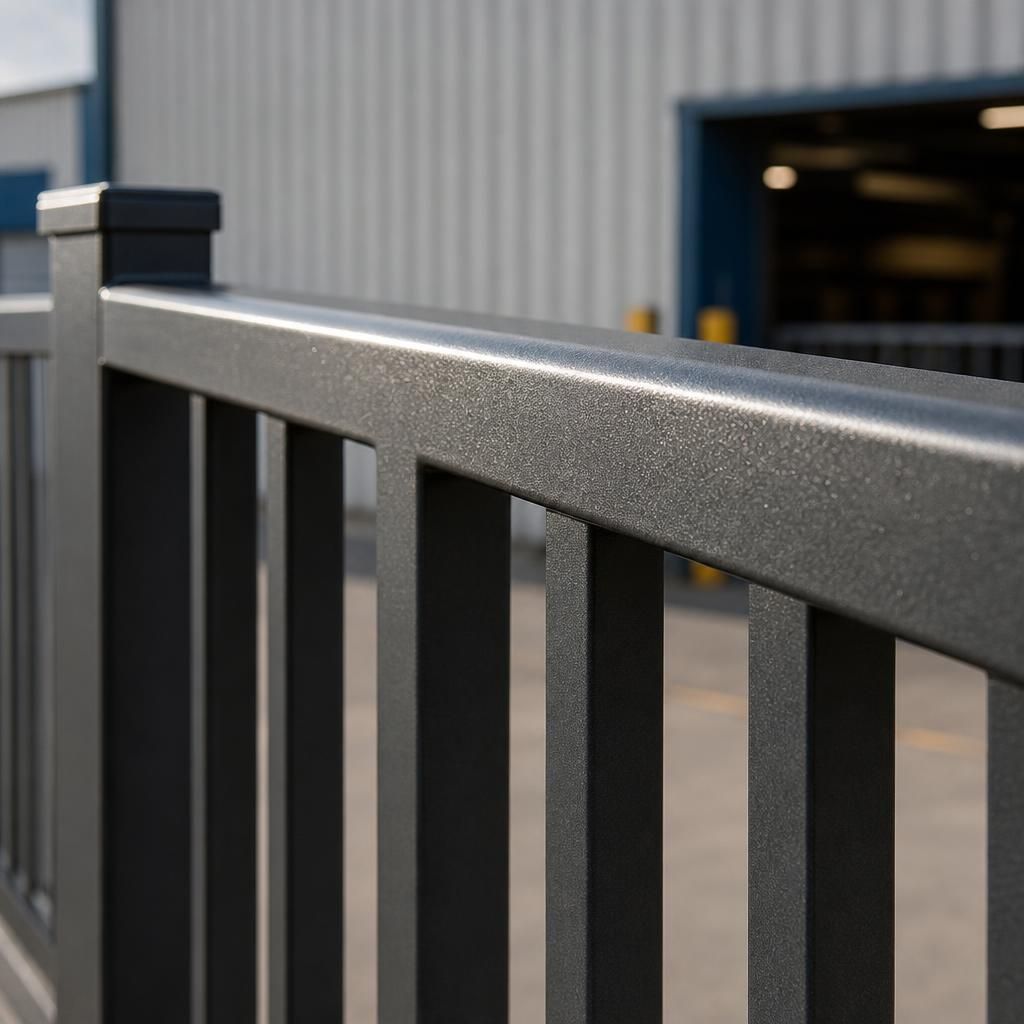
Ultraviolet exposure should be considered separately from ordinary surface dirt when maintaining epoxy powder coated components. Prolonged sunlight can cause gradual loss of gloss, colour fading or surface chalking, even where the coating remains attached to the metal. These changes should be recorded during inspections rather than treated as evidence that cleaning has failed.
Where an epoxy-coated item is used outdoors or near strong artificial UV sources, assess whether the existing coating specification remains suitable for its exposure. If appearance has deteriorated significantly, a compatible protective finish or a complete recoat may be more appropriate than repeated cleaning or local touch-up. Any revised coating system should be selected for the actual combination of UV, moisture, temperature and chemical exposure.