

How does epoxy powder coating improve rust resistance and longevity for steel components?
Epoxy powder coating improves rust resistance by forming a continuous, strongly bonded barrier that isolates steel from moisture, oxygen and corrosive contaminants. Once properly applied and cured, the tough protective film helps reduce corrosion-related deterioration and extends the service life of steel components in suitable industrial environments.
Epoxy powder coating improves the service life of steel primarily by controlling the conditions that allow corrosion to start and spread. Its performance depends not only on the epoxy resin, but also on steel preparation, coating coverage, film thickness, curing and the environment in which the component will be used.
Rust develops when steel is exposed to water and oxygen, particularly where salts, acids, alkaline substances or other contaminants are present. A correctly applied epoxy coating separates the steel substrate from these agents and reduces the opportunity for electrochemical corrosion. The coating also helps prevent contaminants from reaching small surface imperfections that could otherwise become localised rust sites.
Several features determine how effectively the coating protects steel:
- Surface preparation: Oil, grease, mill scale, existing corrosion, dust and soluble salts can prevent proper bonding. Cleaning and suitable mechanical or abrasive preparation provide a sound surface for the powder to adhere to.
- Complete coverage: Bare patches, pinholes and thin areas create weak points. Particular attention is needed around welds, corners, holes, cut edges and recessed sections, where powder can be more difficult to distribute evenly.
- Adhesion: A firmly bonded coating is less likely to lift when the component is handled or exposed to moisture. Poor adhesion can allow water to travel beneath the film, causing corrosion to spread out of sight.
- Correct curing: The powder must reach the specified curing conditions so that the resin forms its intended cross-linked structure. Insufficient or uneven curing can reduce hardness, adhesion and resistance to chemicals and moisture.
- Appropriate film build: The coating needs enough thickness to provide continuous protection, but excessive or uneven build can create defects, trapped gases or curing problems. The required specification should reflect the component design and exposure conditions.
Epoxy also contributes to longevity through its mechanical and chemical resistance. The cured film can help protect steel from abrasion, handling damage and contact with industrial substances. This is particularly relevant for fabricated parts, machinery components, structural items and other steelwork that may be exposed to repeated use or occasional impact.
Protection is not identical in every environment. Epoxy powder coating is well suited to many internal and controlled industrial applications, but prolonged direct exposure to ultraviolet light can cause conventional epoxy finishes to chalk, fade or lose their surface appearance. This does not necessarily mean that the steel immediately loses all corrosion protection, but it can indicate that a different coating system or a compatible protective topcoat should be considered for exposed external components.
Design and fabrication details also affect corrosion resistance. Sharp edges, tightly joined sections, crevices and areas that retain water are more difficult to coat and can remain vulnerable even when the main surfaces are well finished. Components should therefore be designed, where practical, to drain, dry and allow access for preparation and coating. Weld spatter and sharp burrs should be removed before treatment.
For a reliable result, the coating specification should identify the steel grade or condition, preparation standard, required coating system, target film build, curing requirements and intended service environment. It should also account for chemical exposure, moisture, temperature changes, abrasion and ultraviolet exposure rather than selecting epoxy solely for its appearance.
Inspection after coating should check for visible defects, missed areas, poor edge coverage, contamination, blistering and damage from transport or installation. Any damage that exposes steel should be repaired using a compatible system before moisture and contaminants reach the substrate. Routine cleaning and inspection can then identify early signs of breakdown and help prevent a small defect becoming a larger corrosion problem.
In summary, epoxy powder coating extends the useful life of steel when it is treated as a complete corrosion-protection system: the steel is prepared properly, the powder is applied continuously at a suitable thickness, the finish is fully cured and the selected system matches the service environment. These controls reduce the likelihood of rust initiation and slow deterioration where the coating remains intact.
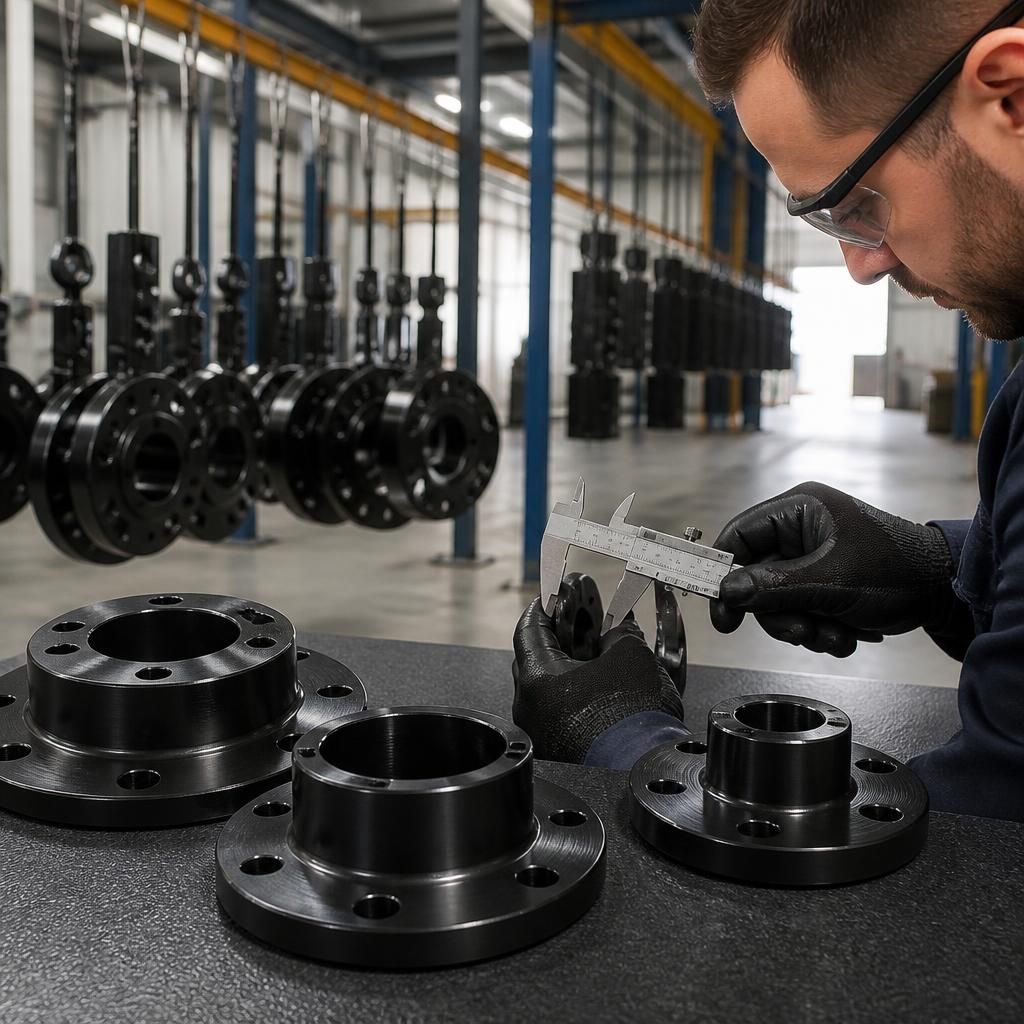
Epoxy powder coating improves longevity by helping steel retain its original section thickness and functional tolerances. Rust can create pitting, roughen mating surfaces and reduce the cross-section of load-bearing or fabricated components. By slowing this deterioration, an intact epoxy finish helps preserve the fit, strength and usable condition of steel parts for longer.
This is particularly important for components with threaded sections, close-fitting interfaces, mounting faces or defined dimensions. Corrosion in these areas can affect assembly, movement and load transfer before the damage is obvious across the wider surface. Selecting an epoxy system that matches the component’s service conditions therefore supports both corrosion control and continued mechanical performance.