

What are the main benefits of using epoxy powder coating for industrial applications?
Epoxy powder coating provides industrial metal components with a hard, well-adhered finish that offers durable protection and strong resistance to chemicals. It also produces a consistent, cost-effective surface finish, making it suitable where functional performance and reliable coverage are required.
For industrial applications, the main benefits of epoxy powder coating are its strong adhesion, functional electrical insulation, efficient dry application and ability to produce a controlled coating on suitably prepared metal components. These advantages make epoxy particularly useful for indoor equipment, enclosed assemblies and parts where performance matters more than long-term resistance to direct sunlight and weathering.
Strong adhesion to prepared metal
Epoxy powder bonds closely to a correctly prepared substrate. Surface preparation, usually including degreasing and abrasive blasting where appropriate, removes contaminants and creates a suitable profile for the coating. This reduces the risk of lifting, flaking and premature failure caused by poor adhesion. The result is a coating that remains closely attached during handling, assembly and normal service conditions.
Electrical insulation
Cured epoxy is a non-conductive material, so it can help isolate metal surfaces and reduce the risk of unintended electrical contact. This is valuable for enclosures, brackets, busbar supports, control equipment and other fabricated components where insulation is part of the design requirement. The required coating thickness, continuity and dielectric performance should be specified against the component’s operating conditions; powder coating should not be treated as a substitute for a complete electrical safety design.
Controlled coverage of complex components
Powder is applied as a dry, charged material and adheres to the grounded workpiece before curing. This allows a coating applicator to cover many profiles, apertures and formed sections without introducing liquid runs or solvent entrapment. However, recessed areas, sharp corners and Faraday cage effects still require careful gun settings, part positioning and operator control. Geometry therefore remains an important consideration when assessing the likely finish.
Efficient, low-waste application
Because the coating is supplied as a dry powder rather than a solvent-based liquid, the process does not require the evaporation of liquid carrier from the film. Overspray may also be collected in a suitable system, although recovery practices depend on the equipment, colour and specification. Powder application can therefore support efficient production and repeatable coverage, particularly for batches of similar components.
Useful mechanical performance
Once cured, epoxy forms a cohesive film that can withstand the handling associated with fabrication, assembly and installation when the coating has been correctly specified. It can help protect the appearance and surface condition of components exposed to abrasion, knocks or contact during their service life. Performance depends on film thickness, cure schedule, substrate preparation and the severity of the working environment, so these factors should be assessed together rather than relying on the resin type alone.
Clean, uniform appearance
Epoxy powders are available in different colours, gloss levels and textures. Correct application and curing can produce an even finish across a batch, helping manufacturers maintain a consistent appearance between components. The finish can also make surface defects, contamination or incomplete preparation more visible during inspection, supporting quality control before parts are released.
Reduced solvent use
Powder coating contains no conventional liquid solvent that needs to evaporate during application. This can reduce solvent emissions associated with the coating stage and removes the need to manage wet paint drying in the same way. The process still requires suitable ventilation, extraction, housekeeping and controls for airborne powder, and the curing oven must be operated in accordance with the coating manufacturer’s requirements.
Important limitations to consider
Epoxy is not automatically the best powder coating for every external application. Prolonged exposure to ultraviolet radiation can cause chalking, fading or loss of appearance, even where the underlying film remains present. For components exposed directly to outdoor weather, an alternative resin system or a compatible overcoat may be more appropriate. The choice should therefore consider exposure to sunlight, moisture, chemicals, heat, impact, cleaning agents and electrical requirements before the specification is finalised.
In practice, the benefits of epoxy powder coating are realised when the coating is matched to the substrate and service environment. A sound specification should define the preparation standard, powder type, colour and finish, target film thickness, curing conditions and any required performance tests. This approach allows manufacturers and fabricators to select epoxy for its functional advantages without treating it as a universal solution for every metal component.
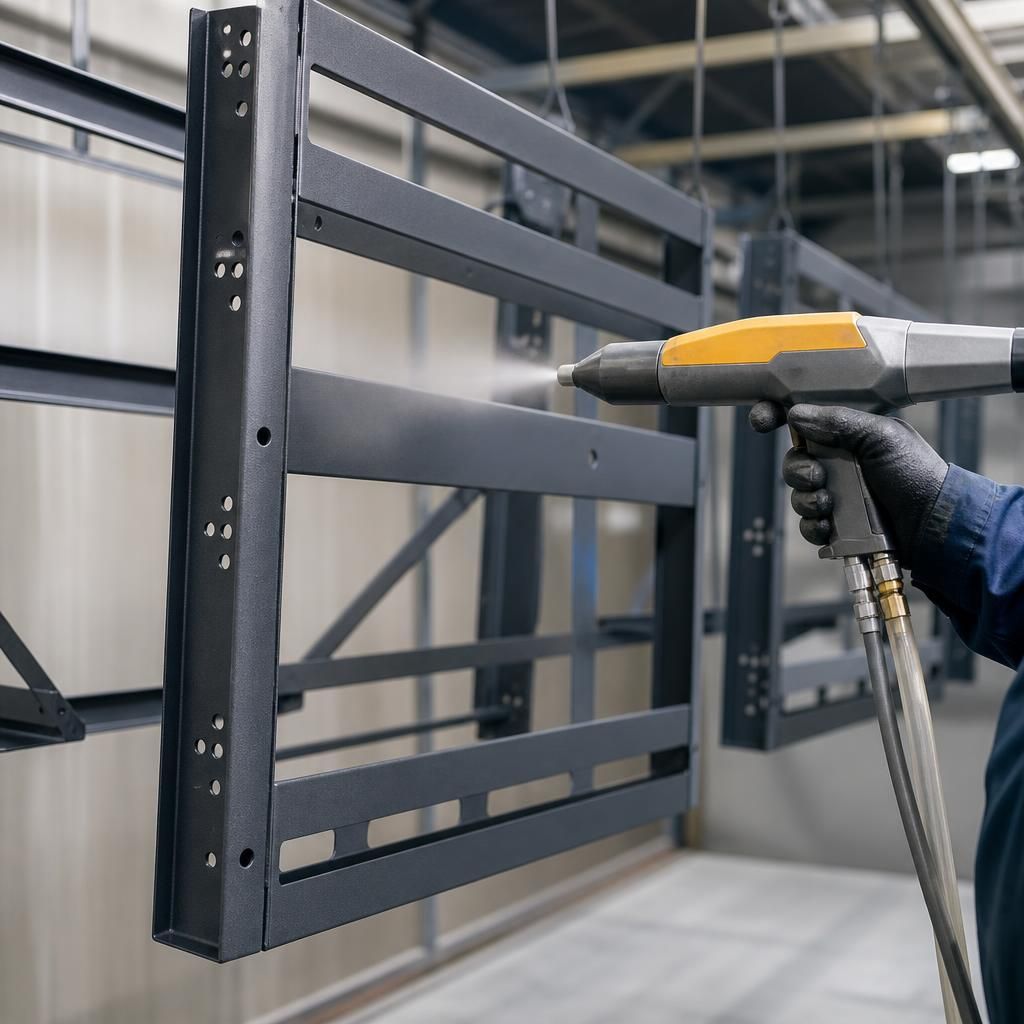
Epoxy powder coating can help reduce corrosion risk by forming a continuous barrier between a prepared metal surface and moisture, salts and other corrosive contaminants. This is particularly useful for industrial components used indoors where the coating must protect the substrate from handling, condensation or contact with aggressive substances.
The level of protection depends on thorough surface preparation, complete coverage and a suitable cured film. Edges, joints, fixings and damaged areas require particular attention because exposed metal can allow corrosion to develop beneath the surrounding coating. For this reason, corrosion protection should be assessed alongside the substrate, operating environment and specified coating system.
Discuss Your Epoxy Powder Coating Requirements
If you are assessing epoxy powder coating for an industrial component, discuss the substrate, operating environment, required film thickness and performance criteria with a specialist before finalising the specification. Share your coating requirements to establish whether epoxy is appropriate for the application.