

What equipment and facility requirements are essential for optimal results in electrostatic powder painting?
Optimal electrostatic powder painting requires a suitable spray gun and control system, a properly grounded spray booth with effective ventilation and powder recovery, a correctly sized curing oven, and equipment for surface preparation, handling and inspection. The facility must also provide clean, dry conditions, sufficient space for safe component movement and consistent oven temperature control so the powder bonds evenly and develops a durable finish.
Optimal electrostatic powder painting depends on an integrated installation in which the application equipment, electrical services, component supports, powder handling arrangements and quality checks are matched to the parts being coated. The essential requirement is not simply a spray gun or oven; it is a controlled process that allows powder to be applied consistently, transferred efficiently and cured according to the coating manufacturer’s specification.
Electrical supply and control equipment
The application system needs a stable electrical supply suitable for its charging and control equipment. Controls should allow the operator to adjust parameters such as voltage, current and powder output to suit the component’s size, shape and recesses. Excessive voltage can contribute to back-ionisation or uneven deposition, while unsuitable settings may reduce coverage in corners and shielded areas. A properly configured control unit should therefore provide repeatable settings rather than relying on manual adjustment alone.
Compressed air is also important. It must be clean, dry and free from oil or moisture that could contaminate the powder or interfere with its flow. Appropriate filtration, pressure regulation and condensate management help maintain a consistent cloud of powder at the gun. Air quality should be checked as part of routine maintenance, particularly where the same equipment is used for different coating colours or powder types.
Component support and line layout
Racks, hooks, frames and jigs need to support the workpiece securely without creating excessive contact marks or blocking areas that require coating. They should be designed for the component’s weight, dimensions and geometry, with contact points positioned where they can be hidden or easily touched up if necessary. Contact surfaces accumulate cured powder over time, so facilities require a method of stripping or replacing hooks and fixtures to preserve reliable electrical contact.
The layout should provide a logical route from loading through application, curing, cooling and unloading. It must accommodate the largest and heaviest components without forcing operators to turn, lift or reposition parts in a way that risks damage. Adequate clearance is also needed around doors, service points and maintenance areas. For batch work, a layout that permits clearly separated loads helps prevent parts, colours or coating specifications from being mixed.
Powder storage and colour-change arrangements
Powder should be stored in its original, labelled containers in conditions that prevent contamination, moisture exposure and accidental mixing. Stock control needs to distinguish between colours, product grades, batch references and any powder approved for recovery or reuse. This is especially important where a finish requires a particular gloss level, texture or chemical resistance.
Where several powder types or colours are processed, the facility should include a defined procedure and suitable equipment for cleaning the gun, hoses, hopper and other powder-contact surfaces. Effective colour-change arrangements reduce cross-contamination and help prevent unwanted shade or texture variation. Recovered powder should only be handled in accordance with the coating supplier’s technical guidance, since its condition and permitted blend ratio can affect the final finish.
Pre-treatment and masking support
Although the exact pre-treatment method depends on the substrate and service environment, the facility must have suitable means of protecting prepared surfaces from recontamination before powder is applied. Masking materials, plugs and caps may be required to keep threads, bores, mating faces, earth points or precision tolerances free from coating. These materials must tolerate the curing process and be fitted consistently so that powder cannot enter protected areas.
For components requiring chemical pre-treatment, the associated tanks, spray stages or application tools need controls appropriate to the process chemistry. Rinsing quality, chemical concentration and drainage all affect adhesion and corrosion resistance. A separate area for preparation and masking can help prevent abrasive dust, oil or loose debris from reaching the application stage.
Curing verification and measurement
A curing oven must achieve the required metal temperature throughout the load, not merely the programmed air temperature. Parts with different thicknesses heat at different rates, so production facilities may use temperature-monitoring equipment attached to representative components to verify the cure cycle. The results should be recorded when the coating specification or customer requirement calls for documented process evidence.
Post-coating inspection equipment should include a suitable dry-film thickness gauge, gloss or appearance assessment tools where relevant, and equipment for checking adhesion when required by the specification. Dimensional gauges may also be necessary for masked features, holes and close-fitting parts. Inspection criteria should be agreed before production, covering acceptable colour, texture, coverage, edge definition, film thickness and visible defects.
Safety, maintenance and process records
The installation should include appropriate fire protection, emergency isolation, operator access controls and procedures for dealing with spilled powder. Powder deposits must not be allowed to accumulate on surfaces or equipment, and cleaning methods should avoid dispersing dust unnecessarily. Electrical and mechanical components require planned inspection so that worn hoses, blocked filters, damaged cables and contaminated contact points are identified before they affect production.
Finally, consistent results depend on documented settings and traceability. Records can link each batch to the powder reference, substrate, pre-treatment route, application settings, oven cycle and inspection findings. This makes it easier to investigate variation and reproduce an approved finish. For industrial work, these supporting systems are as important as the visible application equipment because they control the factors that most often cause inconsistent coverage, contamination, poor adhesion or incomplete cure.
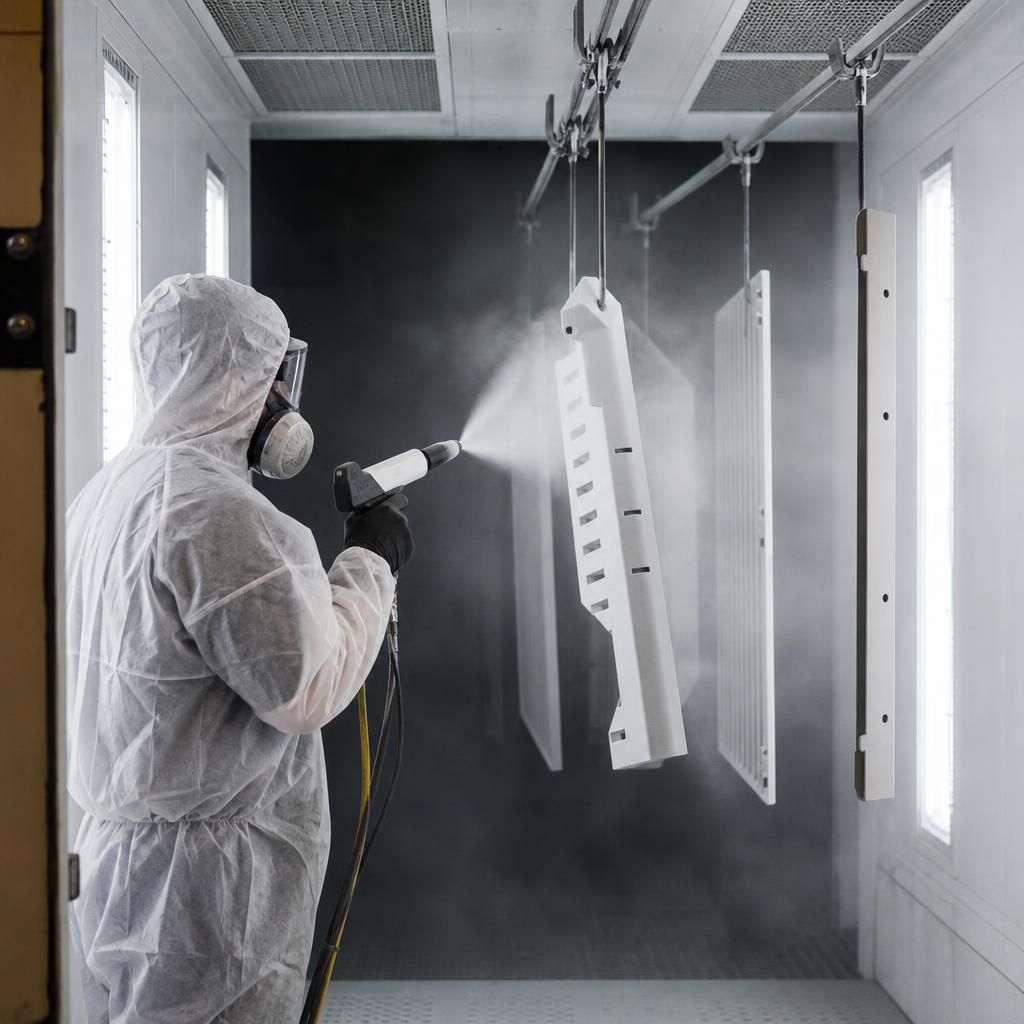
A well-designed spray booth should provide clear visibility of the component while maintaining controlled airflow around the powder cloud. High-intensity, suitably protected lighting helps the operator identify missed areas, uneven deposition and contamination before the part enters the curing oven. Internal surfaces should be smooth and easy to clean, with minimal ledges or recesses where powder can collect and later dislodge onto a finished component.
The booth’s dimensions and extraction pattern also need to suit the largest workpieces being processed. Excessive air movement can disturb powder deposition, while inadequate extraction can allow airborne powder to migrate into adjacent work areas. The arrangement should therefore balance operator visibility, powder containment and stable application conditions without obstructing access to the component.