

What are the cost benefits of choosing electrostatic powder painting over other coating methods?
Electrostatic powder painting can reduce overall coating costs through efficient powder transfer, minimal material waste and lower energy use than some liquid coating processes. Its durable finish can also reduce maintenance, recoating and replacement costs over the service life of suitably prepared metal components.
Electrostatic powder painting can offer a lower whole-life cost than many alternative coating methods because it combines a relatively controlled application process with a hard-wearing finish. The financial benefit is not limited to the price of the coating material: labour, preparation, curing, inspection, handling, rework and future servicing all influence the total cost of a coated component.
Lower application and labour costs
Powder is applied directly to the electrically charged metal surface, where it is attracted to the component before curing. This can make the process more controlled than conventional wet painting, particularly when components are correctly prepared and presented for coating. A controlled process may reduce the time spent correcting uneven coverage, runs, sags or other application defects. It can also simplify the coating sequence by reducing the number of wet coats required to achieve the specified finish, although the exact arrangement depends on the powder system, component design and performance requirements.
Labour costs are also affected by handling. Components that can be loaded, coated and cured in batches may require less individual handling than items processed separately. Suitable racking, access points and batch planning are important because poor loading arrangements can increase masking, movement and inspection time, reducing the cost advantage.
Reduced rework and rejection risk
Coating defects create costs that are often missed in a simple price-per-part comparison. Rework may involve stripping, additional preparation, another coating cycle, extra inspection and delayed assembly. Powder coating can help control these costs where the metal is suitable, the pretreatment is appropriate and the application parameters are kept consistent. A uniform cured finish can make it easier to meet a defined appearance or performance specification across a batch.
This is not an automatic saving. Oil, rust, scale, moisture, contamination and unsuitable previous coatings can affect adhesion and appearance. Clear drawings, agreed finish requirements and inspection criteria help prevent avoidable rework. The most economical quotation should therefore be assessed alongside the proposed preparation and quality-control process rather than on coating price alone.
Benefits for repeat and batch production
Electrostatic powder painting is often financially attractive for repeat work because components with similar dimensions, materials and finish requirements can be processed using a consistent setup. Once the loading method, masking approach and curing parameters have been established, the same process can be applied across subsequent batches with less technical preparation than a completely new job.
Batch production can also make better use of oven capacity, racking and operator time. However, frequent colour changes, small mixed batches, unusual component shapes and extensive masking can add setup costs. A proper comparison should include these variables instead of assuming that every powder-coated part has the same unit cost.
Lower costs associated with component protection
The coating choice can affect how often a component needs to be removed, repaired or refinished during its intended service. Powder-coated surfaces are commonly selected where resistance to everyday abrasion, handling and environmental exposure is required. If the coating specification matches the operating conditions and the substrate has been properly prepared, the component may need fewer coating-related interventions over its working life.
The saving is dependent on use. Outdoor exposure, chemicals, impact, heat, sharp edges and aggressive cleaning can all affect coating performance. A lower-cost specification that is unsuitable for the environment can result in early failure and a higher overall cost, so the finish should be selected according to the component’s actual service conditions.
How to compare the total cost
For a meaningful comparison with liquid paint, plating or another finish, consider:
- the coating material and expected application quantity;
- surface preparation and pretreatment;
- masking, racking and component handling;
- application and curing requirements;
- inspection, rework and rejection allowances;
- transport, collection and delivery arrangements;
- the expected maintenance or refinishing requirement; and
- any effect of the finish on assembly, protection or subsequent processing.
The initial price may favour one method, while the whole-life cost favours another. For example, a process with a lower coating charge may become more expensive if it requires several application stages, more manual correction or more frequent refinishing. Conversely, powder painting may not be the most economical option for every substrate, very small run or temperature-sensitive component. The comparison should account for part geometry, batch size, required finish, production schedule and the conditions the coating will face.
For manufacturers, fabricators, construction firms and automotive businesses across the Midlands, a cost assessment is most useful when it is based on representative drawings, material details, batch quantities and the required finish. That allows the coating route to be judged on its complete processing cost rather than on the application charge alone.
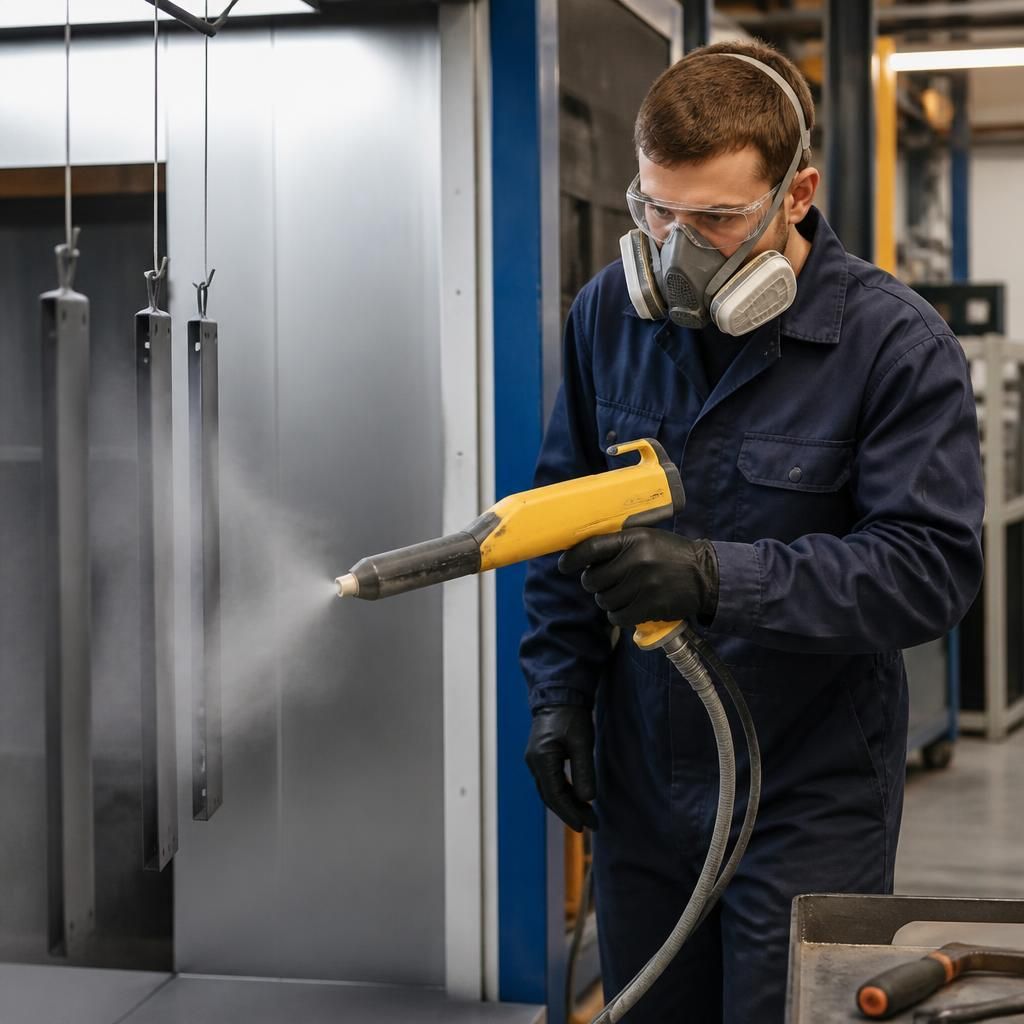
A cost comparison should include the ancillary requirements of each coating method, not just the price of applying the finish. Liquid painting may involve solvent-based materials, dedicated ventilation, drying space, protective equipment, cleaning materials and management of liquid or contaminated waste. Where these requirements apply, they can add operating and handling costs that are less visible in a basic price-per-part comparison.
Electrostatic powder painting uses a dry coating material and a curing process, so it can reduce reliance on some of these consumables and associated handling stages. The effect depends on the powder system, equipment, component size and the preparation standard required. For an accurate assessment, compare the complete route to a finished component, including material storage, application equipment, cleaning, waste handling and any facilities needed to meet the required finish specification.