

How does electrostatic powder painting contribute to sustainability and resource efficiency in industrial applications?
Electrostatic powder painting supports sustainability and resource efficiency by applying charged powder efficiently to metal surfaces, with overspray that can often be collected and reused rather than discarded. Its solvent-free formulation and durable finish can also reduce emissions, material waste and the need for repeated recoating in industrial applications.
Electrostatic powder painting contributes to sustainability and resource efficiency by making the coating process more controlled, reducing unnecessary use of materials and supporting consistent production of finished metal components. Its benefits extend beyond the coating material itself: energy use, preparation, curing, handling, rework and product life all influence the overall environmental performance of an industrial coating operation.
More precise application
The electrostatic process directs charged powder towards an earthed metal component, helping the coating adhere to the intended surface rather than relying solely on manual spraying accuracy. This can improve coverage on suitable shapes and make coating thickness easier to control. Consistent application reduces the risk of excessive coating, thin areas or defects that require additional processing.
Control is particularly important for repeat production. When components are presented consistently, the coater can establish suitable settings for application distance, voltage, gun movement and powder flow. Repeating those conditions across a batch helps limit variation and makes material use more predictable. It can also reduce the resources associated with inspecting, stripping and recoating parts that do not meet the required specification.
Efficient use of energy
Powder coating requires a heated curing stage, so energy efficiency depends on how that stage is managed. A well-planned process matches the curing profile to the powder system, component material, component thickness and load arrangement. Overheating parts or holding them in the oven longer than necessary can waste energy, while insufficient curing may lead to quality problems and further processing.
Resource efficiency can be improved through practical measures such as loading the oven effectively, avoiding unnecessary empty capacity, maintaining suitable insulation and keeping airflow and temperature controls in good condition. The curing requirement should be established through the coating specification rather than by applying a higher temperature as a precaution. For industrial users, this makes process documentation and monitoring important parts of a responsible coating strategy.
Lower demand for corrective work
A coating process that is properly prepared and controlled can reduce avoidable rework. Surface condition, cleanliness, masking, hanging and cure all affect the final result. Contamination, poor contact or unsuitable handling can cause defects even when the powder application itself is correct.
Preventing these issues at the preparation stage is more resource-efficient than correcting them later. Rework may involve additional inspection, labour, energy, consumables, transport and production time. For manufacturers and fabricators, clear acceptance criteria and checks at each stage help identify problems before a full batch has progressed through the process.
Design and production planning
Component design and batch planning also affect sustainability. Parts that can be coated without excessive masking, awkward repositioning or difficult access are generally easier to process consistently. Suitable hanging points and rack layouts can improve access to the surfaces being coated while making better use of oven space.
Grouping components by compatible coating specification can reduce avoidable preparation and changeover activity. However, production planning must balance this with the required colour, finish, thickness and performance characteristics. Choosing a coating system solely because it appears economical at the application stage may be unsuitable if it does not meet the component’s service conditions.
Material selection and service life
Sustainability also depends on selecting a coating that is appropriate for the component’s operating environment. Factors such as exposure to moisture, chemicals, abrasion, temperature changes, impact and ultraviolet light can influence the specification. A coating that is unsuitable for its environment may deteriorate prematurely, creating demand for repair, replacement or additional finishing work.
For that reason, resource efficiency should be assessed across the expected life of the component, not only by comparing the amount of powder used during application. The correct system, substrate preparation and curing conditions need to be considered together. A technically suitable finish can help industrial users avoid treating the coating as a short-term consumable that must be frequently corrected.
How businesses can assess the benefit
A practical assessment should consider:
- the amount of coating material required for the specified film thickness;
- the proportion of components accepted without rework;
- energy used during curing in relation to batch size and loading;
- the number of preparation, colour-change and cleaning operations;
- the amount of packaging, masking and other process consumables used;
- the expected service conditions and maintenance requirements of the finished component.
Electrostatic powder painting is therefore not automatically sustainable simply because it uses powder. Its contribution depends on the full process being designed and controlled efficiently. For industrial applications, the strongest results come from combining suitable material selection with accurate application, disciplined preparation, efficient curing and quality checks that prevent avoidable reprocessing.
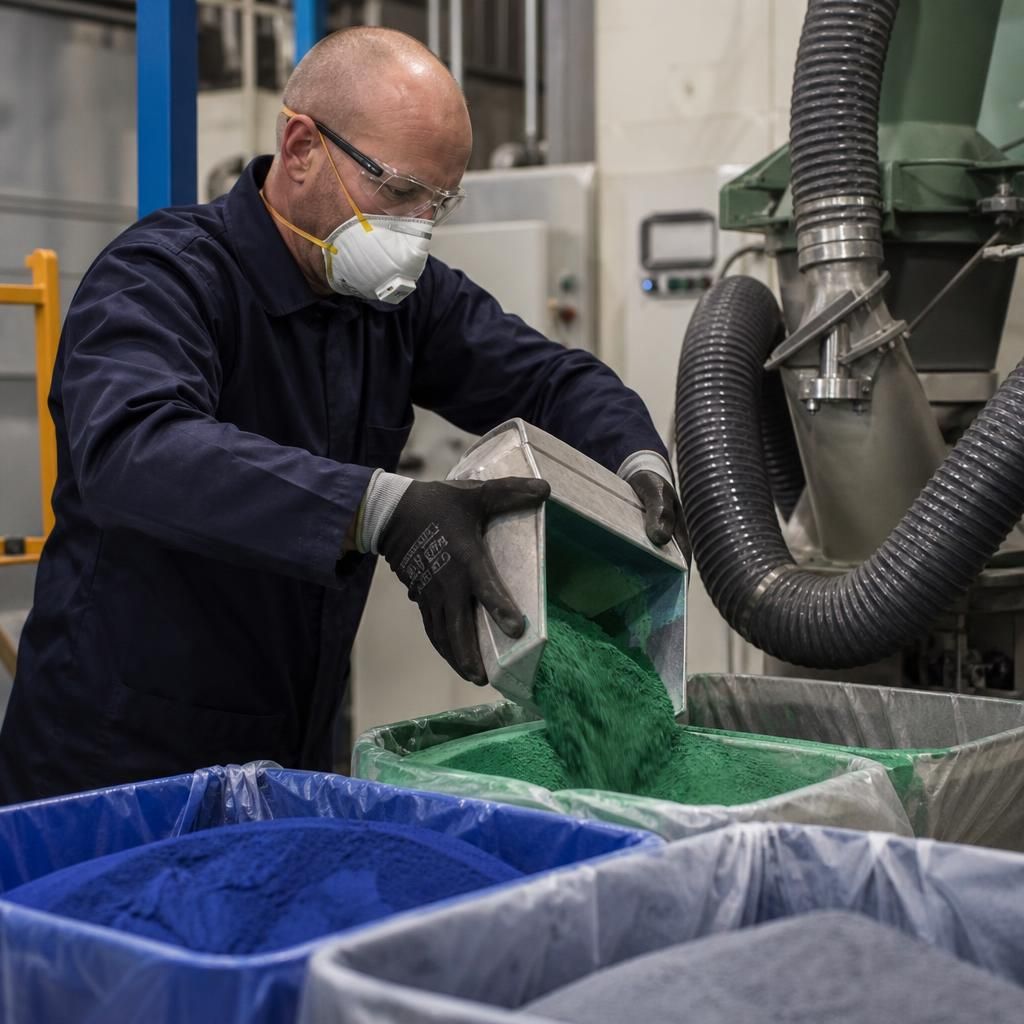
Powder recovery contributes to resource efficiency only when the collected material remains suitable for the required finish. Overspray can be captured during application, but reuse depends on keeping powders separated by colour, chemistry and performance specification. Mixed or contaminated material may not be appropriate for a critical industrial coating.
This makes recovery systems, housekeeping and process control important. Collection equipment should prevent unwanted contamination, while operators need to identify recovered powder clearly and assess whether it can be reincorporated without affecting colour, adhesion or film performance. Where reuse is unsuitable, preventing excess application in the first place remains the better resource-efficiency measure.
Discuss Your Industrial Powder Coating Requirements
Discuss your component specifications, coating requirements and sustainability objectives with the powder-coating team to identify a suitable industrial process. Provide details of the metal, expected service conditions, batch requirements and finish so the options can be assessed accurately.