

How does electrostatic powder painting contribute to environmental sustainability?
Electrostatic powder painting supports environmental sustainability by using dry powder with minimal overspray waste and no solvent-based VOC emissions. Its durable finish can also extend the service life of coated metal components, reducing the need for frequent recoating and the associated use of materials and energy.
Electrostatic powder painting contributes to environmental sustainability by improving material efficiency during application and supporting a lower-impact lifecycle for coated metal components. Its environmental performance is not determined by the coating method alone: powder formulation, surface preparation, curing, equipment settings, waste handling and transport all affect the overall result.
One important benefit is the controlled way in which powder is applied. The powder particles are electrically charged and attracted to the earthed metal component, allowing the coating to be distributed consistently across the intended surface. This can help avoid excessive film thickness, which uses more coating material than necessary and may affect curing performance. Correct gun settings, component positioning and coating thickness are therefore important parts of resource-efficient production.
Unused powder may also be collected through suitable recovery equipment and, where the coating specification and operating controls permit, returned to the application process. This requires careful management because recovered material can become mixed with other colours, formulations or contaminants. A responsible process should distinguish material that can be reused from material that must be disposed of, rather than assuming that all collected powder is suitable for further application.
Energy use is a separate consideration. Powder coatings normally require heat curing so that the particles flow, bond and develop their final properties. The curing oven can therefore represent a significant part of the process’s energy demand. Environmental performance can be improved by matching the oven temperature and dwell time to the powder manufacturer’s technical requirements, avoiding unnecessary heating, maintaining insulation and ensuring that components are loaded efficiently. Overloading an oven can be counterproductive if it produces uneven curing or requires repeat work.
Production planning also influences energy and resource efficiency. Grouping compatible components into suitable batches can reduce repeated oven heat-up and cool-down cycles. However, components must still be compatible in terms of powder type, colour, size and curing requirements. Combining unsuitable work simply to create a fuller batch can lead to cleaning, reprocessing or rejected parts, which weakens the environmental benefit.
Surface preparation should be included in any sustainability assessment. Degreasing, blasting and chemical pretreatment can involve water, abrasives and treatment chemicals. The environmental impact depends on the method used, how consumables are controlled, and how residues and wastewater are collected and handled. Good preparation remains necessary because contamination or poor adhesion can result in rework. Specifying the appropriate preparation for the metal and its intended use helps avoid unnecessary processing.
The coating’s contribution continues beyond the factory. A correctly specified finish can protect metal components against the conditions they will encounter, including abrasion, corrosion or chemical exposure where the chosen system is suitable. This can support longer intervals between maintenance activities and reduce the materials, transport and production operations associated with replacement or refurbishment. That benefit depends on selecting a coating system that matches the substrate, service environment and required performance; powder coating is not automatically suitable for every application.
For businesses assessing the environmental credentials of an electrostatic powder painting process, useful questions include:
- How is coating thickness controlled and checked?
- Is unused powder collected, segregated and managed according to its suitability for reuse?
- How are curing temperature, oven loading and energy use controlled?
- What preparation chemicals, water and abrasive media are used?
- How are spent media, residues and other process waste stored and disposed of?
- Can the coating specification support the component’s intended service conditions without unnecessary over-engineering?
For manufacturers, fabricators, construction firms and automotive businesses, the most credible assessment is therefore a process-based one. Electrostatic powder painting can support sustainability and resource efficiency, but the result depends on disciplined application, appropriate curing, effective preparation and responsible waste management across the complete coating operation.
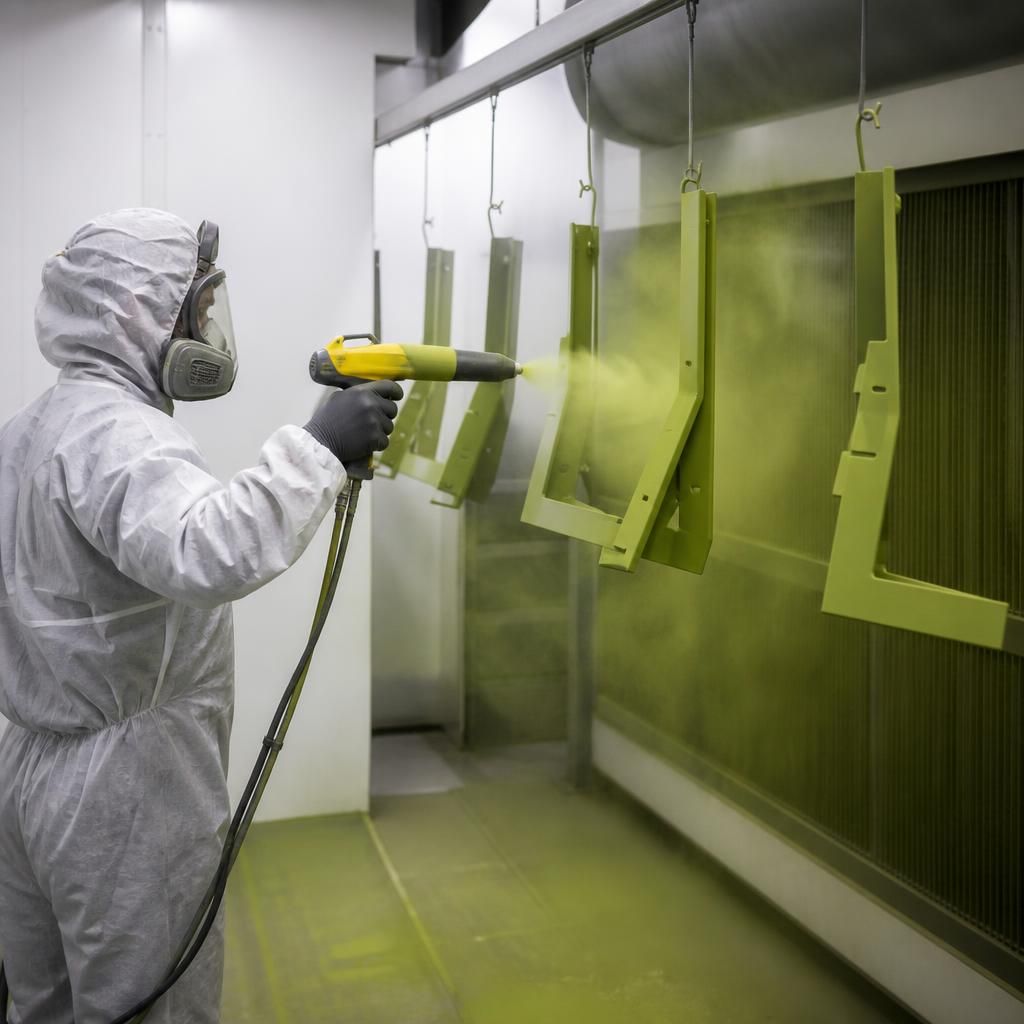
Electrostatic powder painting avoids solvent-based VOC emissions during application, but it still requires control of airborne powder. Fine particles can escape if extraction, booth filtration or housekeeping is inadequate, creating avoidable process waste and potential air-quality concerns. Enclosed application areas with correctly maintained extraction systems help capture overspray and keep powder within the intended process. Filters and collected dust should be inspected, segregated and handled according to the coating specification and applicable waste requirements. This distinction is important when assessing sustainability: the absence of liquid solvents is a significant advantage, but responsible powder containment remains essential to minimise emissions and material loss.