

What factors should I consider when choosing between different heating methods for my industrial paint curing ovens to ensure optimal powder coating results?
Choose the heating method for your industrial paint curing ovens by comparing temperature uniformity, control accuracy, heat-up and recovery performance, load size, ventilation requirements, energy use and installation constraints. Gas-fired systems can suit high-throughput ovens, while electric heating may offer precise, clean control; the best option is the one that provides consistent part temperatures throughout the load and matches the powder coating’s specified cure schedule.
The most suitable heating method for an industrial paint curing oven is determined by the coating chemistry, component design, production pattern, fuel infrastructure and required finish—not by fuel type alone. Gas-fired convection, electric convection, infrared and hybrid systems each transfer heat differently, so the correct choice is the one that cures the powder through the full component without causing defects, contamination or unnecessary process limitations.
Start with the powder coating and substrate
Review the powder manufacturer’s technical data sheet before comparing oven designs. The specified cure schedule normally relates to the temperature reached by the metal, rather than simply the air temperature inside the oven. This distinction is important for thick steel fabrications, assemblies with enclosed sections and parts with different wall thicknesses. A heating system must deliver enough usable heat to bring the slowest-heating areas to the required cure condition.
Consider whether the coating is standard polyester, epoxy, hybrid, nylon or another specialist formulation. Some coatings are more sensitive to overbaking, yellowing, gloss variation or changes in surface appearance. The substrate also matters: steel, aluminium and zinc-coated components absorb and transfer heat differently. A method that works well for one combination of powder and metal may be unsuitable for another.
Compare the way each system transfers heat
- Gas-fired convection: Heated air circulates around the work and transfers heat progressively into the metal. This is commonly considered for larger ovens and substantial production volumes, particularly where a suitable gas supply and extraction arrangement are already available. Direct-fired designs require careful management of combustion products, as unsuitable air quality can affect sensitive finishes.
- Electric convection: Electric elements heat the circulating air without combustion gases entering the oven chamber. This can be useful where a clean process environment is important or where gas infrastructure is unavailable. The electrical supply, element arrangement and control equipment must be assessed against the oven’s duty.
- Infrared: Infrared energy can transfer heat directly to exposed surfaces and may reduce the amount of air that needs to be heated. It is most effective when the components have suitable geometry and a clear view of the emitters. Recesses, backs of sections and shadowed areas may receive less energy, so part orientation and emitter placement become particularly important.
- Hybrid systems: Infrared can be combined with convection to provide rapid surface heating followed by more even heat penetration. This can be useful where a production line needs both a responsive initial heat source and reliable curing through heavier or more complex sections.
Assess component geometry and finish sensitivity
Simple, open profiles are generally easier to expose to radiant energy than deep boxes, brackets, mesh assemblies or parts with overlapping sections. Infrared should therefore be assessed against the actual component presentation, not just the oven’s internal dimensions. Convection may be more forgiving for intricate shapes because heated air can reach areas that are not directly visible to an emitter, although airflow paths still need to be suitable for the load.
For parts with mixed thicknesses, examine the risk of a surface curing before the core has reached the required condition. Excessive radiant intensity can also create local overheating on thin edges or exposed faces. Where appearance is critical, the evaluation should include gloss, colour, orange peel, adhesion and the possibility of premature skin formation.
Consider the production pattern and process flexibility
The oven should suit the range of work rather than only the most common component. Identify whether batches contain one repeatable product or varied parts with different masses, shapes and coating specifications. A system designed around a narrow operating window may be efficient for a consistent line but less practical when jobs change frequently.
Also consider loading and unloading arrangements, conveyor design, dwell time, recipe management and the ability to isolate or adjust heating zones. These features affect how easily the oven can handle different products without relying on improvised changes to burner settings, emitter positions or conveyor operation.
Check safety, emissions and site services
Gas systems require appropriate fuel supply, combustion controls, flue arrangements, guarding and maintenance procedures. Electric ovens require sufficient electrical capacity, correctly specified switching equipment and suitable protection. Infrared systems need attention to emitter guarding, access controls and the risk of radiant heat affecting nearby equipment or operators.
Where the coating or substrate can release fumes during curing, the oven design must include suitable extraction and safe discharge. For direct-fired systems, confirm that combustion products cannot compromise the coating. The choice should also account for fire risk, emergency shutdown, inspection access and compliance with relevant workplace and equipment requirements.
Evaluate maintenance and whole-life operation
Ask how accessible the burners, elements, fans, filters, sensors, emitters and ducting will be for inspection and replacement. A heating method may appear suitable at installation but become difficult to manage if routine service requires extensive oven dismantling. Spare-part availability, technician expertise and the effect of a failed heating zone on production should form part of the comparison.
Look beyond the initial purchase price. Include fuel or electricity infrastructure, extraction, control equipment, servicing, replacement components and the cost of process interruptions. Energy consumption is relevant, but it should be assessed alongside the usable heat delivered to the parts, not simply the rated input of the heating equipment.
Validate the selected method before committing
Use representative components and the intended powder to test the proposed heating approach. Temperature profiling equipment can be attached to the metal at locations such as heavy sections, recesses, edges and areas shielded from radiant sources. The resulting profile should be compared with the powder’s specified cure requirements, followed by checks of the finished coating for appearance and performance.
Testing should cover the lightest and heaviest realistic loads, not only an ideal sample. It can reveal whether radiant heating needs revised part spacing, whether convection requires different airflow distribution or whether a hybrid arrangement would provide a more robust process. Keep the profile records as a reference for commissioning, troubleshooting and future changes to the powder or product range.
In practice, the choice is usually a balance between the coating’s thermal requirements, the geometry of the work, available utilities, environmental controls, maintenance needs and the flexibility demanded by production. A specialist powder-coating engineering assessment can help compare these factors against the actual components and avoid selecting an oven solely on its nominal size or heating capacity.
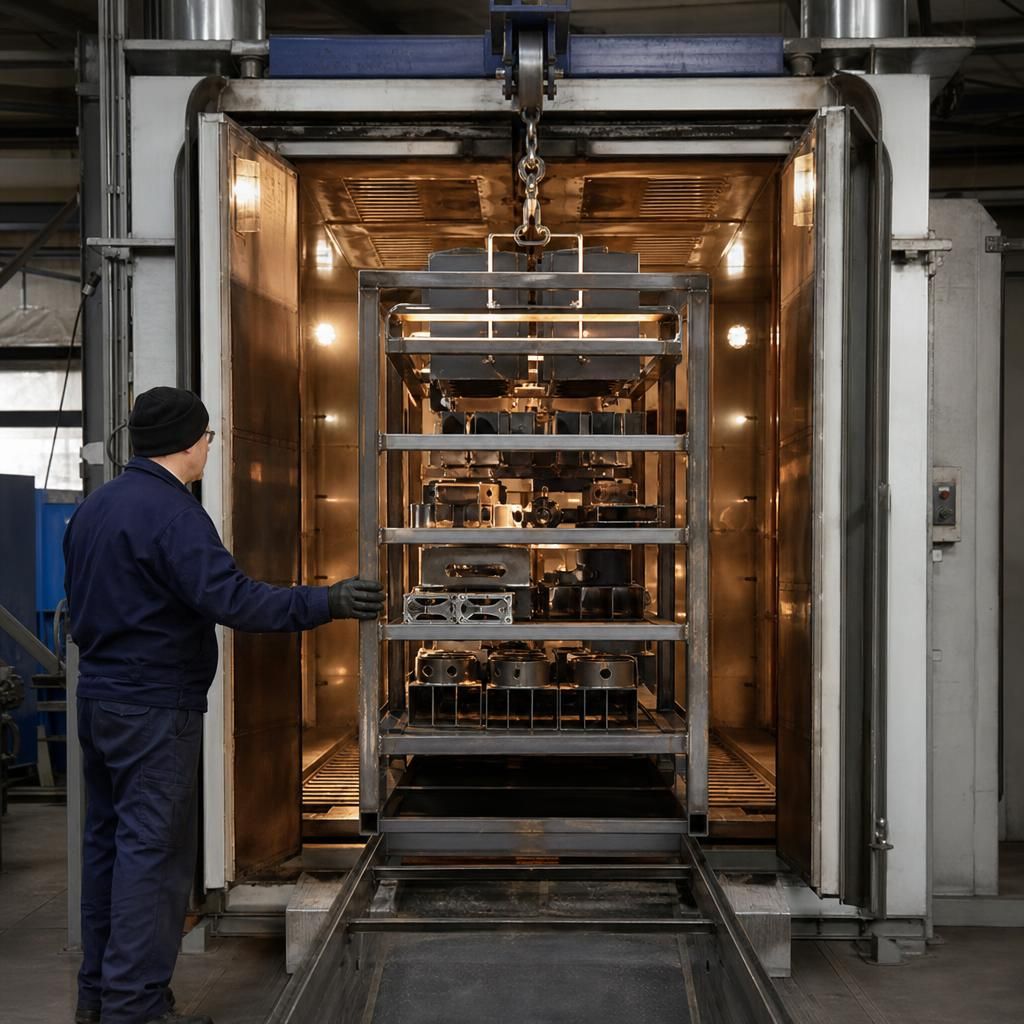
Assess the oven’s thermal load by considering the total mass entering the chamber, not only the coated surface area. Parts, racks, hooks and handling frames all absorb heat, and heavy fixtures can materially affect how much heating capacity is needed to maintain the curing condition.
Compare heating methods under realistic loading conditions, including a full batch, frequent door openings and changes between light and heavy work. An oversized system may cycle more often than necessary, while an undersized system can struggle to maintain the required process condition. The heating method should therefore be matched to the actual loading pattern and the oven’s insulation, airflow and control arrangement.