

How do you ensure accurate temperature control in your powder coating ovens?
We ensure accurate temperature control in our powder coating ovens by monitoring the air temperature across the heated zones and checking the oven profile against the powder manufacturer’s curing requirements. Consistent calibration, even heat distribution and controlled adjustments help the coating reach its specified cure without under-curing or excessive heat exposure.
Accurate temperature control in a powder coating oven depends on controlling the temperature of the coated component, not just the temperature shown on the oven control panel. Our process therefore considers sensor readings, the oven’s operating conditions, the metal’s thermal mass and the powder coating’s specified cure schedule before production work proceeds.
Oven setpoint and component temperature are different measurements. The air inside the oven can reach its target while heavier sections of a component are still warming. Thin sheet, boxed sections, castings, brackets and densely loaded batches all absorb heat at different rates. For this reason, temperature assessment must reflect how the actual parts heat through the oven rather than relying on a single displayed value.
We take account of the points most likely to create variation, including:
- differences in metal thickness and component geometry;
- the weight and spacing of the batch being processed;
- the position of parts in relation to the oven’s heating and circulation system;
- the movement of components through the oven and their resulting dwell time; and
- changes in operating conditions between an empty oven, a light load and a full production load.
This matters because a part can be exposed to the correct air temperature without receiving the correct heat input. A heavy component may require longer to reach the required metal temperature, while a thin component may reach it quickly and be exposed to unnecessary heat if the process is not controlled carefully.
Control equipment is checked as part of process control. Oven sensors, controllers and associated readings need to work together consistently. We review the relationship between the selected setpoint and the temperatures being recorded within the working area, looking for abnormal variation or indications that a control device is no longer responding correctly. Any discrepancy is treated as a process issue rather than being ignored because the oven display appears normal.
Heat circulation is also important. Fans, air paths, doors and seals influence how evenly heat reaches the work. Poor circulation, obstructed airflow or a damaged seal can create local hot or cold areas. Keeping parts suitably spaced and loading them consistently helps prevent one batch from shielding another and makes the heating conditions more repeatable.
The production load is matched to the curing requirement. Before processing, the component design, coating system and batch arrangement are considered together. The curing schedule supplied for the selected powder defines the required combination of temperature and time, but the practical process must also allow the metal itself to reach that condition. Changing from small fabricated parts to heavy or tightly packed components can therefore require a fresh assessment rather than simply using the previous oven settings.
Temperature information is recorded and reviewed where it is needed to confirm that the process has remained within the intended operating conditions. This helps identify gradual drift, unusual heating behaviour or differences caused by a particular load. If readings indicate a problem, production settings, loading arrangements or equipment condition can be investigated before the issue affects further components.
These checks help distinguish between under-curing and excessive heat exposure. Under-cured powder may have reduced hardness, adhesion or chemical resistance, whereas excessive heat can affect appearance, colour stability or the coating’s performance. Accurate control is therefore not only about reaching a number on the display; it is about applying the appropriate thermal cycle consistently to the coated metal.
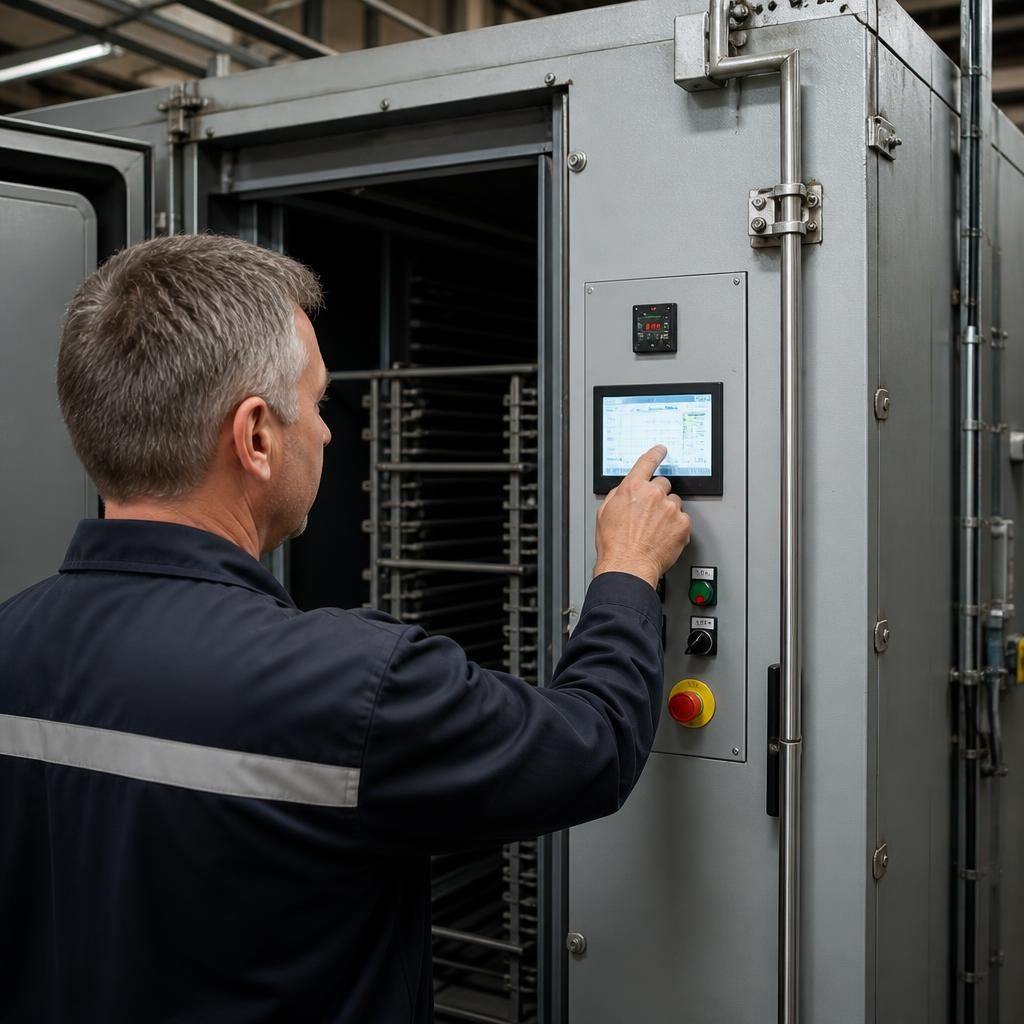
Temperature control also depends on how the oven responds to changes, not only on its steady operating temperature. A controlled assessment can examine heat-up behaviour, recovery after loading and any overshoot caused by the heating system. This helps identify whether the control loop is reacting too slowly or applying excessive heat before settling at the required condition.
Control alarms and safety interlocks form part of this assessment. Faults such as a failed sensor, abnormal temperature rise or loss of airflow should be identified by the oven’s control system rather than allowed to pass unnoticed. Checking these functions alongside the normal operating controls provides an additional safeguard against thermal variation during production.