

What types of powder coating finishes do you offer for aluminium components, and how do these options affect durability and appearance?
For aluminium components, finish options include different colours, gloss levels and textures, together with specialist protective systems such as nylon coatings. The chosen system affects both appearance and performance: decorative finishes define the surface look, while protective finishes can provide greater resistance to wear, impact and demanding service conditions.
Powder coating finishes for aluminium are selected by combining the powder chemistry, surface appearance and level of protection required for the component’s working environment. A decorative industrial finish may be suitable where the main requirements are a consistent appearance and resistance to routine handling, whereas exterior, high-contact or abrasive applications may require a more protective coating system.
For aluminium components used indoors or in general industrial settings, a standard decorative powder system can provide a hard, uniform surface that is less vulnerable to scuffing than an untreated aluminium finish. The visual result depends not only on the selected powder but also on the condition and geometry of the aluminium. Large flat faces, sharp edges, welds, cast areas and repaired sections can each affect how evenly the coating looks after curing.
Components exposed to sunlight, rain or changing temperatures need a system selected for outdoor service. The important considerations are resistance to ultraviolet exposure, moisture and weathering, together with the ability to retain its original surface appearance. A coating that is suitable for an internal component should not automatically be assumed to provide the same long-term performance externally. The intended location, exposure level and expected service life should therefore be considered before the finish is specified.
The surface profile also affects both appearance and maintenance. A smooth coating is generally easier to wipe clean and gives a precise, continuous appearance, but it can make small surface imperfections more noticeable. A fine or heavier texture can alter the visual character of the part and may help make minor variations less apparent. Textured surfaces can require more care when cleaning because dirt may collect within the profile, particularly on components installed in exposed or industrial environments.
Specialist protective finishes are used where aluminium parts face more severe mechanical demands. Nylon coating is one example. It is valued for its combination of abrasion resistance and a resilient surface, making it relevant to components subject to repeated contact, rubbing or impact. Nylon can produce a different tactile and visual result from a conventional decorative powder finish, so it should be chosen for the operating conditions as well as for appearance. The required coating thickness, edge coverage and treatment of fixing points may also need to be agreed at specification stage.
Where corrosion protection is a significant requirement, the finish may involve more than a single decorative layer. A suitable primer or protective undercoat can support adhesion and help protect the aluminium beneath the outer finish. Epoxy-based systems are commonly considered for their protective properties, although an epoxy layer on its own may not be the preferred exposed surface where ultraviolet stability is important. In those cases, the coating specification needs to distinguish between the role of the primer or base layer and that of the final weather-resistant coat.
Finish selection should take account of the following factors:
- Location: internal, external, sheltered or highly exposed installation conditions influence the required resistance to weathering and ultraviolet light.
- Mechanical contact: sliding, repeated handling, impact and abrasion may justify a tougher specialist coating rather than a purely decorative finish.
- Cleaning requirements: smooth surfaces are usually simpler to wipe down, while textured profiles may need more thorough cleaning.
- Component geometry: recesses, holes, corners and edges require suitable application and curing control to achieve consistent coverage.
- Visual specification: the required colour, sheen, texture and consistency should be agreed alongside acceptable tolerance for natural variation between batches.
- Substrate condition: machining marks, dents, oxidation, welds and contamination can remain visible or affect adhesion if they are not addressed before coating.
Preparation and curing are as important as the powder selection. Aluminium develops an oxide layer naturally, and contaminants such as oil, handling residue and workshop debris can interfere with adhesion. Cleaning, suitable pre-treatment, controlled application and correct curing allow the selected finish to develop its intended hardness and appearance. Poor preparation can lead to defects such as uneven coverage, loss of adhesion or premature deterioration, even when the powder itself is appropriate.
For a reliable specification, the coating choice should be matched to the component’s use rather than selected on appearance alone. Providing details of the aluminium grade where known, component dimensions, installation environment, expected handling and any abrasion or chemical exposure helps identify whether a conventional decorative finish, an exterior-grade system, a primer-supported build or a nylon coating is most appropriate.
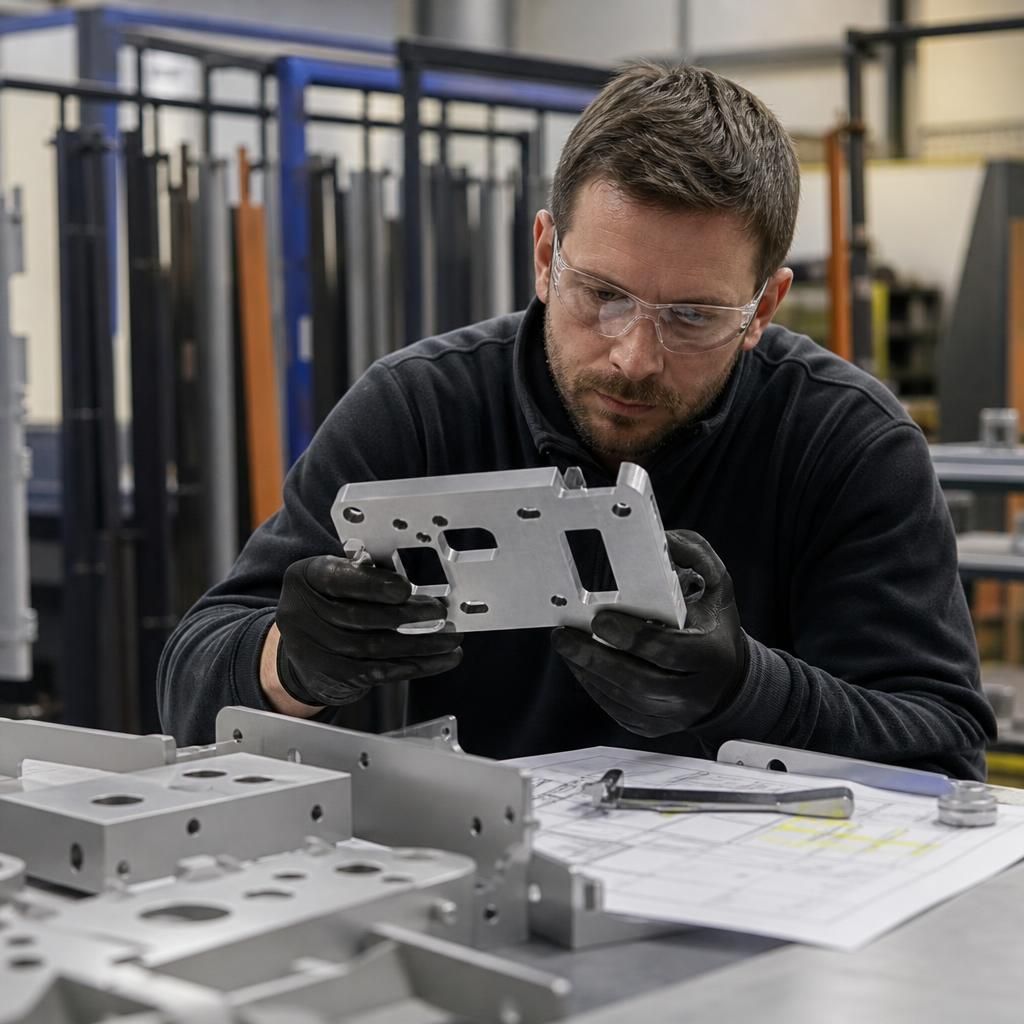
Finish selection for aluminium components should also account for dimensional fit. Powder coating adds a measured layer to the substrate, so close-fitting faces, threads, holes, bearing seats and mating surfaces may need to be masked or otherwise protected during application. This is particularly important where coated parts must assemble accurately or maintain electrical, mechanical or sliding contact.
The drawing or coating specification should identify areas requiring full coverage, controlled coverage or no coating, together with any critical tolerances. Defining these requirements before production helps prevent an attractive finish from affecting assembly and ensures that the chosen coating provides the intended balance between surface protection and component function.