

What is the ideal surface preparation process for aluminium powder coating?
The ideal preparation for aluminium powder coating involves thorough cleaning and degreasing, removal of oxidation and contaminants, suitable chemical pretreatment, controlled rinsing and complete drying. The prepared surface should then be inspected for residue, damage and uniformity before powder is applied, ensuring a clean, chemically receptive base for adhesion and a consistent finish.
The ideal surface preparation process for aluminium powder coating is a controlled, substrate-specific sequence that accounts for the alloy, component design, previous treatment and intended service environment. Preparation should be defined before coating begins, because aluminium alloys and castings can behave differently during pretreatment and curing. A process suitable for an architectural extrusion may not be appropriate for a cast component, welded assembly or part exposed to aggressive industrial conditions.
1. Assess the aluminium and component condition
Start by identifying the material and inspecting the component for issues that could affect the finish. Relevant points include:
- Whether the part is wrought, extruded, sheet or cast aluminium;
- The presence of welds, brazed areas, joints, sharp edges or inaccessible recesses;
- Existing anodising, paint, conversion coating, adhesive, sealant or other treatment;
- Visible pitting, inclusions, embedded abrasive or corrosion damage;
- Oil-retaining features such as deep holes, folded sections and hollow profiles.
Cast aluminium requires particular attention because pores and inclusions can release trapped gases during curing, causing pinholes, blistering or small surface defects. Where the component design permits, a controlled pre-treatment or pre-bake assessment can help identify outgassing risks before production coating.
2. Make the part physically suitable for coating
Preparation is not limited to the chemical line. Burrs, sharp projections, loose material and poorly finished welds can remain visible through a powder film or create weak coverage at edges. These areas should be corrected where the specification allows. Weld spatter and residue should be removed, while excessive grinding should be avoided because it can introduce unevenness or visible marks.
Drainage and venting are also important for hollow or fabricated aluminium parts. Any liquid trapped in a recess can interfere with later stages, while enclosed volumes may retain gases during curing. Components should therefore be designed or presented with suitable access for processing, drainage and inspection.
3. Use mechanical preparation selectively
Light abrasion, brushing or controlled blasting may be appropriate where the existing surface requires additional preparation. The method must be chosen for aluminium rather than copied from a steel process. Excessive blasting pressure, unsuitable abrasive or prolonged treatment can deform thin sections, embed foreign material or leave an unnecessarily coarse profile.
Where mechanical preparation is used, the resulting surface should be checked for uniformity and for abrasive residue. The objective is a sound, receptive surface without changing critical dimensions, damaging edges or introducing contamination that could affect adhesion.
4. Match chemical pretreatment to the application
The pretreatment chemistry should be selected according to the aluminium alloy, the required corrosion performance, the coating system and the conditions in which the component will be used. A conversion coating can improve the interface between aluminium and powder, but its concentration, contact time and operating conditions need to be controlled rather than treated as interchangeable settings.
For parts with demanding environmental exposure, the specification may require a more robust pretreatment system than would be necessary for an indoor component. The chosen process should also be compatible with any primer or topcoat planned for the part. If a low-environmental-impact or chromate-free system is required, this should be confirmed as part of the coating specification rather than assumed.
5. Protect areas that must remain uncoated
Masking and plugging should be planned before processing. Threads, bearing seats, electrical contact points, close-tolerance bores, drainage holes and mating faces may need protection from pretreatment chemicals and powder. Masking materials must tolerate the process temperatures and should not leave adhesive residue or prevent the coating from forming a clean boundary.
The masking plan should also allow adequate coverage around edges without creating excessive build-up. On assembled or fabricated parts, racking points should be positioned on a non-critical area where possible, with allowance for the small contact mark that may remain where the component is suspended.
6. Control handling between preparation and coating
After preparation, the aluminium must be handled in a way that preserves the prepared surface. Clean gloves, suitable racks and protected transfer routes help prevent fingerprints, dust and workshop contamination from being reintroduced. Components should not be placed on dirty benches or stacked face-to-face where prepared surfaces can be marked.
Part orientation also matters. Racking should support the component securely while allowing powder to reach the required faces and preventing liquid retention in pockets. Complex fabrications may need a defined orientation or more than one application position to achieve consistent access.
7. Confirm the preparation against the coating specification
A suitable preparation process is confirmed through documented checks rather than judged only by appearance. Depending on the project, these checks may include verification of chemical process conditions, examination of representative test pieces, adhesion testing after coating and inspection for staining, water marks, residue or uneven conversion.
For repeat production, the preparation method should be recorded with the aluminium grade, component design, pretreatment route, masking arrangement and any known outgassing behaviour. This creates a repeatable basis for future batches and makes it easier to investigate defects such as flaking, blistering, pinholing or edge failure.
In practice, the best preparation process is the one that is tailored to the aluminium rather than applied as a generic metal-cleaning routine. Material identification, suitable mechanical treatment, compatible chemical pretreatment, careful masking, controlled handling and documented verification together provide the foundation for a durable and visually consistent powder-coated finish.
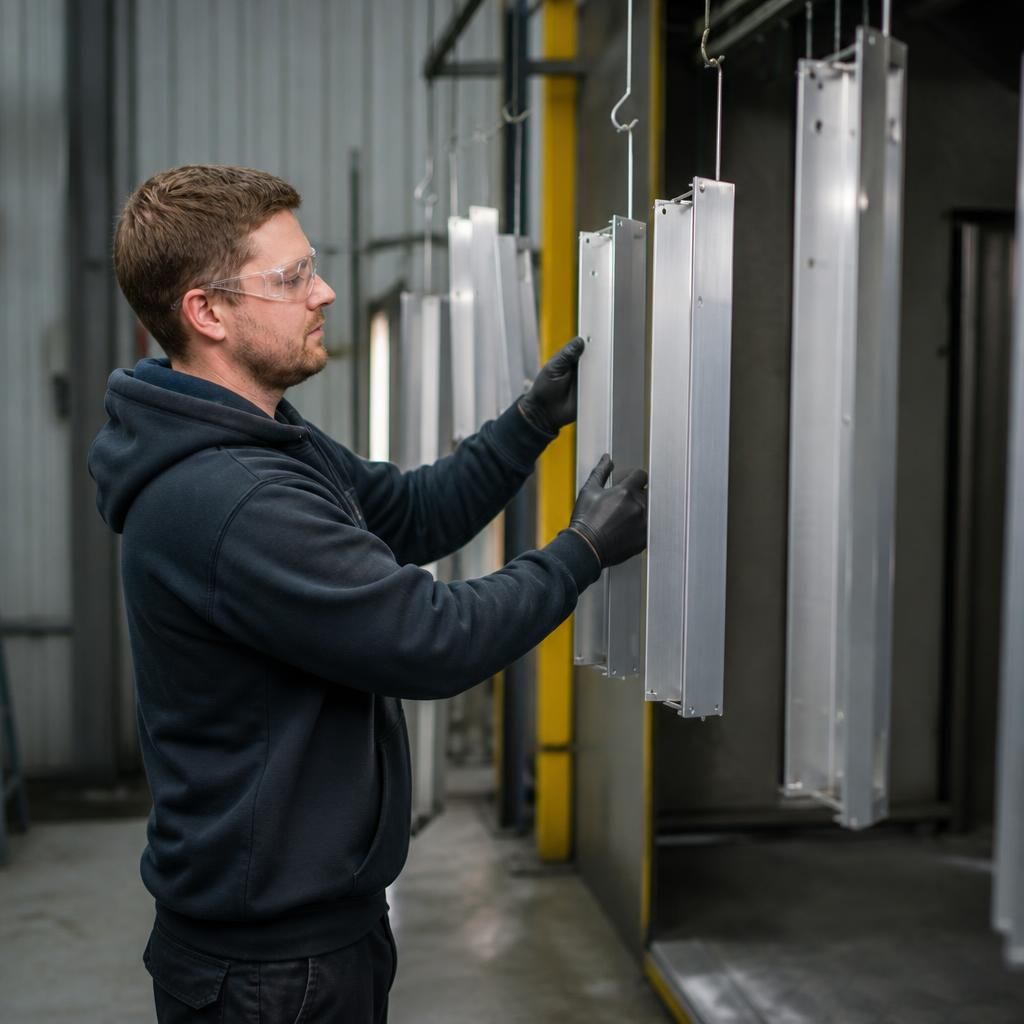
Timing after pretreatment is an important part of aluminium surface preparation. Once the surface has been cleaned and chemically treated, its condition can change through renewed oxidation or contact with airborne contamination. The component should therefore move through drying, inspection and powder application without unnecessary delay, in accordance with the specified process window. If it is touched, exposed to contamination or held beyond the approved interval, it may need to be reassessed or pretreated again rather than coated automatically. This control helps preserve the chemically receptive surface created during preparation.
Discuss Your Aluminium Surface Preparation Requirements
Discuss your aluminium component requirements with the powder-coating.co.uk team to establish a suitable preparation specification for your project. Provide the relevant part details and intended use so the coating approach can be assessed before production begins.