

What colours and finishes are available for aluminium powder coating?
Aluminium powder coating is available in a broad range of colours, including standard solid shades, metallic effects and special finishes. Surface options can include matt, satin, gloss, textured and fine-textured appearances, with the most suitable choice depending on the required appearance, use and powder specification.
Aluminium powder coating can be specified in a wide selection of colour standards, visual effects and surface textures, but the suitable option depends on the component’s location, exposure, appearance requirements and the powder specification. Colour selection should therefore be made alongside decisions about durability, surface preparation and the intended use of the finished aluminium.
Colour options
Many projects use recognised colour references, such as RAL shades, to define the required finish clearly. These references help manufacturers, fabricators and coating specialists work to a consistent colour specification across batches. A colour may appear different depending on the light, surrounding materials, viewing angle and surface texture, so a physical sample or approved colour panel is useful where the appearance is critical.
Colour can also be affected by the condition and profile of the aluminium, the thickness of the applied coating and the curing process. Where components are being coated in separate batches, the same powder reference and agreed application specification should be used. This reduces the risk of visible variation between parts, although an exact visual match can still be influenced by production conditions and the substrate.
Appearance and texture
The finish affects more than colour alone. A smooth coating gives a clean, even appearance and is often selected for architectural or visible components. Textured coatings create a more tactile surface and can make minor surface irregularities less noticeable. The texture may also alter how strongly the colour appears compared with a smooth sample.
Gloss level is another important consideration. Lower-sheen surfaces produce a restrained appearance, while higher-sheen coatings reflect more light and can make the colour look more pronounced. Satin finishes sit between these visual effects. The required gloss should be confirmed as part of the specification rather than inferred from a colour code alone, because the same colour can look substantially different at different sheen levels.
Special-effect powders, including metallic or mica-style appearances, require particular care during application. Their visual effect can be influenced by spray technique, part orientation, batch control and the way adjacent components are coated. For this reason, parts that must appear uniform are normally considered together when the coating method and powder specification are agreed.
Choosing a finish for the application
- External aluminium: the powder system should be selected for the level of weathering, ultraviolet exposure and moisture expected at the installation site.
- Internal components: appearance, cleaning requirements and resistance to handling or abrasion may be more important than resistance to prolonged outdoor exposure.
- Architectural or highly visible parts: colour reference, gloss, texture and acceptable variation should be agreed before production, particularly where multiple components will be installed together.
- Industrial components: the coating specification should reflect contact with chemicals, oils, moisture, heat or mechanical wear where these conditions apply.
- Parts requiring masking: uncoated areas, fixing points and mating faces should be identified before coating so that the finished component remains suitable for assembly.
The aluminium alloy, surface condition and component design can also influence the final result. Sharp edges, recesses, welds, cast surfaces and areas that are difficult to reach may require attention during preparation and application. These factors do not necessarily restrict colour choice, but they can affect how evenly the coating covers the part and how consistent the appearance is across different features.
For a practical specification, provide the required colour reference, sheen, texture, intended environment and any areas that must remain uncoated. If the appearance is particularly important, review a representative sample before committing a full batch. This allows the colour and surface effect to be assessed on aluminium rather than relying solely on a screen image or printed chart.
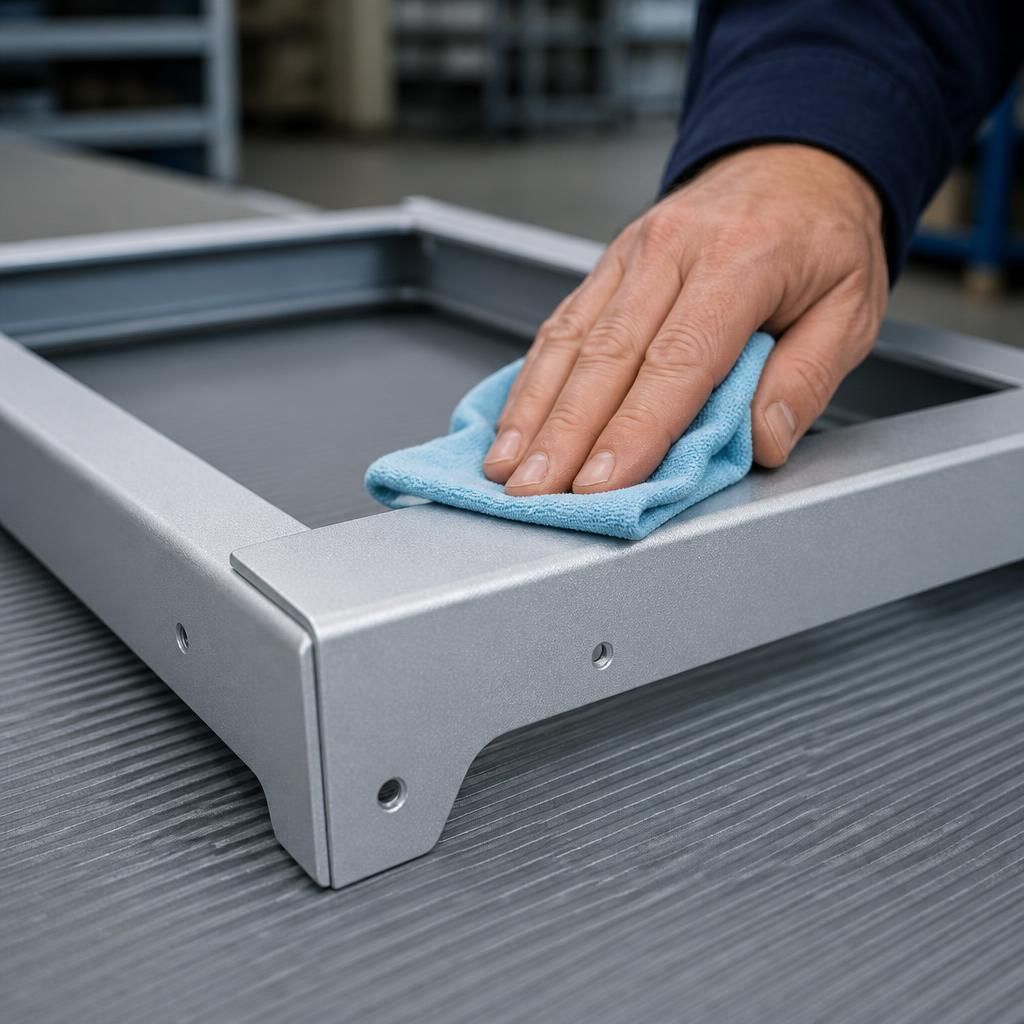
Surface texture can influence cleaning as well as appearance. Smooth aluminium powder-coat finishes are generally easier to wipe clean, while deeper textured finishes may retain more dust or residue in their profile. Where components are exposed to frequent handling, road dirt, process contamination or regular washing, the ease of cleaning should be considered alongside the preferred visual effect. A fine texture can provide a more tactile appearance without the same degree of surface relief as a heavier texture.