

What are the benefits of using nylon coatings for aluminium components?
Nylon coatings provide aluminium components with a tough, flexible barrier that resists abrasion, impact, moisture and many chemicals. They also create a smooth, protective finish, making them suitable for parts that require enhanced surface durability and reliable insulation.
Nylon coating is a thermoplastic finish applied to aluminium components to provide a durable, functional surface where the bare metal would be vulnerable to wear, friction, handling damage or electrical contact. Its main advantages are controlled surface performance, long service life in demanding applications and the ability to produce a consistent coating over suitably prepared aluminium.
Key benefits of nylon coatings for aluminium include:
- Improved wear performance: Nylon forms a resilient working surface that can withstand repeated contact between components. This makes it useful for guides, rollers, brackets, housings, chutes and other parts exposed to rubbing or sliding.
- Reduced friction: The relatively low-friction nature of nylon can help components move more smoothly against one another. It may also reduce surface marking where metal parts are assembled, positioned or handled repeatedly.
- Noise and vibration reduction: Compared with direct metal-to-metal contact, a nylon-coated surface can reduce rattling, knocking and transmission of vibration in some assemblies. This is relevant to fabricated equipment, machinery guards, handling systems and automotive components.
- Protection from handling and assembly damage: The coating provides a separating layer between aluminium and tools, fixtures or adjacent components. It can help limit scuffing and marking during installation or routine use, provided the coating specification matches the mechanical conditions.
- Electrical separation: Nylon is electrically insulating, so it can be selected where an aluminium part needs separation from another conductive surface. The required coating thickness, continuity and operating conditions should be defined before production, particularly where electrical safety is involved.
- Useful film build: Nylon coatings can be applied at a greater thickness than many decorative powder finishes. This can help cover minor surface irregularities and provide a more substantial working layer, although excessive build must be avoided around holes, threads, mating faces and tight tolerances.
- Stable appearance: A correctly applied nylon coating gives aluminium a uniform finished surface. Colour and texture can be selected to support identification, handling requirements or the appearance of the finished product, subject to the available coating specification.
The result depends heavily on preparation. Aluminium must be cleaned and treated to remove oils, oxide contamination and other substances that could interfere with bonding. Edges, recesses, weld areas, drilled holes and threaded features require particular attention because poor preparation or unsuitable coating build can lead to weak adhesion, uneven coverage or assembly problems.
Application normally involves applying nylon powder to prepared aluminium and heating the component so that the powder melts and forms a continuous film. The component’s size, geometry, thermal capacity and required coating thickness affect the process settings. Large sections and thin parts may heat differently, so the coating process needs to be considered alongside the component design rather than treating every aluminium item in the same way.
Nylon is not automatically the best choice for every aluminium component. A specification should consider operating temperature, load, contact frequency, chemical exposure, dimensional tolerances, appearance and whether the part is intended for internal or external use. Areas that must remain uncoated, such as bearing seats, earth points, threads or precision mating surfaces, should be identified before coating. Masking, racking and post-coating inspection can then be planned around those requirements.
For B2B components, the most appropriate nylon system is therefore selected according to function rather than appearance alone. Manufacturers and fabricators should provide the coater with the aluminium grade where relevant, component drawings, critical dimensions, service conditions and any requirements for masking or testing. Powder-coating specialists serving businesses across the Midlands can advise on preparation, coating suitability and collection or delivery arrangements for production batches.
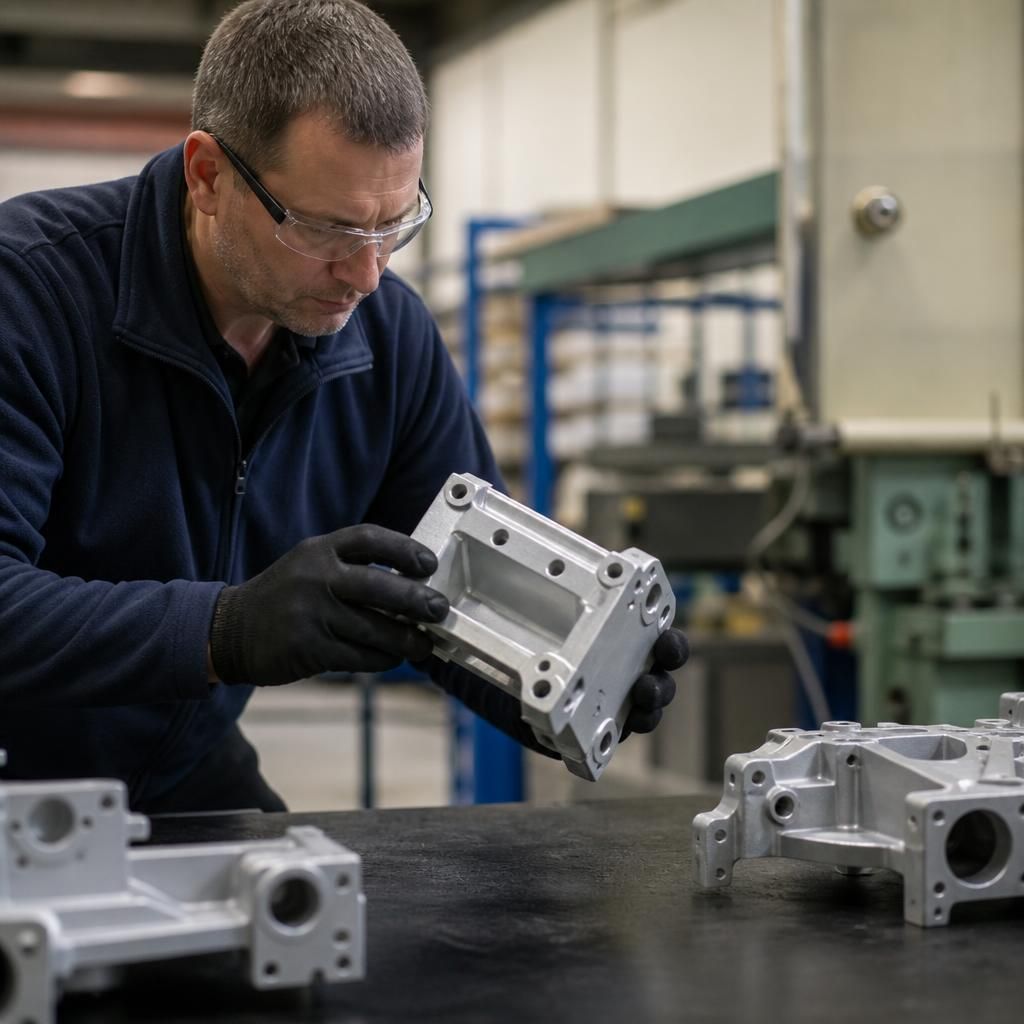
A key benefit of nylon coating is that it can provide a functional surface without changing the underlying aluminium component. This makes it suitable for parts where the coating must add protection while preserving the component’s basic shape and intended use.
For production work, the coating specification should be agreed against the component drawing and service conditions. This allows critical interfaces, uncoated areas and acceptable coating build to be identified before processing, reducing the risk of the finished part interfering with assembly or subsequent operations.
Discuss Nylon Coatings for Your Aluminium Components
Share your component drawings, operating conditions and critical dimensional requirements to discuss whether a nylon coating is suitable and how the specification should be defined. Request a quote for your aluminium components based on the required preparation, coating build and masking details.