

What preparation steps are necessary before applying zinc primer powder coating to metal surfaces?
Before applying zinc primer powder coating, remove oil, grease, dirt, rust and existing loose coatings through suitable cleaning and abrasive blasting, then repair surface defects and ensure the metal is dry and free from contamination. Mask areas that must remain uncoated and inspect the prepared surface for a consistent profile so the primer can bond effectively.
Successful zinc primer powder coating depends on more than removing visible corrosion. Before application, the coating system, metal condition, component design, handling method and curing requirements should all be checked so the primer can be applied consistently and remain compatible with any subsequent topcoat.
Confirm the coating specification first. Establish whether the zinc primer is intended as a standalone protective layer or as the first coat in a duplex system. The required primer, topcoat and total film build must be compatible, particularly where a decorative or weather-resistant finish will be applied over the zinc-rich layer. The product’s technical data should be used to confirm its suitable substrates, application window, recommended film thickness, recoat conditions and curing schedule. These requirements should be agreed before components are processed, rather than adjusted after coating.
- Identify the metal grade and confirm that it is suitable for a zinc primer powder system.
- Check whether the specification requires a zinc-rich primer, a particular topcoat or a defined corrosion-protection category.
- Confirm the required appearance, coverage and thickness tolerances for functional and visible surfaces.
- Review whether the parts have previously received a treatment that could affect adhesion or curing.
Assess the component design and fabrication. Powder coating follows the shape of the part, so narrow gaps, overlapping plates, sharp internal corners and enclosed sections need attention before coating. Hollow components should have suitable drainage and venting where the manufacturing design permits. Without this, trapped moisture, pretreatment residues or expanding air can cause defects during heating. Welded areas should be checked for spatter, porous welds and residues from fabrication processes. Welds and joins may also require particular attention because they can retain contaminants or produce an uneven coating profile.
Edges should be reviewed as part of the design assessment. Very sharp edges can receive less coating coverage than broad faces, while deep recesses may be difficult to coat uniformly. Where the specification permits, edge radiusing and sensible detailing can improve coverage. Threads, close-fitting interfaces, bearing seats and precision-machined surfaces should be identified so that masking, plugs or later machining can be planned without damaging the finished primer.
Plan racking and electrical contact. Each component needs to be supported securely while allowing the powder gun to reach the required surfaces. Contact points should be positioned where minor marks can be tolerated or subsequently treated. The rack and workpiece must provide a reliable electrical path, because electrostatic powder application relies on the part being properly grounded. Poor contact can cause uneven deposition, back-ionisation or powder attraction problems. Racking should also prevent parts from touching one another, collecting powder in unwanted areas or moving during transfer to the oven.
Separate areas that must remain functional. Masking plans should be prepared for threads, holes, mating faces, hinge points, electrical contact surfaces and machined tolerances. Masking materials must withstand the coating and curing conditions without leaving residue or affecting the surrounding finish. For components with tight assembly tolerances, the thickness of the primer and any topcoat should be included in the dimensional assessment.
Control the condition of the metal before coating. After the initial preparation, parts should be protected from handling contamination, rain, condensation, workshop dust and contact with bare hands. They should be moved using clean gloves or suitable lifting methods and stored so that prepared surfaces do not rub against unprepared supports. The metal temperature should remain above the point at which moisture can form on the surface, and the work area should be controlled in line with the coating manufacturer’s requirements. Applying powder to cold or damp metal can interfere with adhesion and produce visible defects.
Check for process-sensitive materials. Castings, porous welds, folded sections and components containing trapped oils or moisture may release gas during the oven cycle. This can create pinholes, bubbling or crater-like marks in the primer. Such parts may need additional preparation or a controlled preheating and cooling procedure specified for the coating system. Any treatment must be validated against the product data, because excessive heat before application can alter the substrate condition or cause unwanted oxidation.
Use a documented pre-application check. Before the first production batch, verify the component identity, coating specification, masking arrangement, rack position, substrate condition and oven programme. A trial piece or representative test panel can help confirm powder deposition, appearance, cure and compatibility with the intended topcoat. The result should be assessed before processing a full batch, especially where the components have unusual geometry or where corrosion protection is a critical requirement.
These preparation controls give the zinc primer a consistent surface and process environment in which to perform. They also reduce avoidable rework caused by poor electrical contact, trapped moisture, unsuitable detailing, dimensional interference or incompatibility between primer and later coating layers.
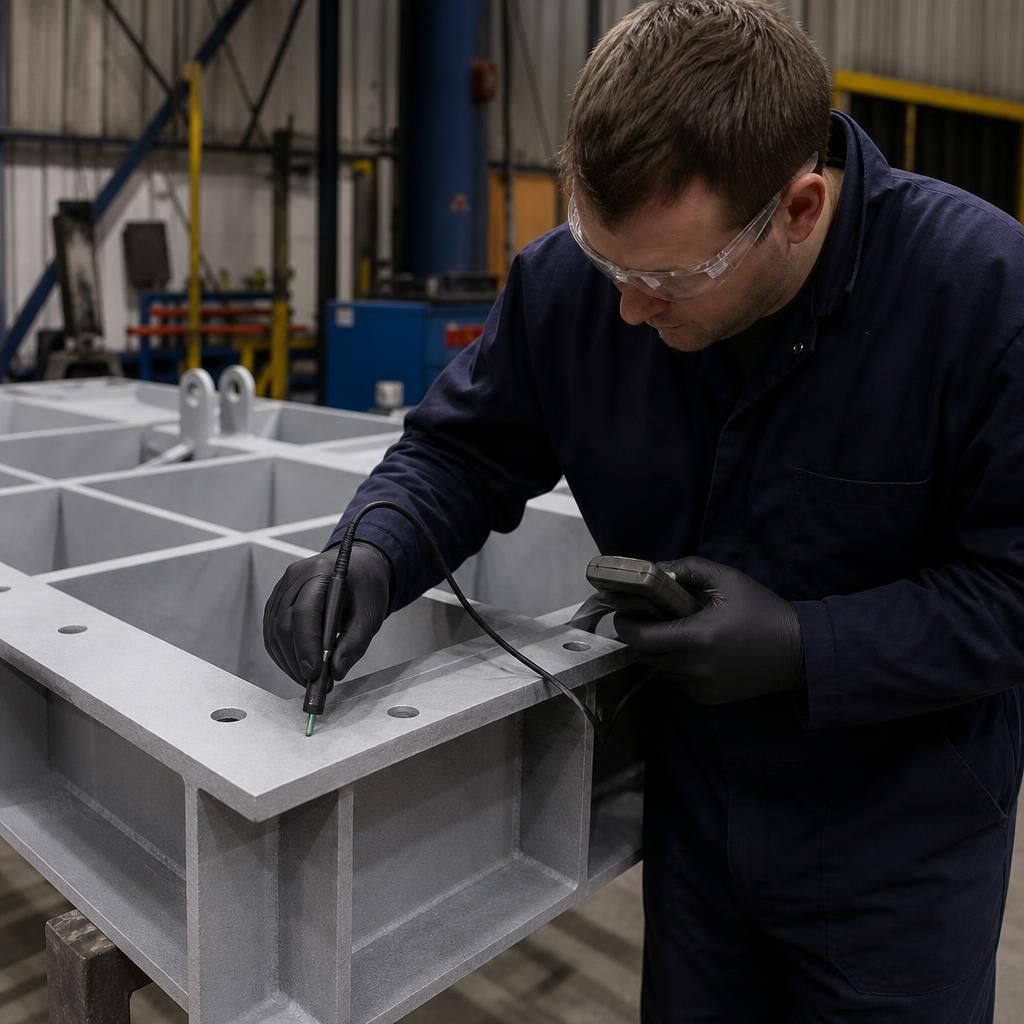
One preparation check that is often overlooked is the removal of soluble salts from the metal surface. Chloride and other salt residues can remain after exposure to handling, storage or industrial environments, even when the component looks visually clean. If they are trapped beneath zinc primer powder coating, they may attract moisture and contribute to underfilm corrosion.
Where contamination is suspected, the prepared surface should be tested and washed using a process compatible with the substrate and coating specification. The component must then be fully dried and protected from renewed contamination before coating. Abrasive media should also be clean and suitable for the required surface profile, since embedded dust or spent abrasive can interfere with bonding and affect the consistency of the primer layer.
Discuss Your Zinc Primer Powder Coating Preparation Requirements
Discuss your zinc primer powder coating preparation requirements with the coating team, including the component material, design, intended service conditions and any topcoat specification. This helps establish a suitable preparation and coating process before production begins.