

What is the role of zinc primer powder coating in maintaining environmental safety and compliance?
Zinc primer powder coating supports environmental safety and compliance by providing corrosion protection without the solvent emissions associated with many liquid primers, while controlled application can help limit coating waste. Compliance still depends on selecting a suitable product, controlling powder handling and curing, and managing residues and waste according to applicable UK environmental and workplace requirements.
Zinc primer powder coating supports environmental safety and compliance by forming a corrosion-resistant foundation beneath a compatible topcoat, helping protect steel throughout its service life while giving the coating process a controllable safety and environmental framework. Its compliance value depends on the particular formulation, application controls, curing conditions, documentation and waste-management arrangements rather than on the word “zinc” alone.
Protection of the underlying metal
Corrosion can create environmental and operational problems when it leads to premature replacement, coating failure or the release of rust and degraded material from structures and components. A zinc-containing primer can provide an additional barrier and, depending on its formulation and the wider coating system, a degree of sacrificial corrosion protection. Extending the useful life of a component can reduce the frequency of stripping, repair, repainting and replacement. Those benefits should be assessed alongside the product’s technical data, intended environment and compatibility with any finishing coat.
Product selection and chemical information
Environmental compliance begins before application. The product’s technical data sheet and safety data sheet should be reviewed for:
- the zinc compound and other substances present in the formulation;
- classification information, hazard statements and recommended controls;
- storage, handling and fire-safety instructions;
- required curing conditions and any emissions that may arise during heating;
- instructions for dealing with spills, residues and contaminated packaging; and
- restrictions relating to discharge, disposal or use in particular environments.
These documents help a business assess the product against its own risk assessments and applicable UK requirements, including workplace chemical controls and obligations concerning hazardous substances. A coating should not be selected solely because it is described as low-emission, zinc-rich or environmentally preferable; the supporting documentation must match the intended process and end use.
Worker and site safety
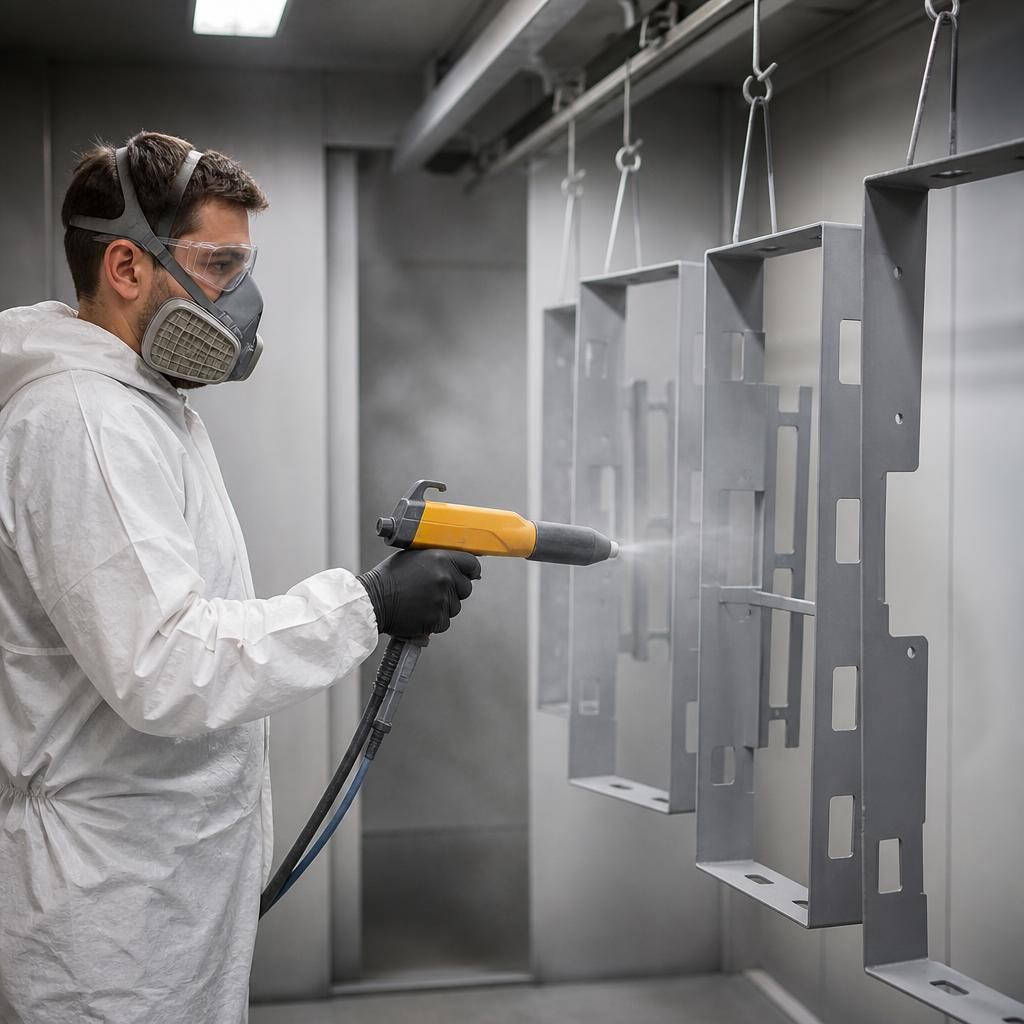
Powder is a fine particulate material, so safe handling requires measures that prevent unnecessary inhalation, skin contact and accumulation on surfaces. Local exhaust ventilation, suitable respiratory and personal protective equipment, closed or controlled transfer methods and good housekeeping should be selected through a documented risk assessment. Compressed air should not be used in a way that disperses settled powder into the workplace. Operators also need procedures for damaged bags, spills, cleaning equipment and powder that has become contaminated.
Where combustible powder is handled, the business should assess ignition sources, dust accumulation and equipment suitability. Extraction, collection and electrical systems need to be appropriate for the process, with inspection and maintenance arrangements recorded. The relevant controls will depend on the equipment, powder characteristics, quantities and layout of the installation; they should therefore be based on the supplier’s information and a competent assessment rather than a generic assumption.
Application and curing controls
Environmental performance is affected by how the coating is applied. Correct gun settings, grounding, booth maintenance and part positioning can help keep powder on the component rather than on surrounding equipment. Recovered powder must only be reused where the coating supplier’s instructions and the required finish permit it. Mixing powders, introducing foreign material or using reclaimed material in an unsuitable application can affect coating quality and create a waste stream that is more difficult to identify and manage.
Curing ovens should be operated at the specified metal temperature and dwell conditions. Under-curing may compromise protection and lead to rework, while excessive heating can affect the coating and increase energy use or generate unwanted breakdown products. Ventilation and extraction should be maintained in accordance with the equipment and product requirements, and any odour, smoke or abnormal deposit should be investigated rather than treated as normal process loss.
Waste, residues and water protection
Zinc-containing overspray, booth residues, used filters, contaminated cleaning materials and empty packaging should be segregated and handled according to their composition and classification. Waste should not be tipped into drains, onto land or into surface water. Zinc and other coating constituents can present risks to aquatic environments when released inappropriately, so spill prevention, contained storage and an established disposal route are important parts of compliance.
The wider preparation process also needs consideration. Abrasive blasting residues, spent media, degreasing materials and pretreatment chemicals may have different handling requirements from the powder itself. If wet preparation or chemical pretreatment produces wastewater, the discharge route must be authorised and controlled under the relevant site arrangements. Keeping waste streams separate makes it easier to identify their contents, obtain suitable disposal advice and retain evidence of responsible handling.
Records and evidence of compliance
A defensible compliance process normally includes the selected product’s current safety and technical documentation, risk assessments, operator training records, maintenance and extraction checks, curing records where relevant, and waste-transfer documentation. Batch or job records can also help demonstrate which primer was used, how the surface was prepared and which topcoat formed part of the finished system. This traceability is useful when investigating defects, reviewing environmental performance or demonstrating that the coating was applied within the manufacturer’s stated parameters.
For a UK business, the practical test is whether the complete process—from receipt and storage of the powder to application, curing, cleaning, waste handling and eventual component use—has been assessed and controlled. Zinc primer powder coating can contribute to a durable, lower-emission coating process, but environmental safety and regulatory compliance come from selecting an appropriate formulation and managing every stage with documented controls.
A zinc primer powder coating supports environmental compliance during service only when the complete coating system is suitable for the component’s exposure conditions. A primer beneath a compatible topcoat should not be treated as automatically suitable for direct contact with soil, standing water, chemicals, potable water or other sensitive environments.
Before specifying the system, assess how the finished component will be used and what may contact its surface. Confirm the coating supplier’s stated limitations, required topcoat and any relevant end-use restrictions. Where damage, abrasion or prolonged exposure could expose the zinc-containing layer, establish an inspection and repair method that restores the specified protection without introducing incompatible materials. This links the coating choice to the component’s actual environmental duty rather than relying on the presence of zinc alone.