

How does zinc primer powder coating interact with other coatings in multi-layered protection systems for metal components?
Zinc primer powder coating forms a corrosion-resistant foundation beneath a compatible topcoat, which adds environmental protection, colour and the specified surface finish. The layers must be selected and applied as a coordinated system, since topcoat chemistry, curing conditions, film thickness and the interval between coats affect intercoat adhesion and overall performance.
Zinc primer powder coating acts as the active corrosion-control layer in a multi-coat system, while subsequent coatings provide additional sealing and resistance to weathering, chemicals, abrasion or colour change. Its performance depends on the primer and topcoat functioning as one specified system rather than as unrelated finishes applied one over another.
How the layers work together
The zinc within the primer can provide sacrificial protection to exposed steel. Where a small defect reaches the metal, the zinc is preferentially consumed before the steel, helping to reduce the rate of corrosion. The topcoat then limits the passage of water, oxygen, salts and contaminants to the primer and substrate. It also protects the zinc-rich layer from direct exposure, which can reduce premature consumption and improve the appearance of the finished component.
This combination is different from relying on a topcoat alone. A topcoat mainly acts as a barrier, whereas the zinc primer adds an electrochemical form of protection. The two functions are complementary, but only if the topcoat allows the primer to remain properly bonded and does not introduce defects that trap moisture between the layers.
Compatibility between primer and topcoat
Topcoat chemistry is a key consideration. Epoxy, polyester, polyurethane and other powder formulations can behave differently over a zinc primer. Some provide strong adhesion and chemical resistance but may be less suitable for prolonged ultraviolet exposure; others offer better exterior colour and gloss retention. The correct choice depends on the component’s environment and the performance requirements of the complete coating specification.
Compatibility should be confirmed for the precise primer, topcoat and curing schedule being used. A coating can appear sound immediately after application yet suffer from poor intercoat adhesion, blistering, cracking or delamination if the two formulations are chemically or mechanically unsuitable. Product data and, where necessary, trial panels or adhesion testing provide more reliable evidence than selecting a topcoat by colour or resin family alone.
Partially cured and fully cured primer layers
In some powder processes, the primer is applied and partially gelled before the topcoat is applied. This can help the layers fuse during the final cure, reducing the risk of contamination between coats. The specified temperature and time must be sufficient for the full system, not simply for one layer in isolation.
A fully cured primer may also be topcoated, but its surface normally needs to be clean and suitably receptive to the next coat. Depending on the product specification, this may involve controlled abrasion, removal of surface contamination or reactivation of the surface. Applying a topcoat to a smooth, contaminated or over-cured primer can reduce mechanical adhesion even when the primer itself is firmly attached to the metal.
Film thickness and application defects
Each layer needs enough film build to perform its intended function, but excessive thickness can create its own problems. Thick or uneven powder deposits may contribute to solvent or moisture entrapment, cracking, pinholing, poor edge definition and incomplete cure. Zinc-rich powders can also affect the appearance and surface texture of the topcoat, particularly where the primer has a rough profile or where gas release occurs during heating.
Edges, corners, welds, folds and recessed areas require particular attention. These locations can receive less uniform coverage and are often the first points at which corrosion protection is challenged. The component design, racking arrangement, application technique and cure profile should therefore be considered as part of the layered system.
Managing outgassing and surface condition
Porous castings, galvanised surfaces, weld areas and contaminated steel can release gases or vapours during curing. If these gases pass through a wet or soft coating, they may leave pinholes or blisters. A zinc primer does not remove the need for suitable preparation or an appropriate degassing and curing approach. Cleaning, abrasive preparation, preheating or the use of a compatible outgassing-resistant specification may be needed, depending on the substrate.
Between coats, the surface must remain free from dust, oil, moisture, fingerprints and other contaminants. Handling marks or deposits can form weak interfaces that are not visible beneath the topcoat. Masking and racking should also prevent uncoated areas, runs, impact damage or contamination from being concealed by the final layer.
What happens if the system is poorly matched?
- The topcoat may fail to wet or bond adequately to the zinc primer.
- Differences in curing or thermal movement may produce cracking, lifting or delamination.
- Pinholes and voids can allow moisture to reach the steel beneath the coating.
- Excessive zinc exposure can affect appearance and may reduce the intended service life of the primer.
- Incompatible recoating can make later repair or refurbishment more difficult.
These failures are not always caused by the zinc primer itself. They can result from unsuitable preparation, incorrect film thickness, contamination, an incorrect oven profile, insufficient cure or applying the topcoat outside the product’s recommended recoat conditions.
Practical specification and inspection
A robust specification identifies the steel preparation standard, zinc primer formulation, intended topcoat, target film thicknesses, cure requirements and inspection method. It should also state whether the primer is to be partially cured or fully cured before the next layer and how damaged areas are to be repaired.
Inspection can include visual checks for pinholes, craters, blisters and uneven coverage, together with dry-film thickness measurements and adhesion testing where appropriate. For components exposed to moisture, salts, chemicals or outdoor weathering, the complete system should be assessed against the relevant performance requirements rather than judging the primer and topcoat separately.
For industrial metal components, the most dependable approach is to treat zinc primer powder coating as one part of a tested, application-specific protection system. Selecting compatible materials, controlling the interface between coats and verifying the finished film are what allow the primer’s sacrificial protection and the topcoat’s barrier properties to work together.
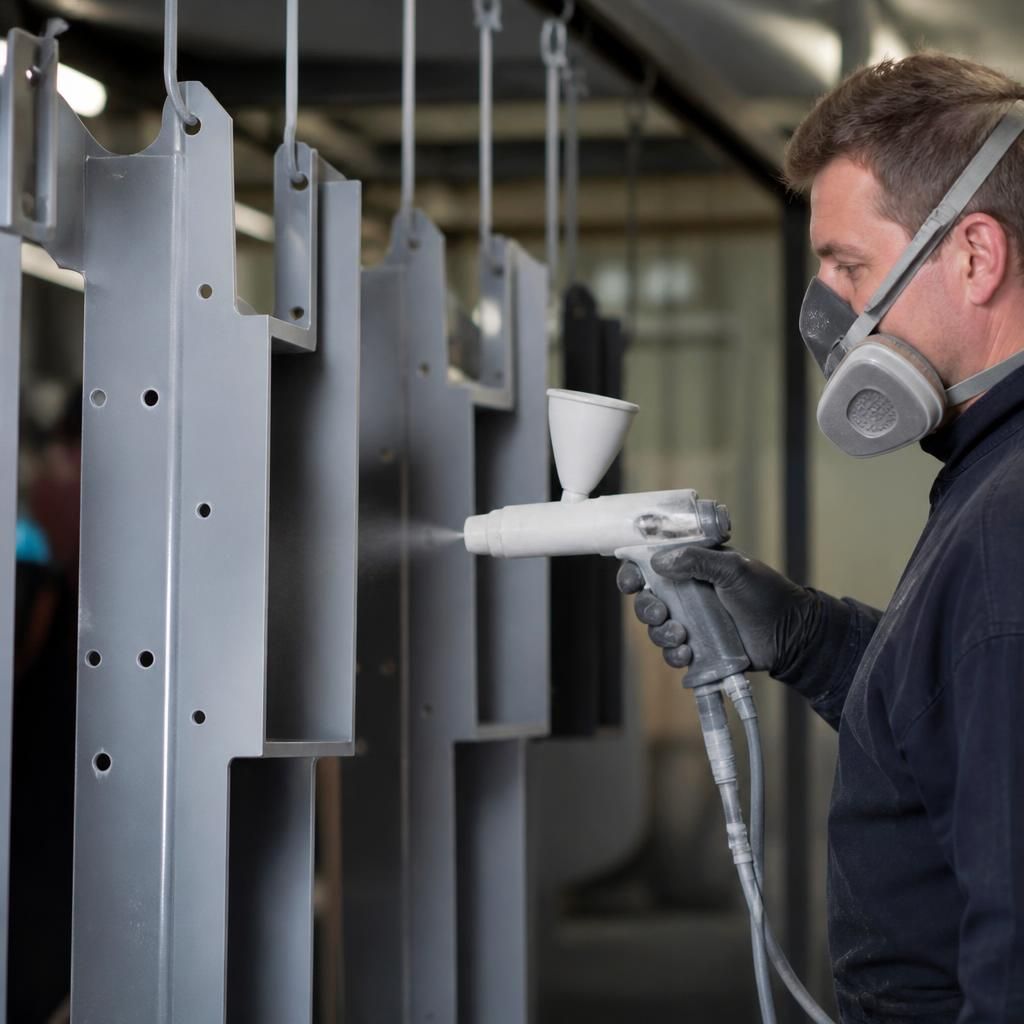
Where a zinc primer and powder topcoat are not directly compatible, a specified sealer or tie coat can act as an intermediate bonding layer. It may help stabilise the zinc-rich surface, reduce porosity and provide a more suitable interface for the final coating, particularly where the primer has a textured or highly conductive surface.
This additional layer does not make incompatible products suitable by default. The complete sequence must be assessed for adhesion, curing and film build, because every added interface creates another potential failure point. The primer, intermediate coat and topcoat should therefore be selected as a tested system, with the manufacturer’s application instructions followed for surface condition, recoat intervals and curing.