

What are the benefits of using primer, epoxy, and nylon coatings for metal components in industrial applications?
Primer, epoxy and nylon coatings improve the performance of industrial metal components in different ways: primers support adhesion and corrosion resistance, epoxy provides a tough protective barrier, and nylon offers durable protection against wear, impact and friction. Selecting the right system helps match the component’s finish to the demands of its operating environment.
The main benefit of using primer, epoxy and nylon coatings is that each material can be selected for a different part of an industrial component’s service requirements. A primer prepares and conditions the metal surface, epoxy forms a chemically resistant coating layer, and nylon creates a smooth, resilient surface where abrasion, sliding contact or repeated handling are important. Used individually or as part of a specified coating system, they can improve component longevity, reduce surface deterioration and make performance more predictable.
Primer coatings support a more consistent coating system. A suitable primer creates an intermediate layer between the metal substrate and the finishing coat. This helps the subsequent coating form a more uniform film, particularly where the component is exposed to moisture, contamination or variable surface conditions. Primers can also help seal the substrate and reduce the effect of small differences in surface profile, although thorough cleaning and preparation remain essential.
For fabricated parts, machinery components and structural items, this consistency is important at edges, joints, weld areas and other points where coating coverage can be more difficult to control. A primer system can also allow the specification to be adapted to the metal being coated and the conditions it will face, rather than relying on one finish for every application.
Epoxy coatings are useful where chemical and mechanical protection are required. Epoxy resins form a closely bonded film that can withstand contact with many industrial substances, including oils, greases, cleaning agents and process chemicals, subject to the exact formulation and exposure conditions. This makes epoxy suitable for plant equipment, fabricated metalwork, machine parts and components located in workshops or production environments.
Another benefit is the ability to specify epoxy as part of a multi-layer system. For example, an epoxy primer may be selected for the base layer while a compatible topcoat provides the required colour, gloss or additional environmental resistance. This approach separates the functions of the coating layers and can be more effective than asking one product to provide every property. Epoxy is not automatically the best choice for prolonged outdoor exposure, because some epoxy finishes can lose colour or develop surface chalking under ultraviolet light. The exposure conditions should therefore be considered before the final specification is agreed.
Nylon coatings provide a low-friction, resilient surface. Nylon is particularly beneficial where metal parts slide against other surfaces, receive repeated contact or need protection from scuffing. Its smooth finish can reduce friction in suitable applications and may help components move more consistently. It can also reduce noise and vibration where coated metal parts come into contact during operation, depending on the component design and coating thickness.
These properties make nylon relevant to handling equipment, guides, rollers, brackets, guards, chutes and other industrial parts exposed to continual contact. Nylon can also provide electrical insulation and a comfortable, less abrasive surface for some handling applications. Its performance depends on the grade, substrate preparation, applied thickness and operating temperature, so it should be matched to the load and environment rather than treated as a universal finish.
Combining coating types can address several risks at once. A component may require a primer to condition the metal, an epoxy layer to resist process chemicals and a compatible outer finish to provide the required appearance or operating characteristics. In another application, nylon may be more suitable as the functional outer layer because the main concern is repeated contact rather than chemical exposure. The benefit of a layered specification is that each coating performs a defined role.
- For prepared structural or fabricated metal: primer can provide a controlled base for the finishing system.
- For plant and machinery exposed to chemicals: epoxy can provide a suitable protective film when its chemical compatibility has been checked.
- For moving, sliding or frequently handled parts: nylon can provide a smooth surface with useful friction and contact characteristics.
- For components with several exposure risks: a compatible primer, intermediate coat and topcoat can be specified to distribute the protective functions.
The practical benefits also depend on preparation and application. Oil, rust, scale, moisture and other contaminants can prevent the coating system from performing as intended. The metal must be prepared to an appropriate standard, and the coating must be applied at a suitable thickness and cured correctly. Excessive thickness, insufficient curing or poor coverage at edges can create weaknesses even when the chosen coating material is appropriate.
Selection should therefore consider the metal substrate, chemical exposure, temperature, ultraviolet exposure, contact or sliding movement, expected cleaning regime and the required appearance. It is also important to check compatibility between primer, epoxy and nylon layers before specifying a combined system. The right choice is not simply the coating with the broadest list of properties; it is the system whose properties correspond most closely to the component’s actual operating conditions.
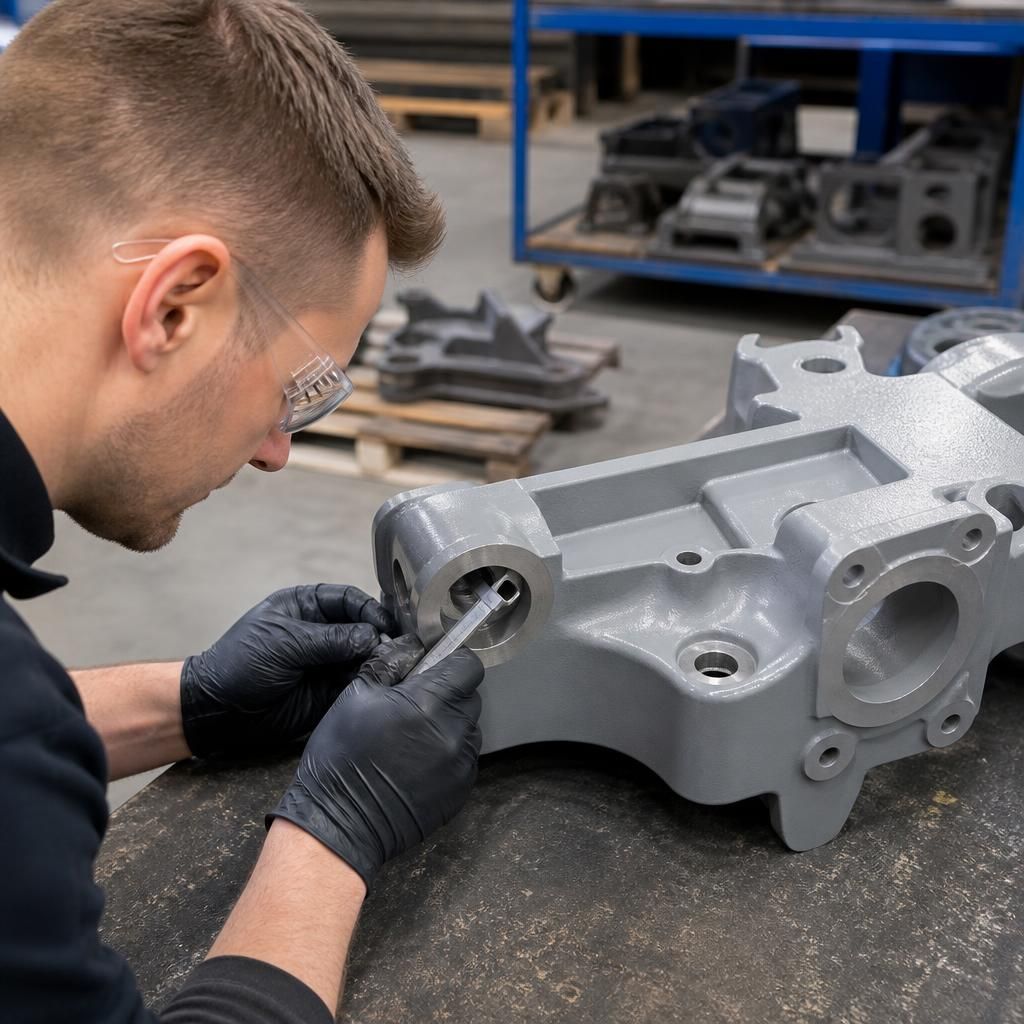
A further benefit of specifying primer, epoxy or nylon coatings correctly is that the finished component can retain its required fit and function. Every coating adds a film to the metal surface, so coating thickness must be considered wherever parts mate, move, thread together or locate against another component.
This is particularly important for machined faces, threaded holes, bearing seats, hinges and sliding interfaces. Areas that must remain uncoated can be masked before application, while the coating specification can identify surfaces where a controlled build is required. Nylon may need particular attention because its functional performance depends on the thickness and uniformity of the finished layer. Planning these details before coating helps avoid interference during assembly and ensures that protection does not compromise the component’s intended operation.