

What types of metal components benefit most from UV resistant powder coatings in outdoor environments?
Metal components that remain outdoors and receive regular sunlight benefit most from UV resistant powder coatings, particularly fencing, gates, railings, street furniture, lighting enclosures, architectural panels and agricultural equipment. These coatings are suited to parts where prolonged UV exposure could otherwise cause colour fading, chalking and deterioration of the visible finish.
The outdoor metal components that benefit most from UV resistant powder coatings are those with prolonged sunlight exposure, a visible finish to maintain and a high cost or inconvenience associated with removing them for refinishing. This includes externally installed equipment, structural accessories and enclosures used in industrial, commercial, infrastructure and agricultural settings.
External equipment housings and enclosures
Electrical cabinets, control-panel housings, ventilation casings, pump covers and equipment guards can be good candidates where their painted surfaces are continuously exposed to sunlight. A UV resistant coating helps the enclosure retain a more consistent colour and surface appearance, which is particularly useful when several units are installed together or form part of a customer’s site infrastructure.
These components may also experience heat, rain, condensation and airborne contamination. UV resistance should therefore be considered alongside corrosion protection, coating adhesion and the suitability of the pre-treatment for the underlying steel, aluminium or galvanised material.
Industrial and commercial site components
Access platforms, handrails around plant areas, external supports, protective guards, loading-bay equipment and service covers can benefit where they cannot be stored indoors between uses. Their surfaces are often inspected by workers, contractors or site visitors, so progressive fading, chalking or loss of gloss can make an otherwise serviceable component look worn.
Powder coating is also useful for components manufactured in batches. Applying the same exterior-grade specification across repeated parts can help maintain a uniform appearance, provided that the metal preparation, powder specification and curing conditions are controlled consistently.
Infrastructure and site furniture components
Components used in transport, utilities and public-facing commercial environments can require a durable finish that remains presentable without frequent removal or repainting. Examples include equipment cabinets, protective barriers, structural brackets, service-access covers and support frames that are permanently installed outdoors.
For these parts, the most important consideration is often not simply whether the coating is labelled UV resistant. The specification should reflect the actual exposure level, expected appearance, substrate and physical demands. A coating that performs well on a sheltered component may not be the right choice for a fully exposed part facing direct sun, water and abrasive dirt.
Components with broad, visible surfaces
Large panels, casings and fabricated assemblies show changes in colour and gloss more readily than small hidden brackets. They are therefore strong candidates for a UV resistant formulation, especially when a consistent appearance is required across a project or between replacement parts. Dark, highly saturated or specific corporate colours may also require particular attention because any variation can be more noticeable across a large surface.
Where appearance is important, the specification should identify the required colour, gloss level, texture and acceptable visual variation before coating begins. Parts should be assessed under suitable lighting after coating, as texture and gloss can affect how colour changes are perceived.
Complex fabricated parts
Frames, brackets and assemblies with folds, recesses or welded joints can remain outdoors for long periods while presenting several coating challenges. The UV resistance of the powder is important, but so are edge coverage, cleanliness, weld preparation and the removal of contaminants from difficult-to-reach areas.
Components should be designed and prepared so that the coating can cover the exposed metal as evenly as possible. Sharp edges, enclosed sections, drainage points and areas where water can collect may need particular attention. UV resistance cannot compensate for poor preparation or a design that allows moisture and contaminants to remain against the metal.
When UV resistance should be part of the specification
- The component will remain outdoors rather than being moved into covered storage.
- Its finish is visible from normal working or public areas.
- It is difficult, disruptive or costly to remove for recoating.
- Several parts need to retain a consistent colour and gloss.
- The component is exposed to direct sunlight for substantial periods.
- The application involves long-term outdoor use alongside rain, condensation, dirt or temperature changes.
UV resistance is not a substitute for a complete coating system. The metal type, pre-treatment, powder chemistry, film thickness, curing process and intended environment all influence the finished result. Components exposed to salt, chemicals, abrasion or standing water may need additional protection or a different specification rather than UV resistance alone.
For businesses supplying repeated metal parts, the coating requirement should be agreed before production. Sharing the component material, dimensions, service environment, preferred appearance and any existing coating constraints allows the finish to be assessed against its actual use. Powder-coating specialists serving manufacturers, fabricators, construction firms and other Midlands businesses can also advise on suitable preparation and handling for batch or larger components, with collection and delivery options available where required.
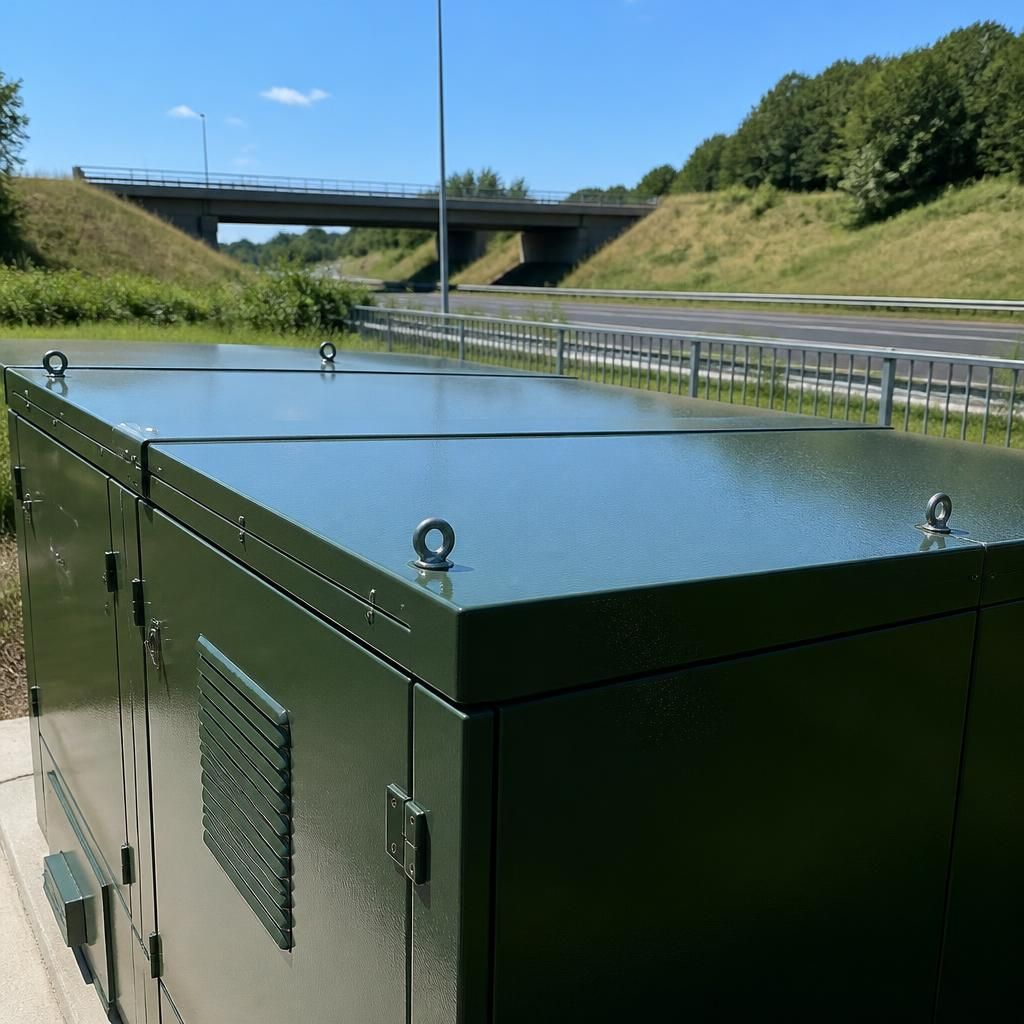
Upward-facing outdoor metal components often benefit particularly from UV resistant powder coatings because they receive direct sunlight for longer periods than sheltered or vertically recessed surfaces. Examples include equipment lids, canopy frames, horizontal covers, sign supports and the top surfaces of external cabinets. These areas can show fading or loss of gloss sooner when the coating is exposed continuously rather than shaded for part of the day.
Exposure is also affected by orientation, surrounding buildings and local shading. A component that is partly sheltered may need a different specification from an identical part installed in an open position. When assessing the finish, consider the component’s most exposed faces, the required colour and gloss, and whether water or dirt can collect on horizontal sections.