

What differentiates UV resistant powder coatings in terms of performance compared to traditional outdoor coatings?
UV resistant powder coatings are formulated to withstand prolonged ultraviolet exposure, so they generally retain colour, gloss and surface integrity for longer than traditional outdoor coatings. This improved resistance helps reduce fading, chalking and coating breakdown on exposed metal components, while the powder-coated finish also provides a durable protective barrier against everyday outdoor wear.
UV resistant powder coatings differ from traditional outdoor coatings mainly through their formulation, weathering stability and method of application. They are designed to preserve the coating film under repeated sunlight and outdoor exposure, while also providing a more uniform, mechanically robust finish on metal components.
The main performance differences are:
- Greater resistance to weathering: UV-stable powder systems use resin and pigment combinations selected to withstand ultraviolet radiation more effectively. This helps the finish remain stable through repeated cycles of sunlight, rain and temperature change, rather than deteriorating as quickly as a coating with limited exterior durability.
- More consistent film formation: Powder is applied as a dry material and then cured to form a continuous film. When the component has been correctly prepared and the coating is properly cured, this can produce consistent coverage across edges, faces and profiles. Liquid outdoor coatings can be more affected by application conditions, solvent evaporation and variations in wet-film thickness.
- Improved resistance to physical wear: The cured powder film is generally resistant to everyday handling, abrasion and minor impacts. This is important for fabricated parts, framework, enclosures and other components that may be transported, installed or exposed to contact during use. The precise level of resistance depends on the selected powder system, film thickness, substrate and curing process.
- Better protection of the underlying metal: A sound powder coating separates the substrate from moisture and common outdoor contaminants. Its performance depends heavily on preparation: oil, rust, mill scale and other contamination must be removed, and the surface must be suitable for the specified coating system. Poor preparation can cause adhesion loss or corrosion beneath any type of outdoor coating.
- Reduced risk of premature surface breakdown: Traditional outdoor coatings may lose flexibility, become brittle, chalk or deteriorate when their binder and pigments are not suited to sustained exposure. A properly selected UV resistant powder coating is less likely to experience these forms of weathering at the same rate, helping the component retain a serviceable finish for longer.
- More repeatable results on batch work: Powder coating is well suited to repeat production because the same preparation, application and curing controls can be applied across a batch. This supports consistency in film coverage and finish between comparable parts. Colour matching and appearance still require control of the powder specification, batch handling, application settings and curing conditions.
These advantages do not mean that every UV resistant powder coating will outperform every traditional outdoor coating in every situation. Performance is determined by the complete system, including the metal substrate, pre-treatment, powder chemistry, coating thickness, curing schedule, design of the component and the conditions it will face. A coating intended for sheltered architectural metalwork may not be suitable for a component exposed to constant moisture, industrial contaminants, abrasion or coastal conditions.
There is also an important distinction between appearance and protection. A finish can remain mechanically sound while its colour or surface sheen changes, or it can retain its appearance while defects in preparation allow corrosion to develop underneath. A meaningful comparison should therefore consider adhesion, corrosion resistance, impact and abrasion resistance, flexibility, film continuity and long-term appearance rather than relying on colour retention alone.
For businesses specifying coatings, the practical approach is to define the exposure conditions and performance requirements before selecting the product. Relevant details include whether the component will be permanently outdoors, the likely level of sunlight, contact with water or chemicals, expected handling, required appearance and the type of metal being coated. The applicator can then advise on preparation, powder selection and curing requirements for the component and its intended use.
For Midlands manufacturers and fabricators, a specialist powder-coating provider can assess batch requirements and arrange collection or delivery where appropriate. The key comparison is not simply powder versus liquid coating; it is whether the complete coating specification is matched to the component’s environment and applied under controlled conditions.
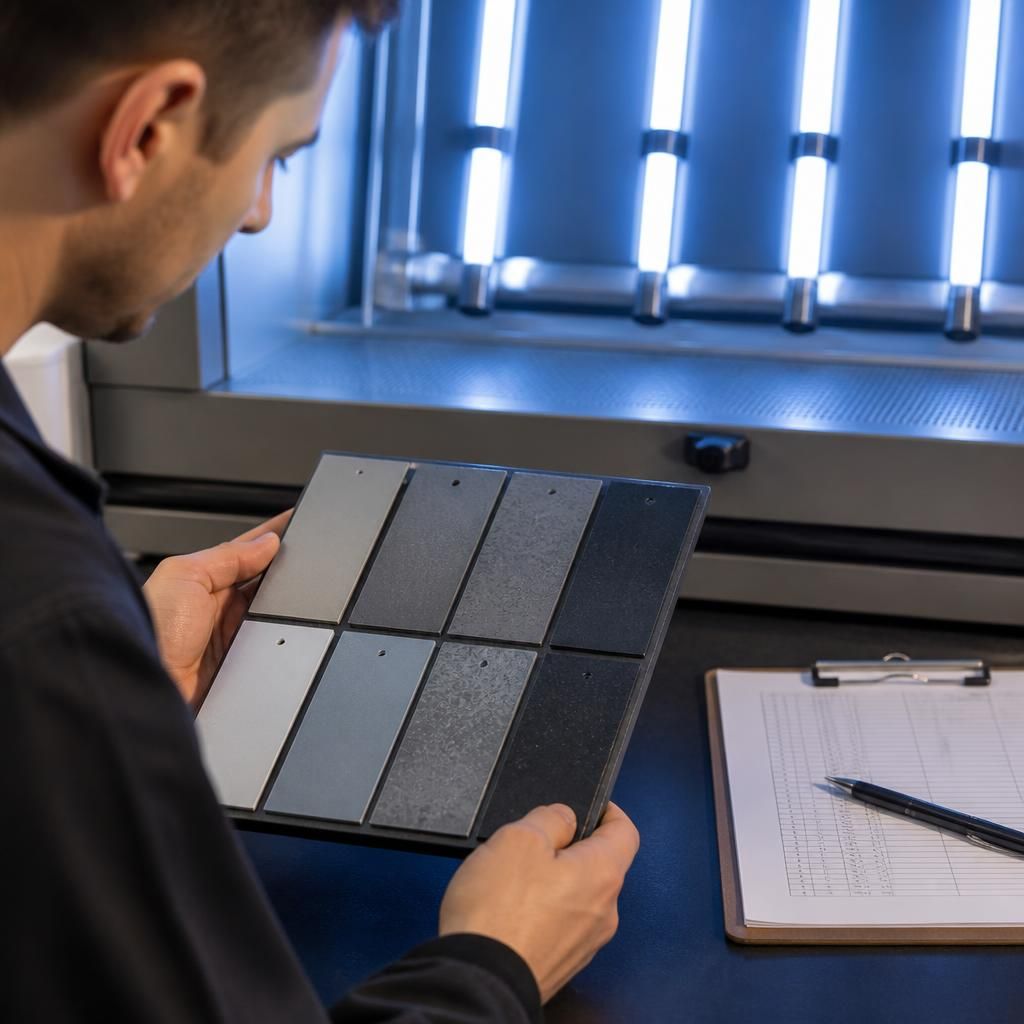
A reliable comparison between UV resistant powder coatings and traditional outdoor coatings should be based on weathering evidence rather than appearance when newly applied. Technical data may include colour and gloss retention after accelerated UV and moisture exposure, along with assessments of chalking, cracking and adhesion. These results help indicate how a coating is likely to respond to prolonged sunlight, although they are comparative tests rather than a guarantee of identical outdoor performance.
For a specific metal component, representative sample panels can provide an additional check before production coating begins. Reviewing the cured finish under the expected exposure conditions helps confirm that the selected system provides the required balance of appearance, surface integrity and substrate protection. This is particularly useful where colour consistency or long-term visual quality is important across a batch of components.