

How do UV resistant powder coatings impact the overall lifespan and maintenance costs of outdoor metal components?
UV resistant powder coatings help outdoor metal components retain their colour, finish and protective performance for longer by limiting UV-related fading, chalking and coating degradation. This can extend the practical service life of the component and reduce maintenance costs by lowering the frequency of recoating, repairs and appearance-related refurbishment.
UV-resistant powder coatings can extend the serviceable life of outdoor metal components by slowing ultraviolet degradation of the coating film, while also reducing the maintenance burden associated with fading, chalking and premature surface breakdown. Their financial effect is best assessed across the component’s lifecycle: a coating that remains stable for longer may reduce the need for cleaning, cosmetic refurbishment, recoating and access equipment, although it cannot prevent every form of outdoor damage.
Ultraviolet radiation gradually changes many organic coating binders and pigments. The result can include colour shift, loss of gloss, chalking, embrittlement and reduced adhesion between coating layers. Once the film has degraded, moisture and contaminants can reach weaknesses in the surface more easily. A UV-resistant formulation uses a resin system, pigments and additives selected to slow these changes. This helps the finish retain its intended appearance and remain a more effective barrier for longer than a coating not designed for the same exposure.
The effect on component lifespan depends on the relationship between the coating and the metal beneath it. Powder coating does not make a component immune to corrosion, impact or fatigue. Surface preparation, pretreatment, edge coverage, film thickness, curing and the suitability of the powder for the exposure environment all influence the result. If rust, oils, mill scale or other contaminants remain on the substrate, the coating may fail locally even when its UV resistance is good. A durable specification therefore considers the complete coating system rather than treating UV resistance as a standalone feature.
Maintenance costs can be divided into several areas:
- Appearance maintenance: better colour and gloss retention can reduce the frequency of cosmetic refurbishment where visual consistency matters, such as on external equipment, architectural metalwork or branded components.
- Protective maintenance: slowing chalking and film degradation helps preserve the coating’s barrier function, so defects can be identified and dealt with before they become more extensive.
- Access and labour: recoating outdoor assemblies may require dismantling, lifting equipment, site access arrangements or temporary removal from service. Extending the interval between major coating work can reduce these associated activities.
- Operational disruption: components that need to be taken out of service for refurbishment can create handling, transport and production-planning costs. Longer coating performance can make such interruptions less frequent, subject to the component’s use and condition.
These potential savings should not be confused with eliminating maintenance. Outdoor powder-coated metal should still be inspected for scratches, impact damage, corrosion at joints and edges, contamination, standing water and contact with incompatible materials. Cleaning with suitable methods can remove deposits that retain moisture or contain corrosive salts. Early repair of a local defect is generally less disruptive than allowing damage to spread beneath the coating.
The expected maintenance profile also varies with exposure. Strong sunlight, high surface temperatures, coastal salts, industrial pollutants, moisture, freeze-thaw cycles and abrasion can act together. A south-facing component may experience a different colour-retention challenge from a sheltered item, while a component near a road may face more dirt and impact damage than one in a protected setting. Finish colour, gloss level, geometry and orientation should therefore be considered when comparing coating options.
For a meaningful lifecycle assessment, specify the likely exposure, required appearance, substrate, component size and handling conditions before coating. It is useful to agree how colour change, gloss loss, surface chalking, corrosion and mechanical damage will be inspected, and to distinguish normal weathering from a coating defect. Records of the powder specification, preparation method, cure conditions and inspection results can also support consistent maintenance decisions across batches.
For manufacturers and fabricators, selecting a UV-resistant powder coating is consequently a balance between initial processing requirements and the cost of keeping the finished component in service. Large, batch or specialist metal components can be assessed according to their exposure and end use, with the coating system chosen to support both long-term appearance and practical protection rather than relying on UV resistance alone.
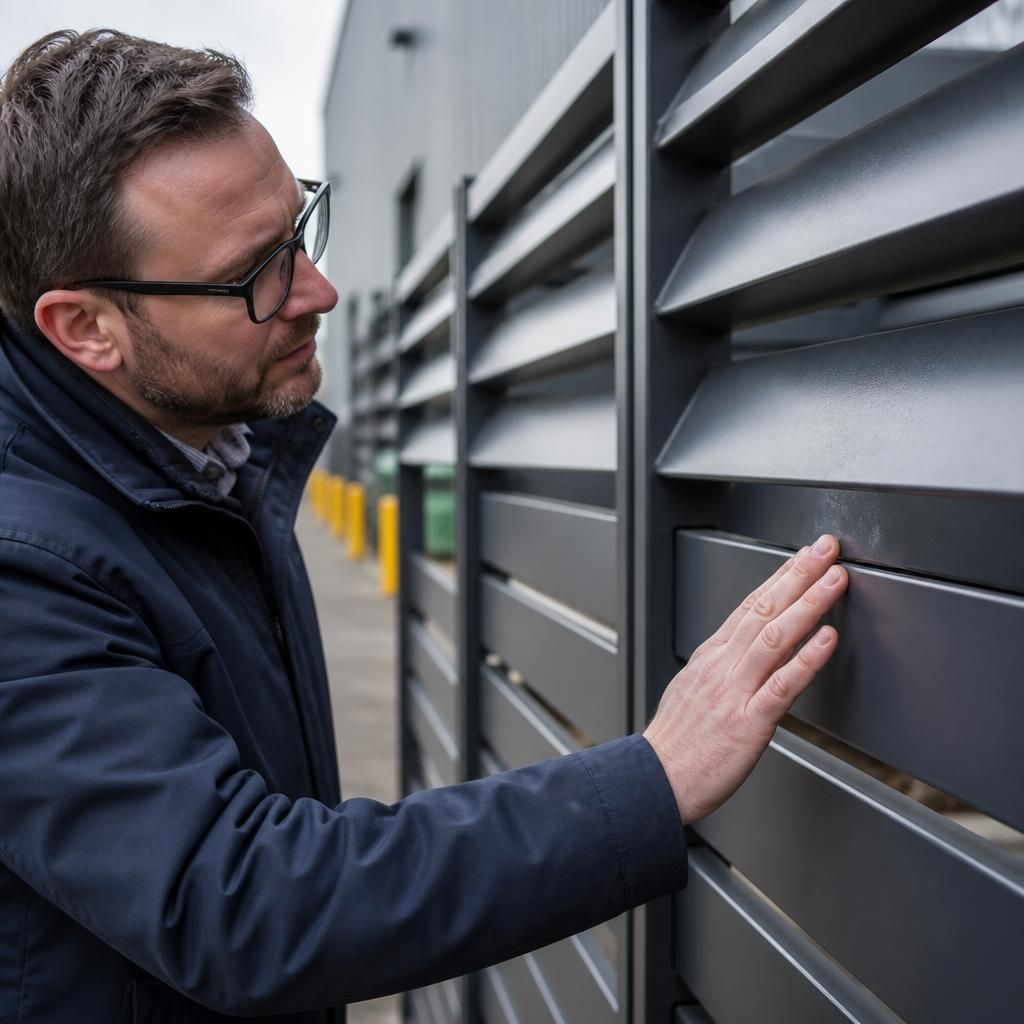
The cost benefit of UV-resistant powder coating is best judged by separating cosmetic ageing from functional coating failure. A component may show some change in colour or gloss while the coating still provides an effective barrier, whereas a scratch, exposed edge or local loss of adhesion may require attention even if the surrounding finish still looks consistent.
This distinction helps businesses set sensible maintenance thresholds. If appearance is critical, such as for visible architectural or branded metalwork, colour and gloss retention may justify earlier refurbishment. For less visible components, maintenance can be guided more by coating integrity and corrosion risk. Assessing these requirements at the specification stage avoids treating every visual change as a reason for complete recoating and supports a more proportionate whole-life maintenance plan.
Discuss UV-resistant coating for your outdoor components
Discuss your outdoor metal components with Powder-coatings.co.uk to review the exposure conditions, substrate and finish requirements for a suitable UV-resistant powder coating system. Provide the component details and intended use to begin an informed coating assessment.