

What are the most common causes of powder coat primer adhesion failures and how can they be prevented?
Powder coat primer adhesion failures are most often caused by inadequate surface preparation, contamination, unsuitable pretreatment, incorrect primer selection or incomplete curing. Prevent them by thoroughly cleaning and profiling the metal, applying the correct pretreatment and primer for the substrate, and controlling application and curing conditions to the specified requirements.
Powder coat primer adhesion failure is the loss of bond either between the primer and the metal substrate or between the primer and a subsequent topcoat. The most reliable way to prevent it is to identify which interface has failed, establish the failure pattern, and then control the complete coating system rather than treating the detached area in isolation.
Identify the type of failure first
- Adhesive failure at the metal interface: the primer lifts cleanly from the substrate, often exposing bare metal. This points towards an issue with the substrate condition, pretreatment layer or primer compatibility.
- Adhesive failure between coats: the primer remains attached to the metal but the topcoat separates from it. This can result from an unsuitable intercoat surface, contamination between stages or an incompatible coating combination.
- Cohesive failure within the primer: the coating splits internally rather than separating neatly from the metal. This may indicate inadequate film strength, excessive or uneven film build, poor fusion or a primer that has been damaged during handling.
- Localised edge or weld failure: adhesion is lost around corners, welds, drilled holes or fabricated joints. These areas often behave differently from flat sheet because of geometry, weld residues, heat-affected zones and variable coating thickness.
Testing a representative affected part is more useful than judging adhesion from appearance alone. A cross-hatch assessment can show whether the coating is firmly attached across a defined area, while a pull-off test can help compare bond strength between sound and defective regions. Testing should be carried out on the actual substrate and coating build where possible, because a small laboratory panel may not reproduce the conditions of a fabricated component.
Substrate-specific risks
Different metals present different adhesion challenges. Galvanised and zinc-coated steel may contain surface passivation, storage residues or loosely bonded material that must be compatible with the selected pretreatment. Castings can retain oil in pores, while aluminium may develop a tenacious oxide layer between processing stages. Welded assemblies can carry heat tint, spatter, anti-spatter residue or embedded grinding debris. These conditions should be considered when defining the preparation route rather than applying one process to every component.
Fabricated parts should also be inspected for crevices, enclosed sections and drainage problems. Trapped water, cleaning chemicals or blasting media can later migrate into the coating and create a local loss of bond. Designs that retain moisture are particularly difficult to coat consistently, so drainage and access should be considered before production.
Control the primer-to-topcoat interface
A primer that appears sound can still produce poor adhesion if the next coat is applied outside the permitted recoat conditions. The primer may need to be fully cured, partially cured or coated within a specified interval, depending on the system. Its surface must also be free from handling marks, dust and other deposits. The technical data for the complete system should confirm compatibility between the primer and topcoat, including application method, film thickness and curing requirements.
Over-curing can be as problematic as under-curing. An excessively hardened primer may provide a less receptive surface for the next layer, while an under-cured film may remain weak or release volatile material during subsequent heating. Record the metal temperature and time at temperature rather than relying only on the oven air reading, particularly where components vary significantly in thickness or mass.
Prevent failures through process verification
- Define the substrate, required corrosion performance and complete coating system before production begins.
- Inspect incoming parts for oils, oxides, weld residues, moisture, storage corrosion and other conditions that could affect bonding.
- Use a preparation and pretreatment sequence suitable for the specific metal and document any deviations.
- Verify primer coverage at edges, recesses, welds and difficult-to-reach areas, not just on broad flat surfaces.
- Check film thickness at representative points. Excessive build can trap volatiles, reduce flexibility and create internal stress; insufficient build may leave weak or poorly protected areas.
- Confirm oven performance, metal temperature and cure time against the coating system requirements.
- Use a test panel or sample component when introducing a new substrate, primer or topcoat combination.
- Retain records of batch details, preparation route, application conditions, measurements and test results so recurring defects can be traced to a process change.
What to do when adhesion has already failed
Do not simply abrade the visible defect and apply more powder over it. First determine whether the failure is isolated or widespread and whether the detached coating has exposed corrosion or an unsuitable underlying layer. Remove loose and poorly bonded material, reassess the remaining coating, and repeat the appropriate preparation and pretreatment before recoating. If the primer and topcoat are incompatible or the cure history is uncertain, complete removal and reprocessing may be safer than building another layer over an unstable surface.
For repeated failures, compare good and defective parts from the same production run. The comparison should include substrate type, preparation condition, coating thickness, cure profile, handling and the time between stages. This evidence-based approach distinguishes a one-off part defect from a systematic issue in the powder coating process.
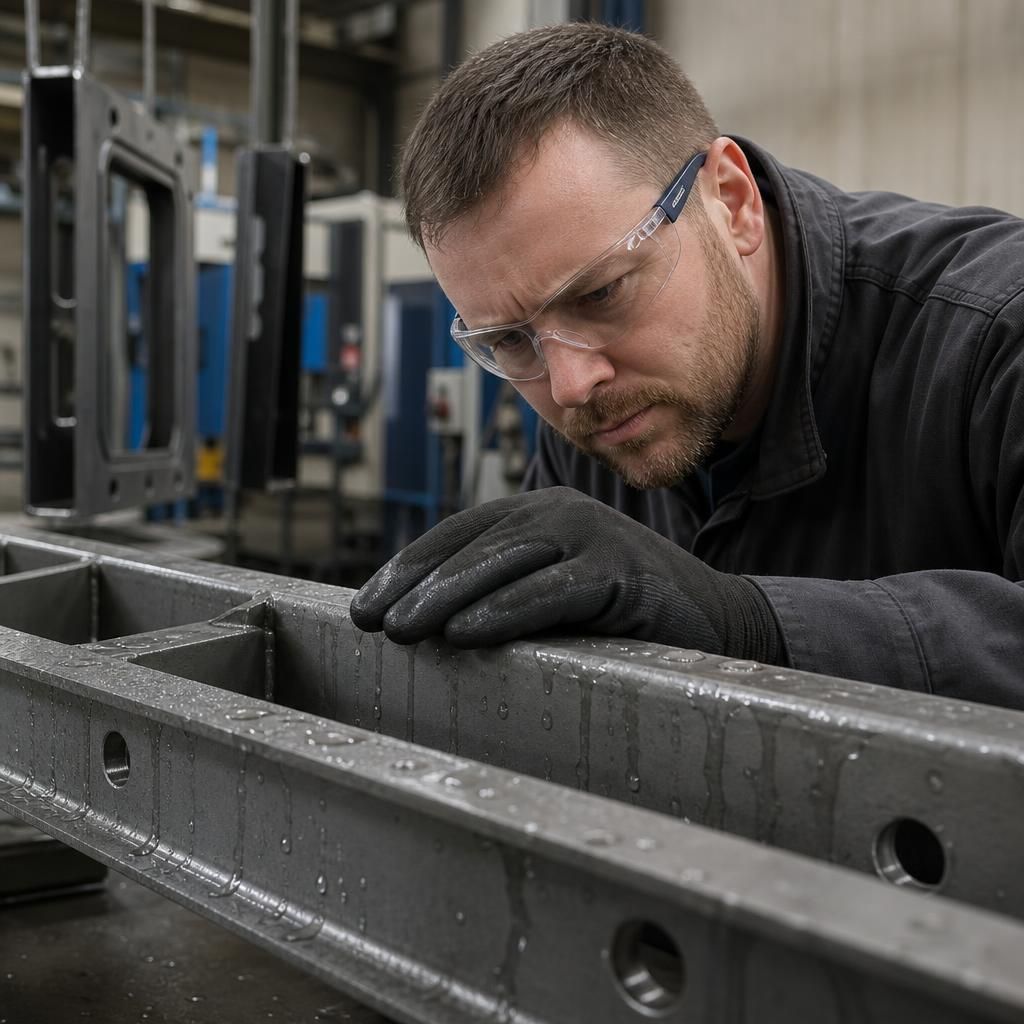
Residual salts and moisture after wet cleaning or chemical pretreatment are a frequently overlooked cause of powder coat primer adhesion failure. If rinse water dries on the metal, it can leave a film that interferes with bonding; if the prepared surface develops flash rust before coating, the primer may attach to corrosion rather than sound metal.
- Use a final rinse appropriate to the pretreatment system and monitor its condition.
- Dry parts thoroughly, including joints, folds and recessed areas where water can collect.
- Inspect prepared metal for staining, powdery residue or early corrosion before primer application.
- Protect the clean surface from contact with dirty gloves, packaging or uncoated storage equipment.
Keeping the prepared substrate chemically clean and completely dry preserves the surface condition created by pretreatment, giving the primer a stable base for adhesion.
Discuss Your Powder Coat Primer Adhesion Requirements
Discuss your powder coat primer adhesion requirements with our Midlands coating specialists, providing details of the substrate, coating system and any failed components. This helps identify the most appropriate preparation, primer and testing approach for your application.