

What are the key factors to consider when selecting a powder coat primer for different metal substrates?
Select a powder coat primer by matching its chemistry and curing requirements to the metal substrate, then assess corrosion exposure, pretreatment compatibility, required film build and the intended topcoat. Steel, aluminium and galvanised metal can require different primer systems because their surface chemistry, conductivity and risk of corrosion vary.
The right powder coat primer depends on more than the name of the metal. Selection should account for the exact substrate or alloy, its condition, the component’s design, the application method and the performance required from the finished coating system. A primer that performs well on clean mild steel may be unsuitable for cast iron, aluminium, stainless steel or zinc-coated components, even when the parts look similar.
Identify the substrate accurately
Begin by confirming what the component is made from and whether it is a single metal or an assembly of different metals. Useful distinctions include:
- Carbon or mild steel: The primer must suit the level of preparation achieved and the required resistance to corrosion and mechanical damage.
- Cast iron: Porosity, graphite-rich areas and embedded processing residues can affect adhesion and may create gas or contamination issues during heating.
- Aluminium: The alloy, oxide condition and previous treatment can influence adhesion. Some alloys also contain elements that respond differently to preparation and coating.
- Galvanised or zinc-coated steel: The zinc surface requires a primer and preparation process that will not undermine the coating or create intercoat problems.
- Stainless steel: Its relatively passive surface may need a different preparation approach from ordinary steel, particularly where strong adhesion is required.
Do not rely solely on a drawing, purchase description or visual appearance if the substrate is uncertain. Material certificates, production records or a controlled test on the actual component can prevent an inappropriate primer from being applied across a complete batch.
Consider the condition and history of the metal
The same substrate can require different treatment depending on how it has been stored, manufactured or previously coated. Assess whether the surface contains mill scale, oxidation, machining oil, drawing compounds, weld residues, marking ink, salts or remnants of an earlier coating. A primer is not a substitute for removing materials that prevent direct contact with the prepared metal.
Previous exposure is also relevant. Components stored outdoors, handled with contaminated gloves or assembled with lubricants may need more extensive cleaning than newly fabricated parts. If a part has been stripped, blasted, chemically treated or previously powder coated, the resulting surface profile and chemical condition should be checked before the primer is chosen.
Match the primer to component geometry
Flat test panels do not behave like complex fabrications. Edges, welds, holes, folded sections, recessed areas and internal corners can receive a different powder deposit from broad, accessible faces. Deep recesses may be difficult to charge electrostatically, while sharp edges can develop a thinner protective film as the powder pulls away from the edge during curing.
When reviewing a primer, consider its ability to form a continuous coating over the component’s most vulnerable features. The design may also require masking of threads, machined faces, earth points or close-tolerance interfaces. Primer selection should allow for those uncoated areas and for any edge preparation needed to avoid premature breakdown.
Account for mixed-metal assemblies
A fabricated item may combine steel, aluminium, stainless steel, fasteners or zinc-coated sections. These materials can differ in surface condition, electrical response and reaction to preparation chemicals. Applying one primer across every area is not automatically the best approach.
Where a single coating system must cover several metals, confirm that it has been assessed for each relevant substrate rather than assuming that performance on one metal transfers to another. Also consider whether exposed interfaces could allow moisture ingress or create a galvanic corrosion risk. Masking, sealing or a separate treatment may be necessary at joints and contact points.
Define the mechanical demands
Primer choice should reflect what happens to the component after coating. Parts that are bent, formed, bolted, impacted, abraded or repeatedly handled need a system with suitable flexibility and toughness. A highly rigid film may be inappropriate if the finished component is likely to deform, while a softer film may not provide sufficient resistance to wear or handling damage.
Pay particular attention to edges, press-fit areas and fastener points. The primer must not interfere with assembly tolerances, electrical contacts or moving interfaces. If the coating will be machined, drilled or repaired after application, that requirement should be included in the specification rather than treated as an afterthought.
Check application and process compatibility
The primer must be suitable for the powder application equipment, grounding arrangement and production sequence. Electrical contact is especially important because the metal component must accept the electrostatic charge consistently. Poor grounding can lead to weak deposition, uneven coverage or difficulty coating recessed areas, regardless of how well the primer was selected.
Confirm the product’s specified application method, recommended storage conditions, recoat requirements and permissible processing range from its technical documentation. The actual metal temperature should be monitored during curing, because the part—not just the surrounding oven air—determines whether the primer develops the intended properties.
Application equipment, booth cleanliness and powder handling can also affect selection. A primer that is technically suitable may be impractical if it cannot be applied consistently with the available equipment or if its process requirements conflict with the production sequence.
Evaluate compatibility between primer and topcoat
The primer and topcoat should be treated as one coating system. Check that the two layers form a sound bond and that the topcoat does not soften, disturb or chemically affect the primer during subsequent heating. Colour, gloss and texture can also change where the primer influences the appearance of a thinner or more translucent topcoat.
Determine whether the primer requires a particular overcoating condition. Some systems are intended to be topcoated within a defined process window, whereas others may require preparation if the first layer has been fully cured or contaminated. If parts are stored between coats, protection from dust, moisture and handling marks becomes part of the specification.
Use testing to confirm the selection
Technical data provides the starting point, but production trials on representative parts are valuable where the substrate, geometry or service conditions are unusual. Test pieces should include difficult features such as welds, edges, recesses and mixed-metal joints rather than only smooth panels.
Assessment may include visual coverage, adhesion, impact or bend performance, resistance to the expected environment and inspection after curing. Any testing should be carried out using the proposed preparation, primer, topcoat and process settings. Changing one of these variables can invalidate the comparison.
Review the specification before production
A robust primer specification should identify the substrate, preparation method, coating sequence, target appearance, critical masking points, curing conditions and acceptance criteria. Keep the technical data and safety information with the job documentation, and record the primer product, batch and process settings used for each production run.
The most reliable selection is therefore based on evidence from the actual metal and manufacturing process. Identify the substrate precisely, examine its condition and geometry, define the mechanical and environmental demands, verify compatibility with the complete coating system and validate the result on representative components before committing to full-scale production.
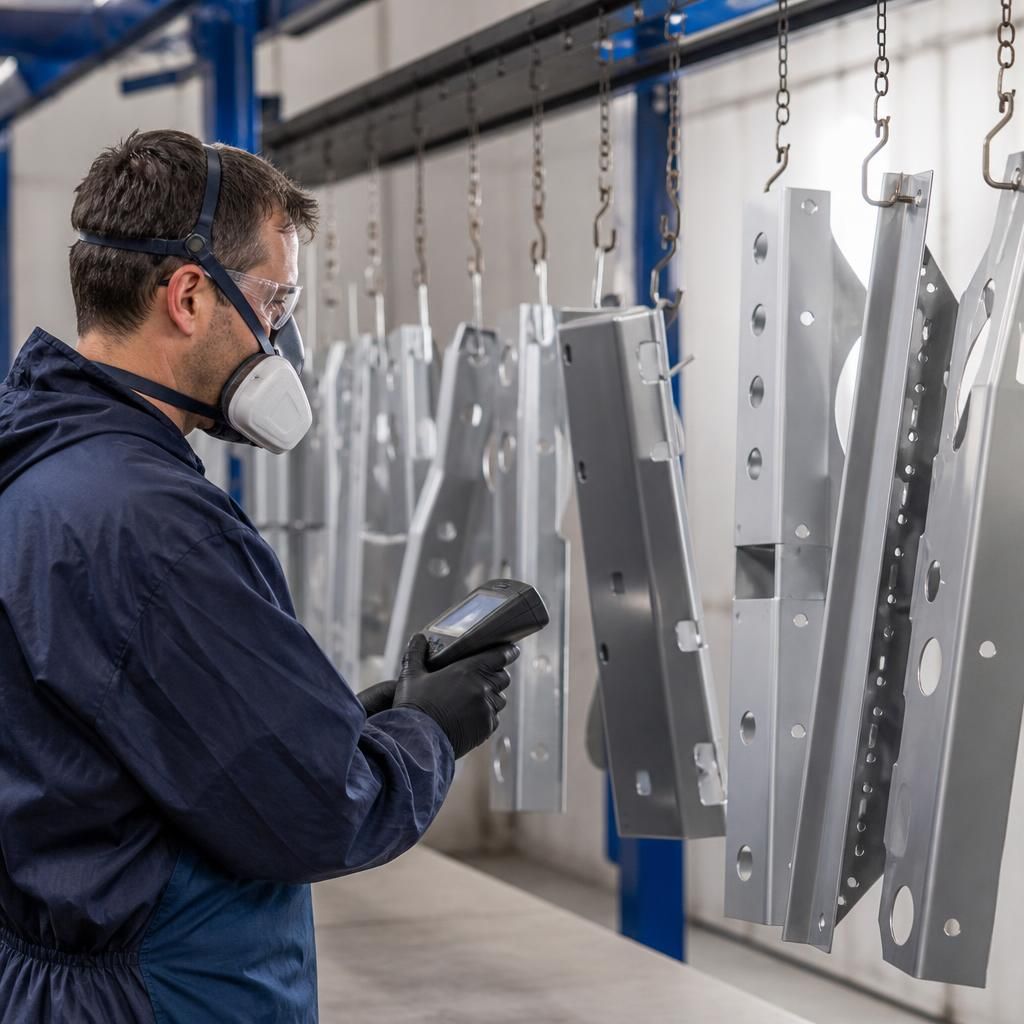
Choose the powder coat primer according to the corrosive conditions the finished component will face, not only the metal beneath it. Indoor, dry applications may require a different level of protection from external structures exposed to rain, road salts, condensation or industrial chemicals.
- Assess moisture, salt and chemical exposure at the installation site.
- Consider whether trapped water can collect in joints, folds or recessed sections.
- Check that the primer and topcoat provide a compatible barrier system for the expected environment.
- Use representative test pieces where exposure conditions are severe or difficult to classify.
This assessment helps prevent the selection of a primer that is technically compatible with the substrate but under-specified for the component’s service environment.