

How does a primer system contribute to corrosion resistance in powder coating applications?
A primer system improves corrosion resistance by creating an additional protective barrier between the metal substrate and moisture, salts, chemicals and oxygen. It also promotes adhesion between the substrate and powder topcoat, helping reduce pathways for underfilm corrosion when the coating system is correctly specified and applied.
A primer system contributes to corrosion resistance by controlling what happens at the metal–coating interface, where corrosion begins. Its role is not simply to add another layer: the primer can stabilise the substrate, limit electrochemical activity, improve the continuity of the coating system and provide a more suitable surface for the powder topcoat.
Controlling the corrosion cell
Corrosion requires an electrochemical reaction involving the metal, moisture and an electrolyte such as dissolved salts. A suitable primer helps interrupt this reaction at the substrate surface. It can reduce the movement of water and ions towards the metal and limit the areas in which anodic and cathodic reactions can occur.
Some primer formulations also provide active corrosion protection rather than relying solely on isolation. For example, a suitably formulated zinc-rich primer may offer sacrificial protection to exposed steel, although its performance depends on the formulation, film thickness, curing conditions and the coating system applied over it. This type of protection must be selected for the substrate and environment rather than assumed to be appropriate for every application.
Reducing corrosion spread from damage
A scratch, chip, sharp edge or small coating defect can expose the substrate. Without a suitable system design, corrosion may spread beneath the surrounding coating, causing blistering, lifting or progressive delamination. A primer can help restrict this spread by improving the stability of the exposed interface and by maintaining stronger cohesion between the metal and the remaining coating.
This is particularly important on fabricated parts with welds, folded sections, drilled holes, joints and edges. These areas can retain contaminants, receive less coating during application or experience greater mechanical stress in service. Primer selection and application therefore need to account for the component’s geometry, not just its broad surface area.
Supporting coating-system durability
Corrosion resistance depends on the complete system, including the metal substrate, preparation, primer, topcoat and curing process. The primer must be chemically and physically compatible with the powder topcoat. If the layers do not cure correctly or develop sufficient intercoat bonding, moisture can enter through the interface and undermine the expected protection.
Correct film formation is also important. An uneven or insufficient primer layer may leave vulnerable areas, while excessive build can affect curing, appearance or the performance of the topcoat. Application parameters should therefore be controlled across the component, with particular attention to edges, recesses and complex profiles.
Why preparation remains essential
A primer cannot compensate for oil, grease, mill scale, rust, soluble salts, blasting residue or other contamination left on the metal. These materials can prevent proper contact with the substrate and create localised corrosion sites beneath the coating. Preparation should establish a clean, suitably profiled surface and remove conditions that would interfere with curing or adhesion.
The required preparation method varies according to the substrate and its previous condition. Steel, galvanised steel and aluminium can present different surface-chemistry challenges, so the primer system should be selected alongside the pretreatment process. Particular care is needed where components have been stored in damp or contaminated conditions before coating.
Matching the primer to the service environment
The level of corrosion protection required is determined by the conditions in which the component will operate. Relevant factors include exposure to rain or condensation, marine salts, industrial pollutants, cleaning chemicals, road salts, abrasion and temperature changes. A system suitable for an internal dry environment may not provide the same protection in an external or chemically aggressive location.
Design details also influence performance. Water traps, unsealed joints and narrow gaps can retain moisture even when the visible coating is sound. Where possible, components should be designed, fabricated and drained to reduce these risks. The coating specification should then define the appropriate primer, topcoat, preparation standard, curing requirements and inspection controls.
How performance is assessed
Primer systems are commonly assessed as part of a complete coating system rather than in isolation. Evaluation may include checks on surface preparation, coating thickness, curing, adhesion and resistance to exposure conditions relevant to the intended use. Laboratory tests can help compare systems, but test results should be interpreted in relation to the component design, substrate and actual service environment.
A primer therefore improves corrosion resistance most effectively when it is chosen for the metal and exposure conditions, applied to a properly prepared surface and cured with a compatible powder topcoat. It is one part of a controlled coating specification, not a substitute for sound fabrication, preparation or application practice.
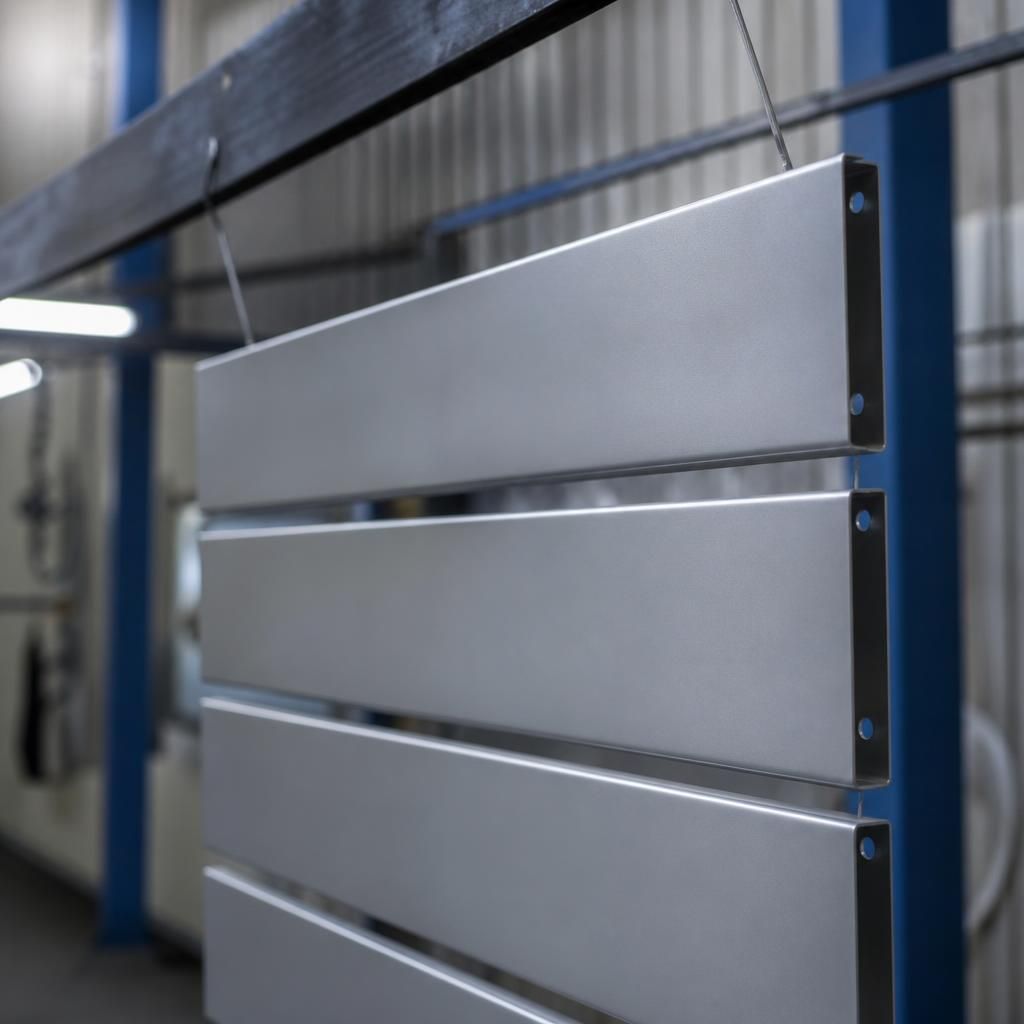
A primer system can improve corrosion resistance by helping the coating withstand thermal movement between the metal substrate and the powder topcoat. When a component heats and cools, these materials may expand and contract at different rates. A compatible primer acts as an intermediate layer, helping distribute stress through the coating system and maintain adhesion at the interface.
This is relevant to components exposed to changing outdoor temperatures, heated equipment or process environments. If the primer and topcoat are poorly matched, repeated temperature changes can contribute to microcracking or separation between layers. These defects may provide routes for moisture and contaminants to reach the metal, so thermal compatibility should be considered alongside the required corrosion protection.
Discuss your corrosion-resistant primer requirements
Discuss your component’s substrate, service environment and corrosion-resistant primer requirements with the powder-coating team. They can help assess the coating system needed for your application, including collection and delivery options across the Midlands.