

What industrial applications benefit most from nylon coatings on metal surfaces?
Nylon coatings benefit metal surfaces used in high-wear industrial applications, including conveyor components, rollers, guides, chutes, bearings and handling equipment. They are particularly suitable for manufacturers, fabricators, construction and automotive businesses where components need reduced friction, abrasion resistance and added protection from corrosion.
The industrial applications that benefit most from nylon coatings are those where metal components experience repeated sliding contact, impact, noise, moisture or contamination, and where replacing the entire part with a polymer would be impractical. Nylon provides a tough, lower-friction surface while the metal substrate retains its structural strength, making the combination useful across manufacturing, automotive, construction and specialist fabrication.
Fluid-handling and process equipment
Pump components, valve parts, pipe supports, brackets and other process equipment can benefit where metal surfaces are exposed to rubbing contact, damp conditions or occasional impact. A nylon coating can separate contacting metal surfaces, helping to reduce galling and surface damage. It may also provide an additional barrier between the substrate and the operating environment.
Suitability depends on the fluid, temperature and exposure time. Nylon is not universally resistant to every chemical, and some grades absorb moisture, which can affect dimensions and mechanical performance. The coating specification should therefore be checked against the actual process medium rather than selected solely because the component is used in a wet environment.
Automotive components and production equipment
Automotive applications often benefit where a metal part needs controlled movement, protection against rubbing or reduced noise. Suitable examples may include brackets, locating components, clamps, fixtures, protective covers and selected parts within vehicle or component production equipment. The nylon layer can help prevent direct metal-to-metal contact and reduce the risk of scratching adjacent surfaces.
It is particularly useful for production fixtures that repeatedly locate, support or release painted, machined or finished parts. However, coating thickness and masking must be controlled carefully where the coating affects a fit, clearance, electrical earth or moving joint.
Manufacturing jigs, fixtures and tooling
Jigs and fixtures are strong candidates when they repeatedly contact components during machining, fabrication, inspection or assembly. Nylon-coated contact points can provide a less abrasive interface than bare steel, helping to protect the workpiece from marks while maintaining a robust metal support underneath. This can be valuable where the fixture is reused across many production cycles or where the component’s visible finish must be preserved.
Potential applications include clamps, stops, locating blocks, support rails and changeable tooling surfaces. The design must allow for the coating’s build thickness, particularly around holes, threads, datum faces and precision locating features.
Packaging and production machinery
Packaging machinery can use nylon-coated metal parts where products, packaging materials or machine elements pass over a contact surface. Examples include wear strips, change parts, guides and support components, provided the chosen coating is appropriate for the material being handled and the operating conditions. The main advantages are reduced friction, lower risk of surface marking and protection of the underlying metal.
Where a component contacts food, pharmaceuticals or other regulated products, the coating must meet the relevant specification and approval requirements. A general-purpose nylon coating should not be assumed to be suitable for direct product contact.
Construction and fabricated plant
Construction-related equipment and fabricated plant can benefit from nylon-coated contact faces, pivoting interfaces, support components and protective metalwork. These applications are often exposed to dirt, moisture, impact and repeated movement, so a polymer surface can help limit damage that would otherwise occur on unprotected metal.
Nylon can also be considered for components where reducing operational noise is important, because the coating forms a resilient interface between contacting surfaces. It is still necessary to assess the load, impact energy and temperature, as a coating is not a substitute for a mechanically suitable base material or correctly sized bearing arrangement.
Electrical and control equipment
Selected enclosures, brackets, mounting components and metal supports may benefit from nylon where surface insulation, protection from light abrasion or separation between dissimilar metal parts is required. In these applications, the coating can help prevent unintended direct contact and protect the substrate from handling damage.
Electrical design requirements remain essential. A coated surface should not automatically be treated as a reliable earth path or as a replacement for dedicated insulation. Masking, coating continuity and the required breakdown performance need to be defined before processing.
Applications where nylon may be less suitable
- Parts exposed continuously to temperatures beyond the selected nylon system’s service range.
- Components requiring extremely tight dimensions unless coating thickness can be incorporated into the design.
- Surfaces subject to aggressive chemicals without confirmation of chemical compatibility.
- High-load rolling or precision bearing interfaces where a different engineered surface may be more appropriate.
- Parts with poorly prepared surfaces, contamination or inadequate access for consistent application.
The strongest candidates are therefore metal components with a sound substrate, repeatable contact or wear conditions, and enough dimensional allowance for the coating. Application success depends on surface preparation, the selected nylon formulation, coating thickness, curing requirements and correct masking of functional areas. For manufacturers, fabricators, construction firms and automotive businesses, assessing the complete operating environment is more reliable than choosing nylon solely by sector or component name. Specialist powder-coating providers can review the part geometry, intended use and batch requirements before confirming whether nylon is the appropriate coating system.
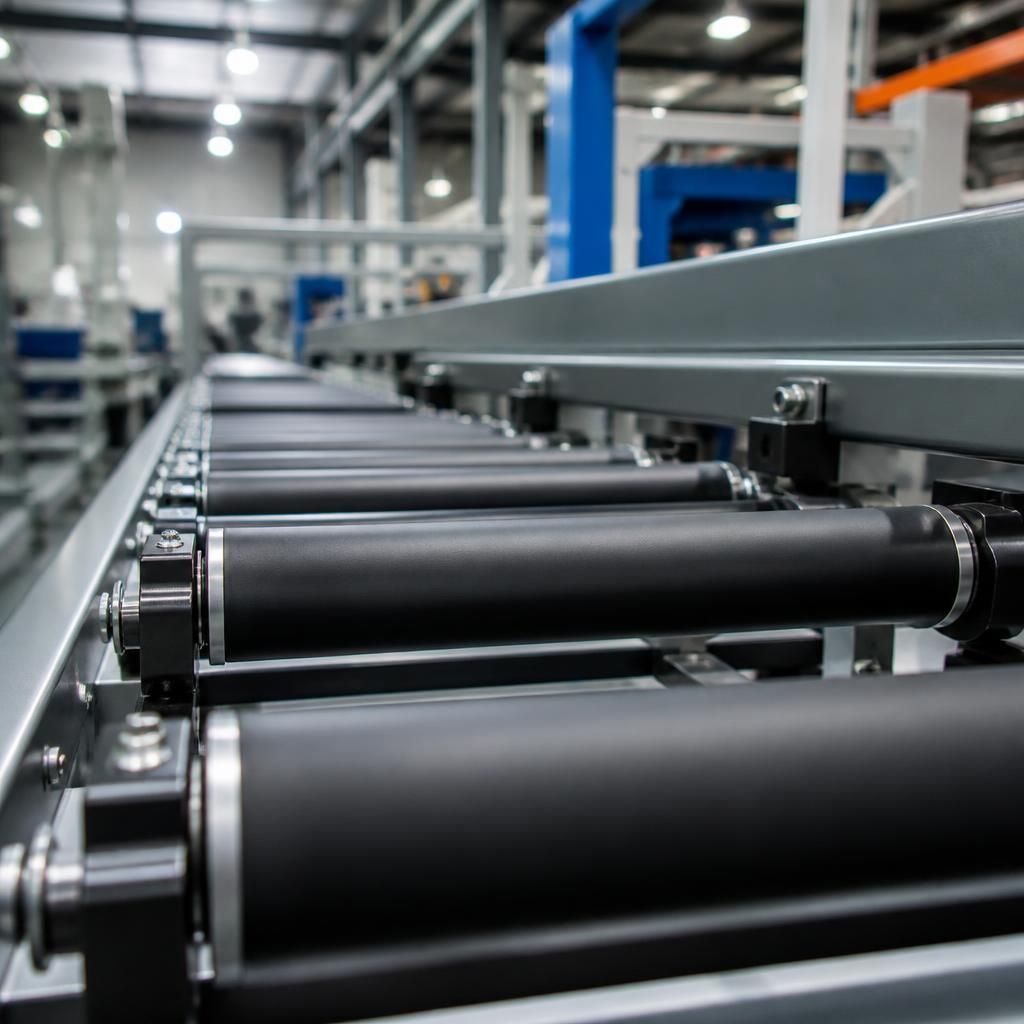
Nylon coatings are most effective when the coating surface is designed to suit the way the component moves and what it contacts. A smooth finish can support sliding movement and reduce surface marking, while the required texture, thickness and formulation may differ where the coating must tolerate repeated contact with another hard material. The mating component should be assessed alongside the coated part, since its hardness, finish and movement pattern all influence wear.
This makes nylon particularly relevant to engineered interfaces where the coating acts as a controlled wear surface rather than simply a decorative finish. Defining the contact conditions before coating helps determine whether nylon is suitable and prevents a general-purpose specification being applied to a demanding industrial duty.
Discuss Your Nylon Coating Application Requirements
If you are assessing nylon for a specific industrial component, discuss the part geometry, operating conditions and required finish with the powder-coating team. This helps establish whether the proposed coating system is suitable before processing.