

How does the application process influence the effectiveness and durability of nylon coatings on metal coils?
The application process directly affects how well a nylon coating adheres to a metal coil and how consistently it protects the surface. Thorough preparation, controlled coating thickness, even coverage and correct heating and cooling help produce a continuous finish with the wear resistance, corrosion protection and long-term durability expected in industrial use.
The application process influences nylon coating performance by determining whether the finish can remain bonded, continuous and mechanically stable throughout the coil’s service life. On metal coils, the result depends not only on depositing the nylon but also on how the coating responds to the coil’s shape, handling, forming operations and working environment.
Coil geometry creates application challenges that are less pronounced on flat, easily accessible components. The outer surface, edges, inner turns and areas between adjoining sections may not receive the same exposure to coating material. If the coil is coated in strip form before being wound, the process must account for later forming and contact between adjacent layers. If it is coated after forming, access and drainage become more important. These differences affect the risk of thin areas, trapped contamination and local damage.
The condition of the metal also affects the coating’s chemical and mechanical bond. Oils, oxide residues, moisture and other contaminants can interfere with adhesion or create defects beneath the nylon. Surface treatment therefore needs to be appropriate to the substrate and the intended service conditions, rather than treated as a standard step that is identical for every coil. A correctly prepared surface gives the coating a more stable foundation and reduces the likelihood of lifting, flaking or corrosion developing beneath damaged areas.
Application equipment and powder handling influence the consistency of the deposited layer. The selected method must suit the coil’s dimensions, surface profile and production requirements. Particular attention is needed at edges, corners, joints and changes in section, where the coating may behave differently from the broad faces. Excess material can affect fit, movement or heat transfer, while insufficient material may leave the metal more vulnerable to abrasion, impact or corrosive agents.
The thermal stage affects more than the final appearance. Nylon must reach the required condition for its particles to fuse into a coherent film, but the metal’s mass, shape and heat-conducting properties influence how evenly that condition is achieved. Uneven thermal exposure can leave variations in film structure or internal stress. Excessive thermal exposure may also alter the coating’s properties. For this reason, the relevant control is the temperature history of the coated metal, not simply the setting shown on the equipment.
Cooling and subsequent handling can influence the coating before it has developed its full practical resistance. Moving, stacking or winding a coil too soon may mark the surface, create pressure points or damage edges. Handling equipment should therefore be suitable for coated metal, and contact points should be considered where the coil is supported, turned or stored. This is particularly relevant where the finished coil will be transported or incorporated into another assembly.
Quality checks should assess the coating as a functional barrier rather than relying only on its appearance. Depending on the specification, checks may include:
- continuity across accessible surfaces, edges and transitions;
- film thickness in representative and difficult-to-reach areas;
- adhesion after the coating has been processed and handled;
- evidence of pinholes, blisters, inclusions, runs or exposed metal;
- resistance to the abrasion, impact, chemicals, moisture and temperature changes expected in service.
These checks help distinguish an attractive finish from one that is suitable for the coil’s actual duty. A nylon coating that performs well in a dry, low-contact application may require a different specification or process control where the coil is repeatedly flexed, exposed to contaminants or subject to sliding contact.
Process records are also valuable when repeat batches are required. Recording the substrate condition, coating material, application method, thermal profile, inspection findings and any handling concerns makes it easier to identify variation between batches. This is especially useful for manufacturers and fabricators who need consistent performance across components made from different coil sizes or metal grades.
In practice, an effective nylon coating process is therefore a coordinated sequence rather than a single application step. The coil design, substrate, coating specification, production method and intended service conditions must be considered together. When those factors are aligned, the coating is more likely to retain its adhesion, protective function and wear resistance during the handling and operating conditions for which the metal coil was produced.
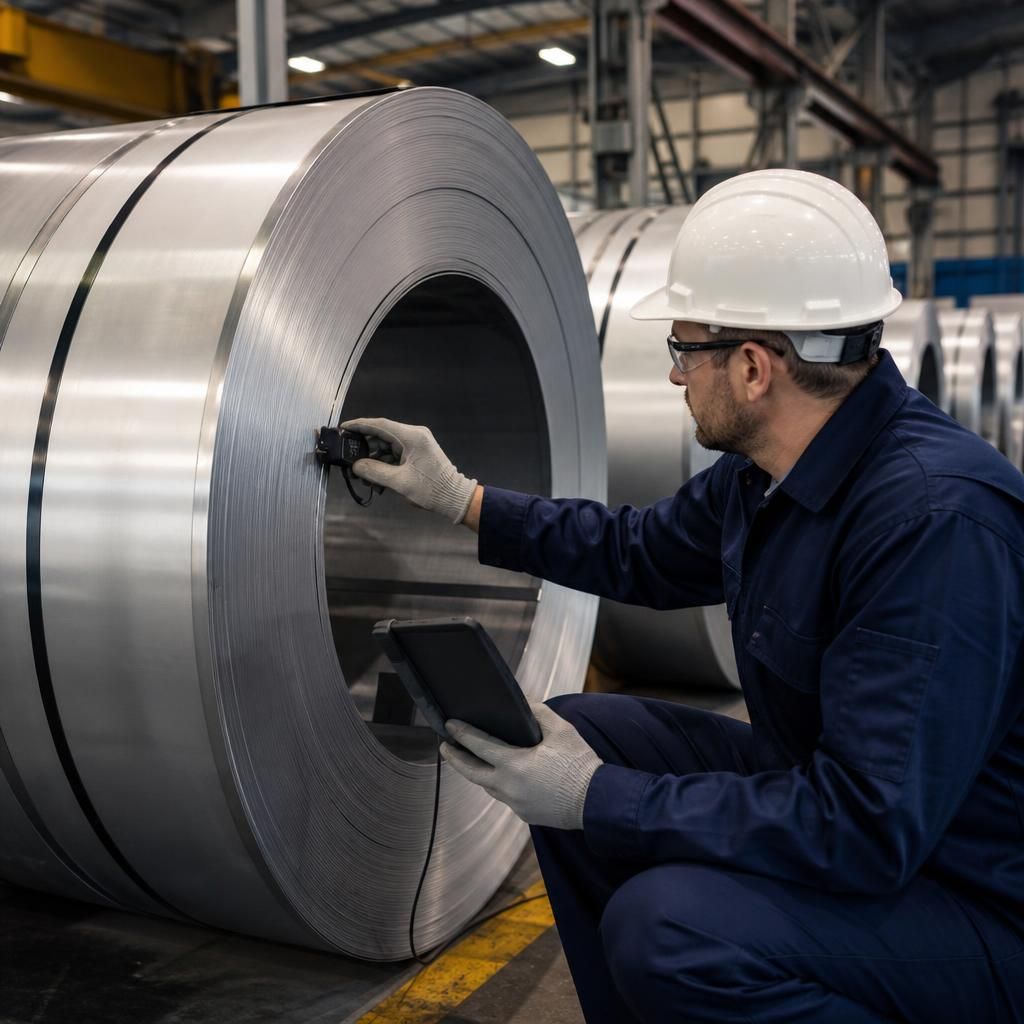
Moisture control is an important part of applying nylon coatings because nylon can absorb moisture before it is fused. Damp coating material may flow inconsistently during application or release vapour during heating, contributing to surface defects, porosity or a less uniform film. These defects can reduce the coating’s ability to protect the metal coil and may become more significant when the surface is exposed to wear or corrosive conditions.
Coating material should therefore be stored, handled and conditioned in accordance with its specification before use. Keeping the powder in suitable conditions helps preserve consistent application behaviour, while checks on the material and substrate can identify moisture-related risks before coating begins. This control complements surface preparation and thermal processing, helping the finished nylon layer develop a continuous structure rather than merely appearing satisfactory after application.