

What specific pre-treatment processes are essential for ensuring optimal adhesion and finish quality of high gloss and specialty powder coats on different metal substrates?
Essential pre-treatment includes thorough degreasing, removal of rust, scale and existing contaminants, and a suitable conversion coating before powder application. The process should be matched to the substrate: cleaned and chemically treated steel may require phosphate protection, while galvanised steel and aluminium need substrate-specific cleaning and conversion treatments to promote adhesion, reduce defects and preserve the quality of high gloss or specialty finishes.
Optimal adhesion and finish quality depend on a controlled pre-treatment system that is matched to the metal, the powder chemistry and the service environment. Beyond basic cleaning and conversion treatment, the essential stages include substrate inspection, appropriate mechanical preparation, controlled rinsing, complete drying, management of porosity and masking of areas that must remain uncoated. These controls are particularly important for high gloss and specialty finishes because surface marks, residues and gas release are more visible after curing.
Begin with a substrate assessment. The coater should establish whether the component is mild steel, galvanised or zinc-coated steel, aluminium, stainless steel, cast metal or a mixed-metal assembly. The inspection should also identify weld spatter, sharp edges, burrs, laminations, casting pores, deep scratches, previous coatings, adhesive residues and areas affected by handling or storage. Pre-treatment cannot correct dimensional damage or a poor underlying surface, so defects that would remain visible through a high gloss finish should be addressed before chemical processing.
Use mechanical preparation where the condition of the part requires it. Light abrasion, blasting or other approved preparation can provide a consistent surface profile and remove firmly bonded residues that chemical treatment alone may not address. The method must be selected carefully: excessive blasting can distort thin components, embed abrasive material or produce an unnecessarily rough profile that affects gloss. On aluminium and zinc-coated steel, aggressive preparation can remove useful protective layers or expose uneven areas, so the objective is controlled uniformity rather than maximum abrasion.
Control the treatment stages rather than treating them as a single operation. Each chemical stage needs the correct concentration, contact time, temperature and replenishment. Rinsing between stages is equally important because carry-over can weaken the conversion layer, leave visible deposits or interfere with powder curing. The final rinse should not leave salts or residues on the surface. Water quality, drainage and the design of the component all matter: recessed sections, overlaps and blind holes can retain treatment liquid and later cause staining, blistering or premature corrosion.
Steel requires attention to flash rust and edge condition. Once prepared, unprotected steel can oxidise rapidly if it remains damp or is handled with contaminated equipment. Parts should therefore move promptly through the approved process and be dried thoroughly before powder application. Welds and cut edges may need additional preparation because oxide, spatter and heat-affected areas can behave differently from the surrounding sheet. Rounded, clean edges also help powder coverage and reduce thin spots at corners.
Galvanised and zinc-coated steel need treatment that respects the zinc layer. The surface may contain passivation residues, storage staining or variations caused by galvanising. Preparation should promote adhesion without unnecessarily removing the zinc protection. Vent holes and drainage paths should be considered on fabricated galvanised items, particularly where trapped moisture or air could later contribute to bubbling during oven curing. Any white corrosion products or unstable surface material must be dealt with before coating, and the part must be dry before entering the spray stage.
Aluminium needs a consistent, residue-free surface. Aluminium forms an oxide layer naturally, and that layer can vary according to storage, alloy and previous handling. Preparation should produce a uniform condition without smearing the surface or leaving alkaline or abrasive residues. Cast aluminium deserves particular attention because pores may retain oils or moisture and release gas when heated. Where outgassing is likely, the finishing specification may need a suitable pre-bake or an appropriate powder system, agreed before production rather than discovered after defects appear.
Stainless steel and other less reactive metals still require validation. Their corrosion resistance does not automatically provide reliable powder adhesion. The surface condition, alloy, finish and any passivation treatment should be identified, then checked against the proposed preparation system. Mixed-metal assemblies create an additional risk because one treatment may be suitable for one alloy but ineffective or damaging to another. Separating components for treatment, or confirming compatibility through a controlled trial, is preferable to applying a generic process to the complete assembly.
Drying and handling are part of pre-treatment quality. All cavities, joints and edges must be free from retained water before powder is applied. Clean gloves, racks and handling equipment prevent recontamination from fingerprints, oil and workshop dust. Parts should be supported so that treated surfaces are not rubbed against dirty contact points. Contact marks should be planned in areas that will be masked, hidden or subsequently finished, because high gloss coatings can reveal even minor handling damage.
Masking and drainage should be planned before processing. Threads, bearing seats, electrical contact points, machined faces and earth points may need plugs, caps or other suitable masking methods. Masking materials must tolerate the curing cycle and should not shed residue onto the coating. Holes and cavities need suitable drainage or venting where required, while the finished design must still meet its functional requirements. Poor masking can cause rework, while trapped liquid or air can create defects that only become visible after curing.
For high gloss coatings, the final inspection should check for water marks, powdery residues, fingerprints, embedded particles, uneven preparation and visible substrate imperfections before spraying begins. Specialty finishes may impose further requirements: textured, metallic, transparent, antimicrobial, nylon or protective powders can differ in film behaviour and curing sensitivity. The pre-treatment and curing specification should therefore be confirmed against the chosen powder rather than selected solely by metal type.
A practical quality-control record should link each batch to its substrate, preparation route, chemical stages, drying condition, masking arrangement and powder specification. Test panels or trial pieces are useful where the substrate is unfamiliar, the component has a complex fabrication history or appearance requirements are demanding. Checks such as visual inspection, coating thickness assessment and adhesion testing can then verify that the prepared surface is suitable before a full batch is processed.
In practice, the best results come from treating pre-treatment as a complete chain: identify the substrate, correct physical defects, apply a compatible preparation system, rinse and dry it properly, prevent recontamination, and confirm compatibility with the selected high gloss or specialty powder. A powder coating specialist can assess drawings, sample parts and substrate combinations before production so that the finish specification accounts for the condition and construction of the metal components.
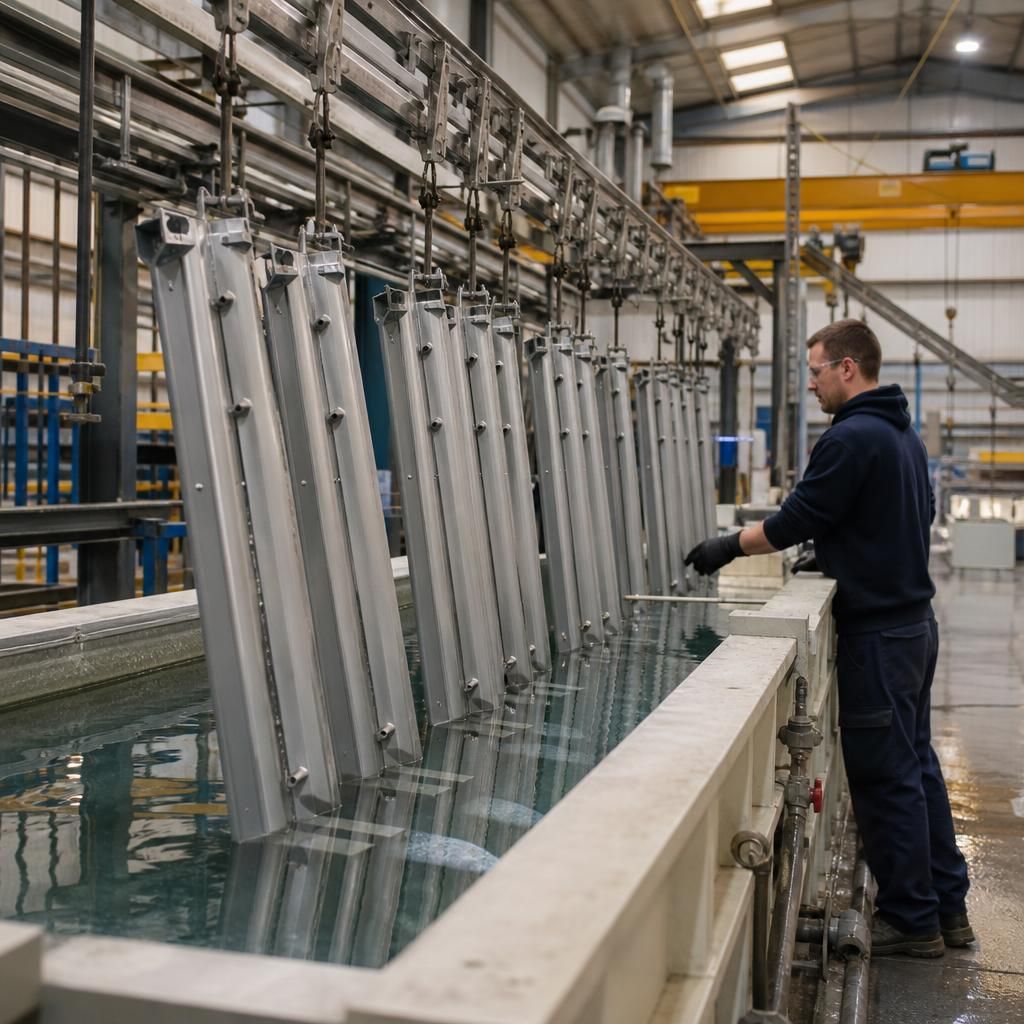
Pre-treatment improves powder adhesion by removing weak boundary layers and creating a chemically compatible surface. Oils, polishing compounds, oxidation products and handling residues can sit between the metal and powder film, preventing the coating from bonding consistently even when the component appears visually clean.
A suitable conversion layer provides a more stable base for the powder film and helps limit corrosion beneath the coating if the surface is later damaged. Its effectiveness depends on compatibility with the substrate and powder system, so the preparation route should be confirmed through the coating specification rather than judged by appearance alone.
Discuss Pre-Treatment for Your Powder Coating Project
Discuss your component drawings, sample parts and chosen powder specification with a powder coating specialist to confirm the most suitable pre-treatment route. This can identify substrate-specific risks before production and help establish the required finish and inspection criteria.