

How does powder coating in vibrant colours affect the overall appearance and performance of metal components?
Powder coating in vibrant colours gives metal components a more distinctive, uniform appearance while adding a hard-wearing finish that helps resist wear, corrosion and everyday handling. Its performance depends on appropriate powder selection, surface preparation, curing and the component’s exposure conditions, so colour choice should be considered alongside the required level of protection.
Powder coating in vibrant colours primarily changes the visual identity of a metal component, while its effect on performance depends on the powder formulation, substrate preparation, film build and curing process. A bright colour does not automatically make a coating stronger or more weather-resistant; those properties must be specified separately for the component’s operating environment.
Appearance is influenced by more than the colour reference. Gloss level, surface texture and the underlying metal all affect how a vibrant shade is perceived. A high-gloss finish reflects more light and usually gives colours a sharper, more saturated appearance. Satin and matt finishes reduce reflection, which can create a softer appearance and make minor surface marks less prominent. Textured finishes scatter light and can also help disguise small substrate irregularities, but they may make the colour appear less intense than a smooth finish.
Colour depth and consistency depend on the powder’s pigmentation and hiding power. Strong, bright shades may reveal variations in film thickness or preparation more readily than darker, less saturated colours. Areas such as edges, corners, recesses and welds can therefore require particular attention during application. The shape of the component and the way it is hung for coating can also influence how evenly the powder is deposited.
Vibrant colours can improve product recognition and visual consistency. For manufactured assemblies, colour may be used to distinguish product ranges, identify components or support a wider corporate design scheme. Consistent results require the same colour specification, finish type and application controls across separate production batches. Where parts will be assembled together, their coating sequence and exposure history should also be considered, as separately coated items may show small differences in shade or gloss.
The performance of a coloured powder coating is determined by the complete coating system. Important factors include:
- Powder chemistry: the resin and pigment system influence hardness, flexibility, chemical resistance, weathering behaviour and gloss retention.
- Surface preparation: cleaning and suitable pre-treatment remove contaminants and create the conditions needed for reliable adhesion.
- Film thickness: insufficient or excessive build can affect coverage, edge protection, appearance and the coating’s mechanical properties.
- Curing: the powder must reach the required cure across the whole component. Under-curing can reduce performance, while unsuitable heat exposure can affect the finish or the metal substrate.
- Service conditions: sunlight, moisture, chemicals, abrasion, temperature changes and impact should all be considered when selecting the coating specification.
For outdoor components, the key issue is not simply whether a colour is bright. Ultraviolet exposure can gradually reduce gloss or alter the shade, particularly where the coating is not formulated for prolonged exterior use. A colour selected for external equipment, architectural metalwork or vehicle-related components should therefore be matched with a suitable exterior-grade system and an appropriate gloss or texture. Indoor components may have different priorities, such as resistance to cleaning chemicals, impact or frequent handling.
Pigments can also affect functional performance in specific applications. Dark colours generally absorb more solar heat than lighter colours, which may influence the temperature reached by exposed metalwork. This matters where dimensional stability, touch temperature or the operating temperature of adjacent materials is important. The coating’s temperature limits and the component’s design should be reviewed together rather than assessed from colour alone.
Colour selection can affect inspection and maintenance as well. Very glossy, dark or saturated finishes may make fingerprints, dust, scratches and local surface defects more noticeable. Matt or textured finishes can reduce the visual prominence of some marks, although they still need the same underlying preparation and coating quality. Cleaning methods should be compatible with the coating, particularly where strong solvents or abrasive products could change the gloss or damage the surface.
Before production, the specification should identify the colour reference, gloss level, texture, coating type, intended environment and any requirements for chemical, impact, heat or weather resistance. A sample panel or approved control sample is useful where colour matching is critical, because appearance can vary with substrate, application conditions, film build and viewing light. Powder should also be sourced and applied consistently where separately coated parts need to match.
For B2B projects, supplying clear component drawings and service-condition information helps the coater determine whether a vibrant decorative finish is suitable for the intended use. A specialist powder coating service can then advise on the preparation, powder selection and application requirements without treating colour as a substitute for the performance specification.
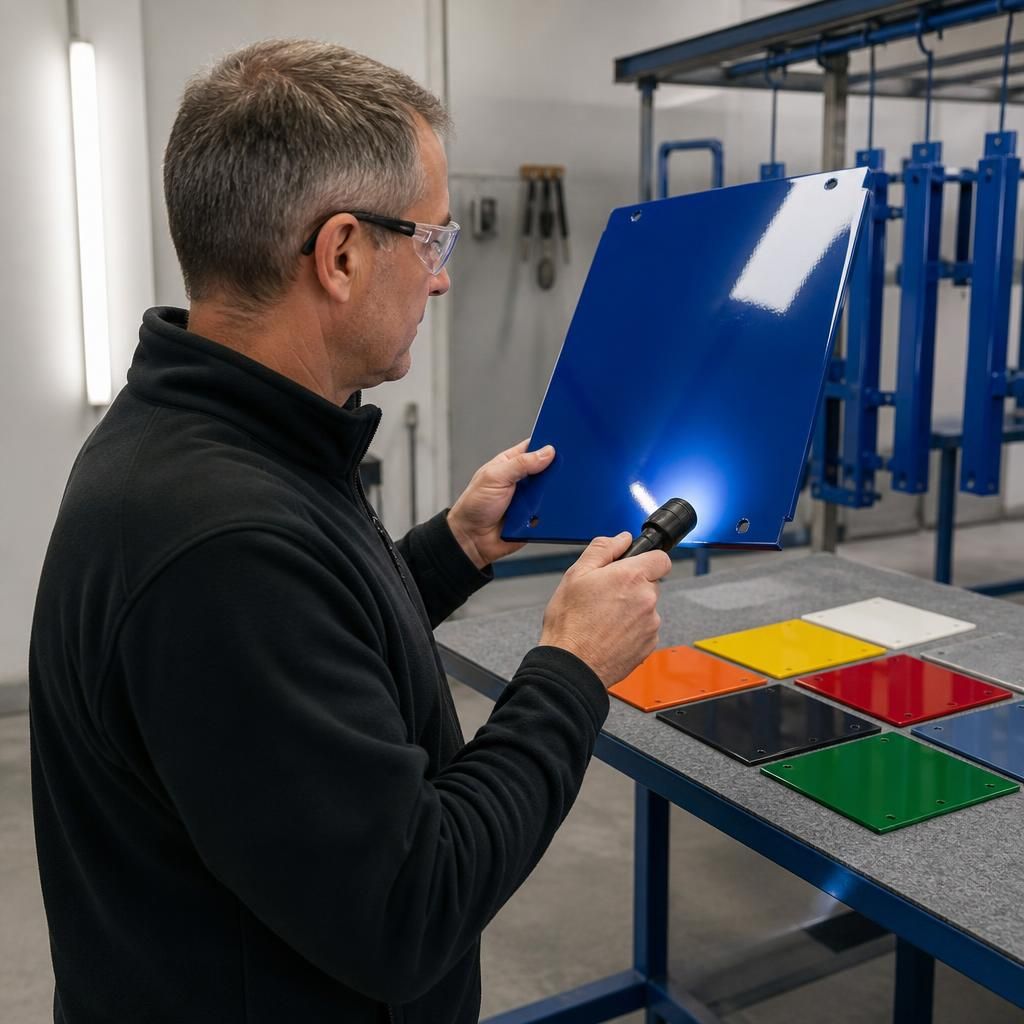
The appearance of a vibrant powder-coated component should be assessed against agreed acceptance criteria rather than colour alone. Colour, gloss, texture, coverage and visible surface defects should be reviewed using an approved sample and under representative lighting and viewing conditions. This helps distinguish an acceptable visual variation from a coating fault that could affect service performance.
Appearance inspection should be complemented by checks appropriate to the component’s use, such as adhesion, film coverage and resistance to the expected environment. A finish can look bright and consistent while still requiring confirmation that the complete coating system is suitable for handling, chemicals, moisture or abrasion.
Discuss vibrant colour powder coating for your metal components
If you are assessing a vibrant colour finish for metal components, discuss your drawings, colour specification and service conditions with Powder-coatings.co.uk. Their specialist team can advise on a suitable coating approach for your application.