

What properties should I look for in a filler primer to ensure it provides the necessary corrosion resistance for my metal components?
Choose a filler primer with strong adhesion to the specific metal substrate, effective barrier protection against moisture and salts, and resistance to the chemicals and environment the component will encounter. It should also be compatible with the intended powder coating and cure reliably to form a continuous, durable film without pinholes or other defects that could allow corrosion to develop.
A corrosion-resistant filler primer should provide more than surface filling: it must control the electrochemical processes that cause corrosion, remain physically sound beneath the powder coating, and retain its protective properties throughout the component’s service life. The most important properties to assess are the primer’s corrosion-inhibitive formulation, film integrity, thickness control, edge coverage, flexibility and documented performance on the relevant substrate.
- Corrosion-inhibitive formulation: Look for a primer designed to slow corrosion at exposed areas, scratches and small coating defects. Suitable active pigments or inhibitors can help limit the reaction between the metal, moisture and contaminants. The technical data should identify the intended substrates and exposure conditions rather than making a general claim of “anti-corrosion” performance.
- Low permeability: The cured primer film should restrict the movement of water, oxygen and dissolved contaminants towards the metal. A dense, well-formed film is particularly important on components exposed to condensation, road contaminants, industrial pollutants or outdoor weathering. Porosity, pinholes and solvent entrapment can create routes for corrosion beneath the coating system.
- Controlled film build: Check the recommended dry film thickness and the permitted application range. Too little material may leave surface irregularities and vulnerable areas insufficiently covered, while excessive build can cause solvent retention, cracking, poor curing or loss of flexibility. A filler primer should fill minor imperfections without creating a weak, excessively thick layer under the powder coating.
- Coverage of edges, corners and recesses: Corrosion often begins at sharp edges, holes, joints and other areas where a liquid coating can pull away or become thin. Choose a formulation capable of producing consistent coverage on the component’s actual geometry. The application guidance should explain how to treat difficult areas and whether a stripe coat, adjusted spray technique or additional preparation is required.
- Flexibility and impact resistance: The primer must tolerate handling, assembly and normal movement without becoming brittle. A rigid film may crack at bends, pressed sections or impact points, allowing moisture to reach the metal. Consider the component’s forming, transport and service conditions, particularly where the powder-coated part will experience vibration or mechanical contact.
- Resistance to underfilm corrosion: Review evidence showing how the primer behaves when the outer coating is damaged. Useful test information may cover creepage from a scribe, blistering, rusting, loss of adhesion and changes after exposure to humidity or salt contamination. Results are most meaningful when the test panel uses the same metal preparation, primer build and powder-coating system intended for production.
- Substrate-specific performance: Steel, galvanised steel, aluminium and other alloys do not corrode in exactly the same way, and surface residues can affect the primer’s behaviour. The product documentation should state which metals it is intended for and identify any preparation limits, conversion treatment requirements or restrictions on previously coated surfaces.
- Thermal stability: Because the primer will pass through a powder-coating cure cycle, it should remain stable at the specified metal temperature. Look for resistance to softening, bubbling, blistering, shrinkage and decomposition during heating. The primer’s cure schedule should be based on metal temperature rather than oven air temperature alone, where the manufacturer provides that distinction.
- Resistance to the expected service environment: Assess the full exposure profile, including water, humidity, salts, cleaning chemicals, fuels, oils, acids, alkalis, ultraviolet radiation and temperature changes where relevant. A primer suitable for sheltered internal components may not provide the same protection for externally exposed or chemically contaminated parts.
Application tolerance is also an important property. A filler primer that performs only within a very narrow preparation, mixing or thickness range may be unsuitable for varied industrial batches. Review its pot life where applicable, recoat interval, permissible application methods and sensitivity to small variations in film build. These factors affect whether the finished primer layer is uniform enough to protect the metal consistently.
Before approval, compare the product data sheet and safety data sheet with the component specification, then verify the system on representative test pieces. Inspect edges, welds, drilled holes, folds and repaired areas rather than evaluating only a flat panel. Measure the cured primer where thickness is critical and examine the powder-coated surface for pinholes, blistering or other signs of incompatibility. This practical check confirms that the selected properties translate into corrosion protection on the actual component, not just under laboratory conditions.
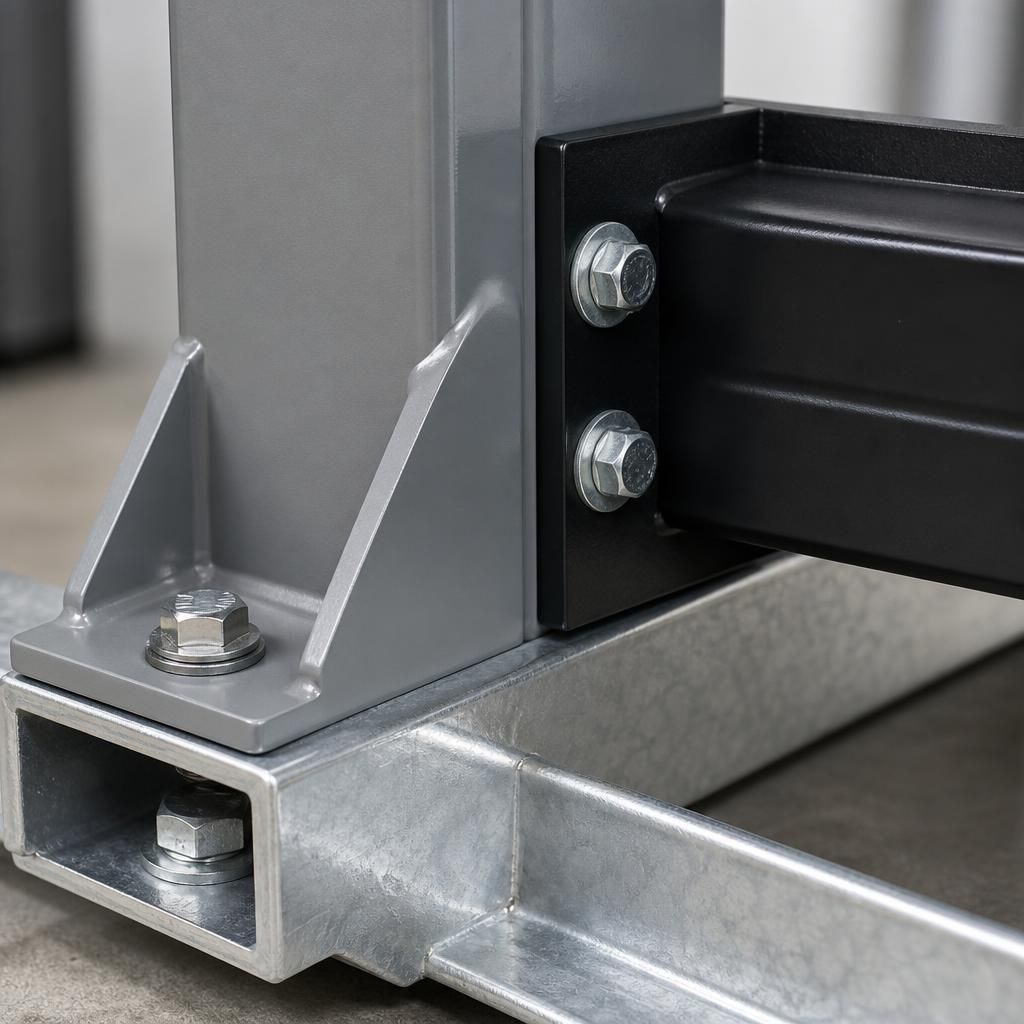
Where a component combines dissimilar metals, consider whether the filler primer provides effective electrical isolation as well as physical coverage. Steel, aluminium and zinc-based surfaces can form a galvanic couple when moisture creates a conductive path between them, increasing corrosion risk at contact points, joints and exposed edges. A suitable primer should be specified for the metal combination and should not create an adverse reaction with either substrate.
Check the technical documentation for evidence of compatibility with mixed-metal assemblies, fasteners, welds and conductive conversion treatments. The finished system should maintain isolation after curing and during normal service, without cracking or losing adhesion at joints. Representative trials should include the actual assembly rather than testing each metal only as a separate flat panel.
Discuss corrosion-resistant filler primer options for your metal components
Share your component material, geometry and expected service environment with the powder-coating team to discuss a filler primer and powder coating system suited to the application. Representative parts or specification details can help establish the most appropriate preparation and testing requirements.