

How do filler primers improve the adhesion of powder coatings?
Filler primers improve adhesion by creating a uniform, chemically compatible intermediate layer between prepared metal and the powder coating. They fill minor surface irregularities and provide a stable base, helping the cured coating remain securely bonded during handling and service.
Filler primers improve powder-coating adhesion by creating a prepared, receptive surface between the metal substrate and the finishing powder. Their contribution is not limited to filling marks: they help control surface chemistry, reduce local defects and provide a consistent intercoat interface when the primer and topcoat are selected and cured as a compatible system.
They improve the interface in several ways:
- Improved contact: A primer can cover shallow pits, grinding marks and small pores that would otherwise interrupt contact between the metal and the powder coating. A more continuous surface gives the molten topcoat fewer gaps in which adhesion can be weakened.
- Better wetting during cure: As the powder melts, it must flow across the primed surface. A correctly specified primer allows the coating to spread rather than retract from incompatible or contaminated areas. This supports consistent intercoat contact across the component.
- Intercoat bonding: The primer chemistry is chosen to work with the powder coating during the heating cycle. Chemical compatibility allows the two layers to bond at their interface, rather than relying only on the topcoat gripping the surface mechanically.
- Reduced defect concentration: Sharp scratches, pinholes and isolated surface cavities can create weak points where moisture, impact or handling stress begins to damage the coating. Filling and levelling these features helps distribute stress more evenly through the coating system.
The quality of the underlying preparation remains critical. Oil, grease, mill scale, rust, dust and treatment residues can prevent the primer from bonding properly to the metal. Cleaning and pretreatment must therefore remove contaminants and produce a surface suitable for the chosen primer. A filler primer cannot reliably compensate for loose corrosion, poor cleaning or an unsuitable conversion treatment.
Substrate condition also affects the result. Castings, galvanised steel, fabricated assemblies and previously coated parts may have different levels of porosity, surface roughness and chemical reactivity. For example, a porous casting may require attention to trapped air or contaminants, while galvanised material may need a pretreatment system intended for zinc surfaces. Selecting the primer around the actual metal and its preparation route helps prevent adhesion failures that appear to be caused by the powder topcoat.
Curing affects adhesion at both stages. The primer must reach the specified cure state before the finishing powder is applied, unless the product and process are specifically designed for another sequence. An under-cured primer may remain too soft or chemically active, whereas excessive heating can damage the primer or reduce its ability to bond with the subsequent layer. The complete temperature profile, including the time taken for the component itself to reach the required temperature, is more important than relying solely on oven air temperature.
Film thickness must also be controlled. An insufficient primer film may fail to cover surface defects, while excessive build can create solvent, gas or shrinkage-related problems and may interfere with the topcoat’s appearance and adhesion. Consistent application is particularly important around edges, welds, recesses and complex geometries, where coating thickness and heat exposure can vary.
Adhesion is best considered as a system property rather than a feature of the primer alone. The following elements need to work together:
- the substrate type and its surface condition;
- the cleaning and pretreatment process;
- the filler primer’s resin and pigment composition;
- the powder topcoat chemistry and application thickness;
- the interval and handling conditions between coats; and
- the complete curing schedule used for the component.
Compatibility should be checked before production coating, particularly when a liquid primer is being combined with a powder topcoat or when the component will face outdoor exposure, chemicals, abrasion or repeated temperature changes. Technical data should be reviewed for recoating guidance, cure requirements, recommended substrates and resistance properties. A small trial panel or representative component can help reveal cratering, lifting, poor flow or weak intercoat adhesion before a full batch is processed.
Testing can then confirm whether the finished system is adhering as intended. Visual inspection may identify blistering, pinholes, lifting or edge breakdown, while cross-cut or pull-off testing can provide a more structured assessment where the specification requires it. Results should be interpreted alongside the failure pattern: separation at the metal-to-primer interface points towards preparation or pretreatment, while separation between primer and topcoat suggests compatibility, contamination, recoat or curing issues.
In practice, a filler primer improves adhesion when it is matched to the metal, applied at a controlled thickness, cured correctly and overcoated within the system’s recommendations. It supports a stronger coating structure, but it does not replace sound substrate preparation or correct powder-coating process control.
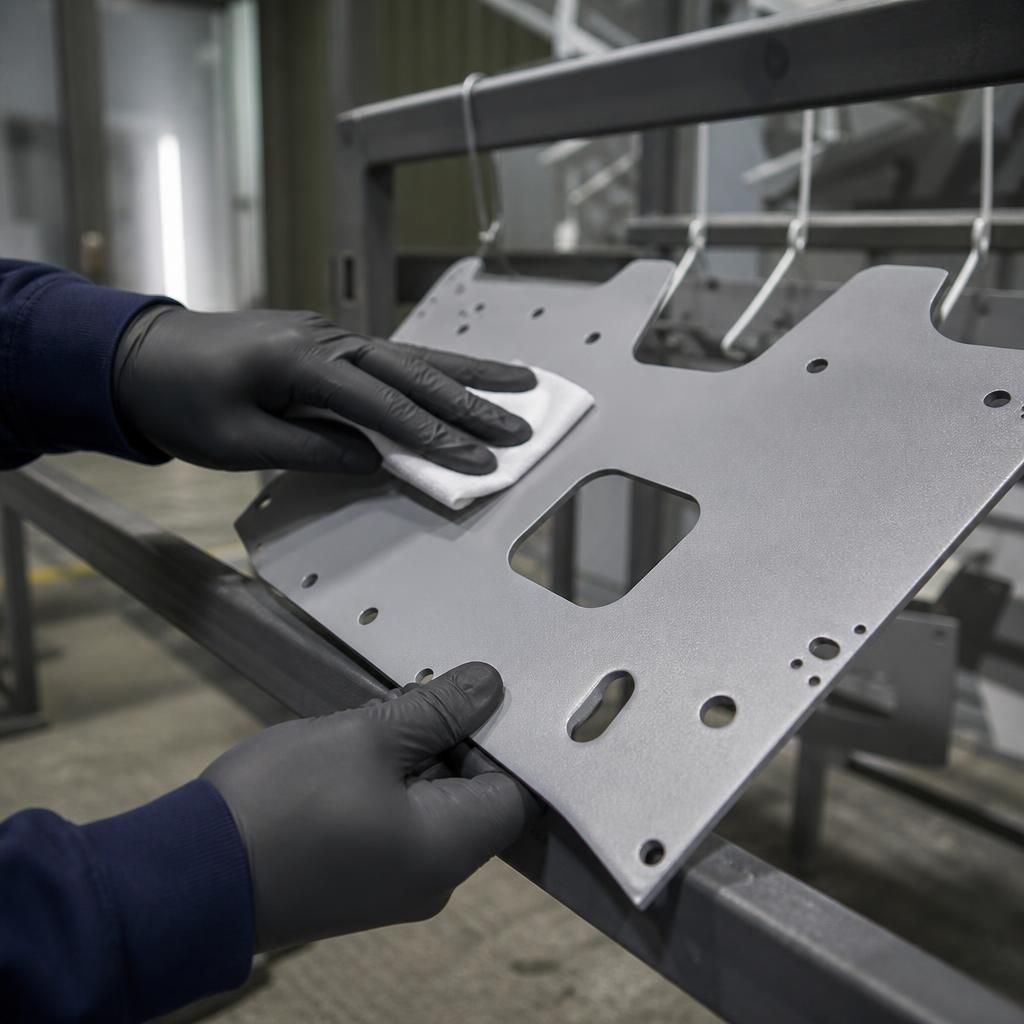
A filler primer only improves powder-coating adhesion if its surface remains suitable for overcoating. After curing, the primed component should be protected from dust, oil, moisture and unnecessary handling, as contamination can form a barrier between the primer and the powder layer.
Before applying the powder, inspect the primer for gloss changes, dirt, pinholes, lifting or other surface defects. Follow the product guidance on the permitted overcoating interval and any required preparation between coats. If the interval has been exceeded, do not assume that applying powder directly will restore adhesion; the primer may require cleaning, abrasion or reprocessing according to the specified coating system.
This controlled handover between primer and topcoat is particularly important for components that are stored, moved between departments or assembled before finishing. Keeping the primed surface clean and following the specified recoating procedure preserves the receptive interface that allows the powder coating to bond consistently.