

How can the application method influence the effectiveness of a filler primer in achieving a seamless powder coating finish?
The application method affects a filler primer’s film thickness, coverage and surface smoothness, all of which influence how seamlessly the subsequent powder coating appears. Applying the primer evenly and at the recommended thickness helps prevent runs, pinholes, texture and areas of inadequate filling that could remain visible after curing.
The application method influences a filler primer’s effectiveness by determining how well it reaches surface defects, adheres to the substrate and forms a stable base for the powder coating. The correct method must suit the primer, the metal component’s shape and the defect being filled; otherwise, preparation work can be undermined by poor wetting, trapped air, contamination or an unevenly cured primer layer.
Surface preparation comes first. Filler primer cannot compensate for oil, dust, oxidation, loose mill scale or other contamination on the metal. The substrate should be cleaned and prepared in accordance with the primer manufacturer’s instructions, then handled in a way that avoids recontamination. Particular attention is needed around welds, folded sections, recesses and edges, where residues can remain and interfere with adhesion. If preparation reveals sharp projections or unstable material, these should be dealt with before the primer is applied rather than concealed beneath it.
Spray application is generally suited to industrial components with complex profiles. It allows the operator to work around apertures, returns, welds and recessed areas more consistently than a simple manual application. Gun distance, angle, atomisation and the order of passes affect whether the primer reaches the sides of a defect rather than merely bridging its opening. Keeping the applicator at a controlled angle is particularly important on edges and inside corners, where an unsuitable approach can leave areas with limited contact.
Spray technique also affects the amount of air and solvent introduced during application. Excessive atomisation, an unsuitable nozzle or an inconsistent gun movement can create dry spray, poor coalescence or air entrapment. These defects may become more apparent during subsequent heating. Equipment should therefore be set up for the specific primer, and the material should be mixed and thinned only as permitted by its technical documentation.
Brush or roller application can be appropriate for local repairs and small areas, particularly where a defect needs targeted filling rather than treatment of an entire component. However, these methods can leave brush marks, roller texture or disturbed edges if the material is repeatedly worked after it has begun to set. They are less suitable where a highly uniform base is required across a large visible face or where the component contains many inaccessible sections. Any locally applied repair should be feathered into the surrounding surface and allowed to stabilise before further preparation.
Application sequence matters on complicated parts. A useful sequence normally starts with difficult-to-reach areas, followed by accessible faces and then a careful check of edges, welds and recesses. This reduces the risk that later passes obscure areas that still need attention. Parts should also be positioned so that gravity does not cause the uncured primer to collect at lower edges or in pockets. Rotation between stages may be necessary, provided the primer has reached the appropriate state for handling.
Environmental conditions affect the result as much as the applicator. Temperature, humidity, ventilation and airborne dust influence wetting, drying and contamination. Applying primer outside its stated conditions can alter its flow and curing behaviour, while poor ventilation may delay solvent release. The work area, component and primer should be allowed to reach suitable conditions before application. Drying or flash-off intervals should follow the product instructions rather than being judged solely by the surface appearance.
Curing is part of the application method. A filler primer that appears dry may still contain residual solvent or may not have developed its required mechanical properties. Applying powder coating before the primer has cured sufficiently can lead to blistering, loss of adhesion or changes during the powder-coating bake cycle. Conversely, excessive handling before the primer has hardened can mark the surface or expose repaired areas. The specified cure schedule, including the relevant substrate temperature where applicable, should be confirmed for the complete coating system.
Inspection between stages helps identify whether the chosen method has worked. Under suitable lighting, check for missed defects, contamination, pinholes, lifting, dry spray, edge breakdown and areas that have not bonded correctly. Light preparation may be required before the powder coating is applied, but aggressive sanding can remove the filler from the very defects it was intended to address. The inspection method should therefore reflect the component’s function and the appearance required after powder coating.
For repeat production, the process should be standardised around the component design and the primer’s technical requirements. Record the preparation method, equipment settings, application sequence, drying conditions and curing parameters, then verify the finished coating on representative parts. This makes it easier to distinguish a problem with the primer from one caused by substrate preparation, application technique or the later powder-coating process.
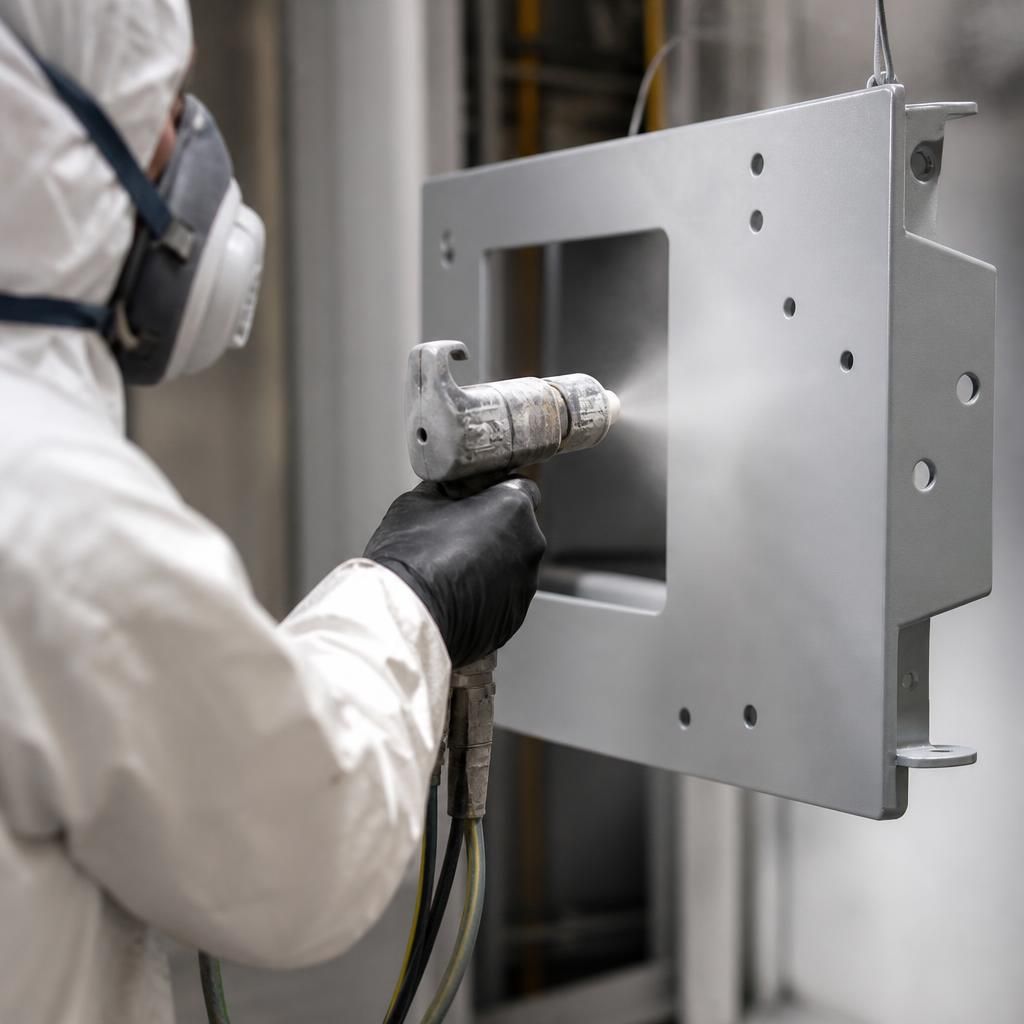
Application method can also affect the electrical continuity needed for electrostatic powder coating. A filler primer that is applied too heavily over earthing points, hanging locations, threaded holes or other contact areas may insulate the component or interfere with its positioning during powder application. These areas should be identified before priming and kept clear, masked or restored to the specified condition once the primer has cured.
This is particularly important on parts with several faces or multiple hanging positions. The coating operator should confirm that the chosen application method has not covered essential contact points or created excessive build in assembly features. Checking these details before powder coating helps maintain consistent powder deposition while preserving the smooth, filled surface achieved by the primer.
Discuss Your Filler Primer Application Requirements
Contact Powder-coatings.co.uk to discuss your filler primer application requirements and the finish required for your components. Sharing substrate details and the intended powder coating system will help establish a suitable approach before work begins.