

What preparation is needed before applying epoxy primer coats to metal surfaces?
Metal surfaces should be free from oil, grease, dirt, rust, mill scale and incompatible existing coatings before an epoxy primer is applied. Preparation typically involves degreasing, suitable abrasive cleaning or blasting, removing dust, ensuring the surface is completely dry, and masking areas that must remain uncoated.
Preparation before applying an epoxy primer coat involves more than making the metal look clean. The substrate must be assessed, repaired, profiled and configured so the primer can form a continuous, well-adhered film and remain compatible with any subsequent powder coating. The required preparation depends on the metal type, the condition of the component, its intended service environment and the coating system specified.
Confirm the coating system first. Before work begins, check the primer’s technical requirements, recommended film thickness, recoat window and compatibility with the intended topcoat. Some epoxy primers are designed for specific substrates or follow-up finishes. Applying a chemically incompatible powder coating, or exceeding the recommended interval before recoating, can affect intercoat adhesion even if the metal itself has been prepared correctly.
Inspect the component in detail. Inspection should identify features that could affect coating continuity or appearance, including:
- weld seams, heat-affected areas and weld spatter;
- sharp corners, knife edges and burrs;
- casting pores, laminations, dents and deep scratches;
- blind holes, recesses, joints and overlapping sections;
- residual salts or other process contamination that may not be visible;
- existing coatings or corrosion products that have penetrated into defects.
Inspection is particularly important for fabricated parts because coating cannot correct poor joints, open crevices or unstable surface defects. Any areas that may trap moisture or interfere with the coating process should be addressed before the component enters the primer stage.
Complete mechanical repairs before coating. Welds should be continuous where the design requires them, with spatter removed and irregular profiles dressed to an appropriate finish. Burrs and sharp projections should be removed, while edges may need suitable rounding to reduce the risk of thin coverage. Deep surface defects should be repaired using a method compatible with the metal and the coating system. Filler materials, sealants and repair compounds must be fully cured and suitable for the temperatures used during subsequent powder coating; otherwise they can blister, shrink, release gases or lose adhesion.
Deal with substrate-specific risks. Different metals require different checks:
- Mild and carbon steel: pay close attention to weld areas, embedded corrosion and the condition of edges and joints.
- Galvanised steel: check for passivation layers, white corrosion products and surface irregularities that could interfere with adhesion or cause gassing during heating.
- Aluminium: consider oxide formation, embedded workshop contamination and the need for a treatment suitable for aluminium rather than assuming a steel preparation method will be appropriate.
- Cast metals: assess porosity and the possibility of trapped air or process residues being released during curing.
Where a component has been exposed to chemicals, marine conditions, de-icing salts or other aggressive contamination, additional testing or treatment may be needed. Soluble salts can remain on a surface without being obvious during visual inspection and may contribute to underfilm corrosion or loss of adhesion.
Check the surface profile and condition. Where abrasive preparation is specified, the resulting profile should be suitable for the primer rather than simply as rough as possible. A profile that is too shallow may provide insufficient mechanical key, while an excessively coarse profile can leave peaks with reduced coverage. The prepared surface should be checked using an appropriate inspection method, and any loose abrasive or preparation residue should be removed without introducing fresh contamination.
Plan masking and assembly details. Areas that must remain free of coating should be identified before preparation, including threaded holes, bearing seats, electrical contact points, machined faces and tolerance-critical locations. Masking must withstand the primer and curing process and should not leave adhesive residue. Drainage and vent holes may be required in hollow or enclosed fabrications to prevent trapped solutions, air or gases causing defects during heating. These design details should be agreed before coating, as they may not be correctable afterwards.
Control handling and pre-application checks. Prepared components should be handled with clean equipment and suitable gloves to avoid transferring skin oils or workshop residues. They should be protected from condensation, rain and other sources of recontamination. Immediately before priming, the coater should verify the substrate condition, masking, component identification and any specified environmental or process limits. The metal should be at a suitable temperature relative to the surrounding air so that condensation does not form during preparation or application.
For critical work, preparation records can include the substrate type, repairs completed, preparation method, profile checks, contamination checks and masking requirements. This documentation helps distinguish a coating problem from a fabrication or handling problem if the finished component later requires investigation. Thorough preparation gives the epoxy primer a stable foundation; the primer can then provide corrosion protection and a suitable base for the following powder coating layer.
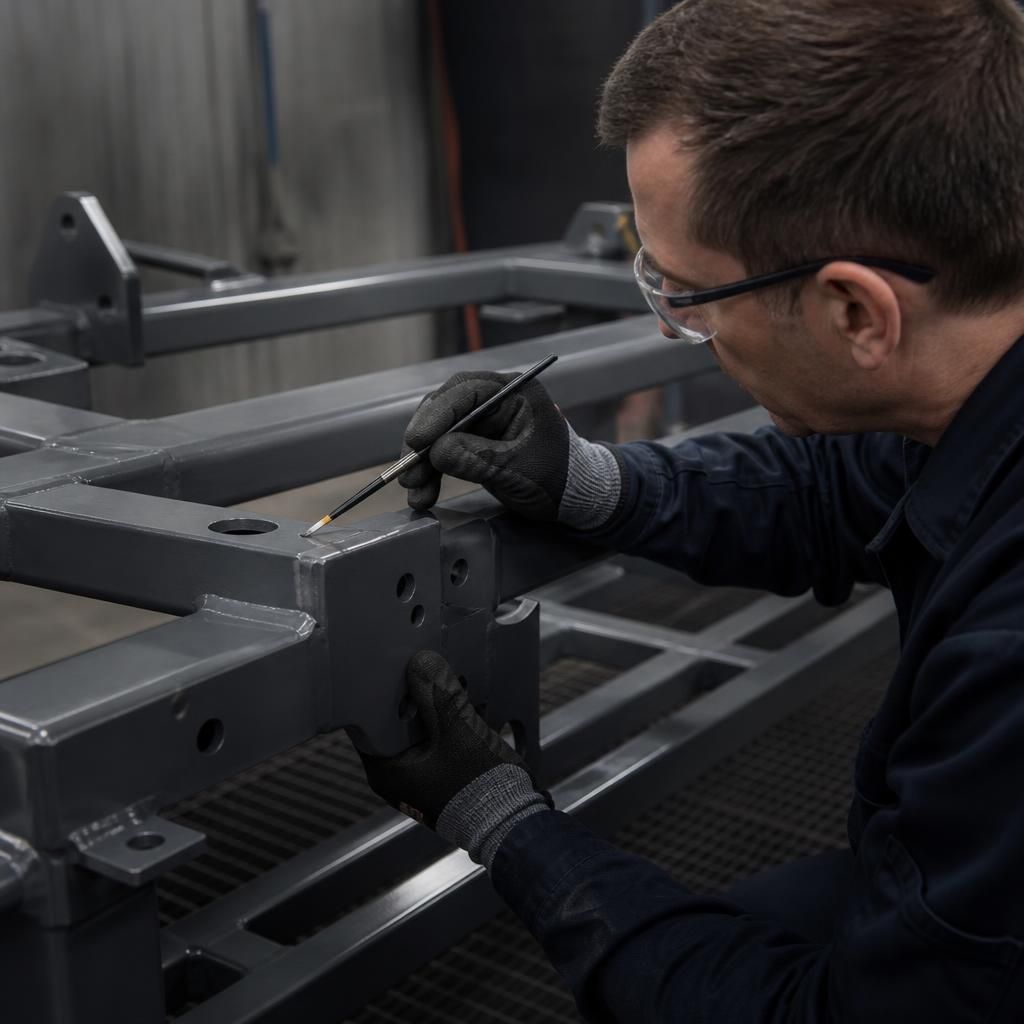
Where the substrate, previous coating history or preparation method is uncertain, validate the proposed preparation on a representative test area before processing the full batch. This is particularly useful for mixed-metal fabrications, repaired sections and components with differing surface conditions.
The trial should confirm that contaminants can be removed, the prepared surface is uniform and the epoxy primer forms a continuous film without visible defects. If the test area performs differently across the component, the preparation method should be reviewed before full-scale coating rather than relying on visual cleanliness alone.