

What are the key considerations when selecting an epoxy primer to ensure compatibility with follow-up powder coating layers?
Choose an epoxy primer specifically approved for use beneath the intended powder coating, checking its technical data for intercoat adhesion, compatible cure temperatures and required overcoating window. Also confirm that the primer suits the metal substrate, provides the necessary corrosion protection and will withstand the powder coating’s application and service conditions without impairing the finish.
Selecting an epoxy primer for use beneath powder coating requires assessment of the complete coating system rather than the primer in isolation. The primer, pre-treatment, metal substrate and powder topcoat must work together through application, curing and service. The most reliable choice is supported by the primer’s technical data, the powder manufacturer’s compatibility guidance and a practical trial on the actual component.
Check the chemistry of both layers. Epoxy primers are not interchangeable. Their resin, curing agent, additives and surface characteristics can affect how the powder layer wets, bonds and cures. Confirm that the primer is intended to receive a thermosetting powder coating, rather than being designed only for liquid paint or a different finishing system. The powder type also matters: polyester, epoxy-polyester hybrid and other formulations may have different requirements for surface energy, cure temperature and flexibility.
Review the technical data in detail. Important information includes recommended dry film thickness, application method, minimum and maximum recoat intervals, curing conditions, storage requirements and any restrictions on the type of topcoat. The safety data sheet can also identify solvents, reactive components or handling precautions that may influence the coating process. If the documentation does not clearly confirm powder-over-epoxy use, the system should be checked with the coating supplier before production work begins.
Match the primer to the production process. The primer must tolerate the way the component will be cleaned, pre-treated, coated and heated. Consider whether it is applied by spray, dip or another method, and whether the chosen process can produce a consistent film without runs, pinholes or areas of excessive build. A primer that is suitable in a laboratory test may be unsuitable for a production line if it cannot be applied evenly to recesses, welds, edges and complex profiles.
Control film thickness and surface condition. Excessive primer build can affect dimensional tolerances, edge definition and the appearance of the powder finish. An uneven or contaminated primer surface may cause craters, pinholes, loss of gloss or localised adhesion failure. Before powder application, inspect the primer for dust, moisture, blistering, exposed substrate and other defects. Any required sanding or cleaning must be compatible with the primer and must not leave residues that interfere with intercoat bonding.
Consider thermal behaviour during powder curing. The primer should remain stable during the complete heating cycle, including the time needed for the metal to reach the specified temperature. Pay attention to solvent release, gas evolution, softening, shrinkage and post-cure behaviour. Trapped volatiles can produce pinholes or bubbles in the powder layer, while incomplete cure can leave the primer too soft or chemically active. Cure schedules should therefore be based on part temperature, not simply oven air temperature.
Assess mechanical compatibility. The finished system may be exposed to impact, forming, vibration, abrasion or movement between the metal and coating layers. A rigid primer beneath a more flexible powder can crack when the component is bent or struck. Conversely, a primer that remains too soft may reduce the stability of the topcoat. The intended service conditions should guide the choice, particularly for fabricated parts, vehicle components, machinery and assemblies subject to handling or repeated loading.
Check corrosion-protection requirements separately from adhesion. A primer may bond well to the metal yet provide insufficient protection for the operating environment. Consider the substrate, the effectiveness of pre-treatment, cut edges, weld areas, joints and any locations where the coating could be damaged. Where corrosion resistance is important, the full system should be assessed rather than relying on the primer’s product description alone. Compatibility with sealants, fasteners or other adjacent materials may also need checking.
Use a representative trial before approval. Test panels should use the same metal grade, preparation, primer application, powder, film build and curing process intended for production. Examination should include visual finish, adhesion between layers, coating continuity and relevant mechanical or corrosion testing. Testing parts with welds, edges, apertures and recesses is more informative than testing a flat panel only. Keep records of batch details and process conditions so that an approved system can be reproduced consistently.
- Confirm that the primer is designed for powder-coating overcoat systems.
- Compare the primer’s cure and recoat requirements with the powder’s complete heating cycle.
- Check recommended film thickness, application method and surface preparation limits.
- Assess flexibility, impact resistance and chemical stability against the component’s service conditions.
- Check for potential outgassing, blistering or other defects during heating.
- Validate the complete system on representative substrates and component geometries.
These checks help distinguish a primer that is merely suitable for metal protection from one that is genuinely suitable beneath a particular powder coating. The final specification should identify the metal preparation, primer, target film build, powder type, curing schedule and inspection requirements as one controlled system.
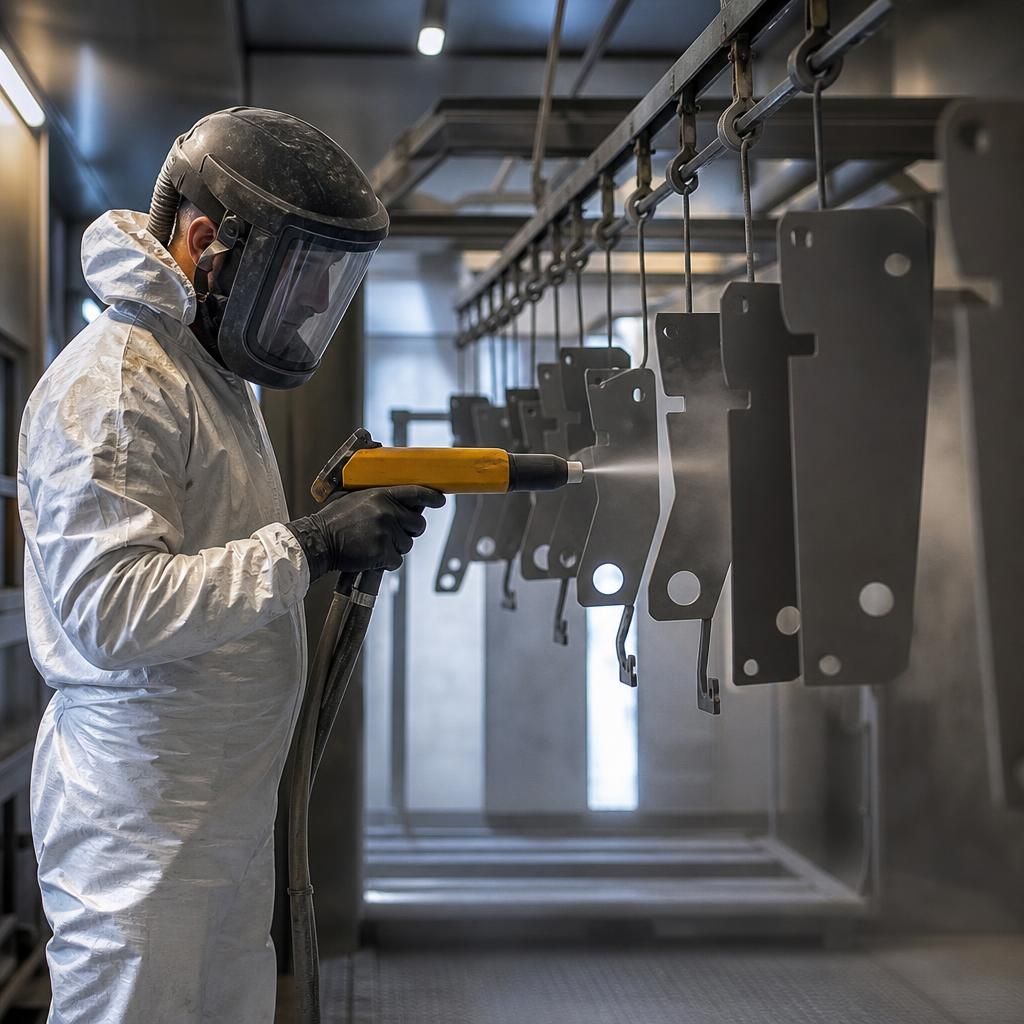
An epoxy primer’s electrical behaviour can affect how effectively a powder coating is deposited. Because cured epoxy is generally insulating, the primer surface may influence electrostatic attraction, transfer efficiency and powder coverage in recesses or Faraday-cage areas. The primer should therefore be assessed not only for chemical compatibility, but also for its effect on the intended powder application equipment and earthing arrangement.
During system trials, check whether the powder forms an even layer across exposed faces, edges and recessed sections without excessive overspray or thin areas. If coverage is inconsistent, review the component’s earthing, gun settings, primer film build and surface condition before changing the powder formulation. This helps prevent application problems being mistaken for a primer adhesion failure.