

How does the application method affect the performance of epoxy primer coats on metal?
The application method affects epoxy primer performance by controlling film thickness, coverage, surface wetting and the risk of defects. A well-controlled spray application typically provides the most even coating on complex metal components, while brushing, rolling or dipping may be suitable for simpler parts when application and curing are carefully controlled.
The application method affects an epoxy primer coat by influencing how the resin bonds to the prepared metal, how consistently it cures and how well it supports the subsequent coating system. The best method depends on the component’s size, shape, production volume, access to all surfaces and the type of finish required. A method that is suitable for a simple bracket may be unsuitable for a fabricated assembly with joints, recesses and difficult-to-reach areas.
Spray application and film formation
Spray application allows the operator to control atomisation, material flow and the distance between the spray equipment and the workpiece. These variables affect whether the primer forms a continuous coating without dry spray, runs, sags or excessive build-up. Poorly atomised material can produce a rough, weakly bonded surface, while excessive wet application may trap solvent or extend the time needed before overcoating.
For components that will receive a powder coating, the primer must also be suitable for the specified overcoat and its curing cycle. An incorrectly applied liquid epoxy primer may retain solvent or remain insufficiently cured when the powder layer is applied. This can lead to intercoat defects, loss of adhesion or surface disturbance during the later bake. Application is therefore linked to the primer manufacturer’s requirements for mixing, thinning, flash-off and cure.
Brushing and rolling
Brushes and rollers can be useful for small areas, repairs or components where spray application is impractical. They provide direct control over the material but can introduce brush marks, roller texture, trapped air and local variations in the coating. These features may not prevent protection on a straightforward part, but they can affect the appearance and create points where moisture or contaminants are retained.
Brushing is also sensitive to working technique. Repeatedly working material after it has started to set can disturb the film and reduce its uniformity. A roller can leave a more consistent texture than a brush on broad, accessible faces, but neither method is automatically suitable for intricate assemblies or high-volume production. The primer’s recoat window must be respected so that the next layer bonds chemically or mechanically as intended.
Dipping and immersion methods
Dipping can coat the internal and external surfaces of smaller components in a single operation. Its performance depends on immersion time, withdrawal speed, drainage and the behaviour of the primer at edges, holes and enclosed sections. Material may collect at the bottom of a part or drain from recesses, creating local differences in cure and mechanical performance.
Entrapped air is a particular concern with hollow sections and complex fabrications. Air pockets can prevent the primer from contacting the metal, while retained liquid in joints or cavities can later drain, blister or interfere with the finishing coat. Components intended for dipping should therefore be designed, positioned and drained so that the primer can reach the required surfaces and excess material can escape.
Electrostatic application
Electrostatic spray can improve material transfer by giving charged particles an attraction towards an earthed metal component. However, its results depend on effective earthing, suitable equipment settings and the geometry of the part. Recesses, internal corners and areas shielded by the component can respond differently from exposed faces. Operators must also prevent excessive charge build-up and ensure that the primer remains compatible with the equipment and the planned curing process.
How application affects corrosion protection
Epoxy primers protect metal only where they form a properly bonded, continuous and adequately cured barrier. Application faults can expose the substrate, leave weakly bonded areas or create voids through which moisture and corrosive agents can travel. The resulting problem may not be visible immediately; it can appear later as underfilm corrosion, blistering or delamination, particularly at cut edges, joints and areas subject to handling.
Application equipment should be selected with the primer’s viscosity and working life in mind. Material that is too viscous for the equipment may not atomise or flow correctly, whereas excessive thinning can alter the intended solids content and curing behaviour. Mixing must also be thorough, especially for two-component systems, because an incorrect resin-to-curative ratio can leave sections under-cured regardless of the application method.
Choosing a method for industrial work
- Spray: generally appropriate where controlled production, a consistent finish and access to broad or shaped surfaces are important.
- Brush or roller: more suitable for small components, localised work and areas where overspray must be avoided, provided surface texture and film consistency are acceptable.
- Dip coating: useful for suitably designed smaller parts, but dependent on drainage, air release and control of material build-up.
- Electrostatic spray: potentially effective for compatible metal components when earthing, equipment settings and part geometry are properly managed.
Whichever method is selected, performance should be assessed across the complete coating process rather than by application alone. Surface preparation, primer mixing, environmental control, flash-off, curing and compatibility with the next layer all contribute to the final result. For industrial metalwork, a controlled method with documented parameters and suitable inspection provides a more reliable basis for adhesion, corrosion resistance and long-term coating performance than choosing equipment solely for convenience.
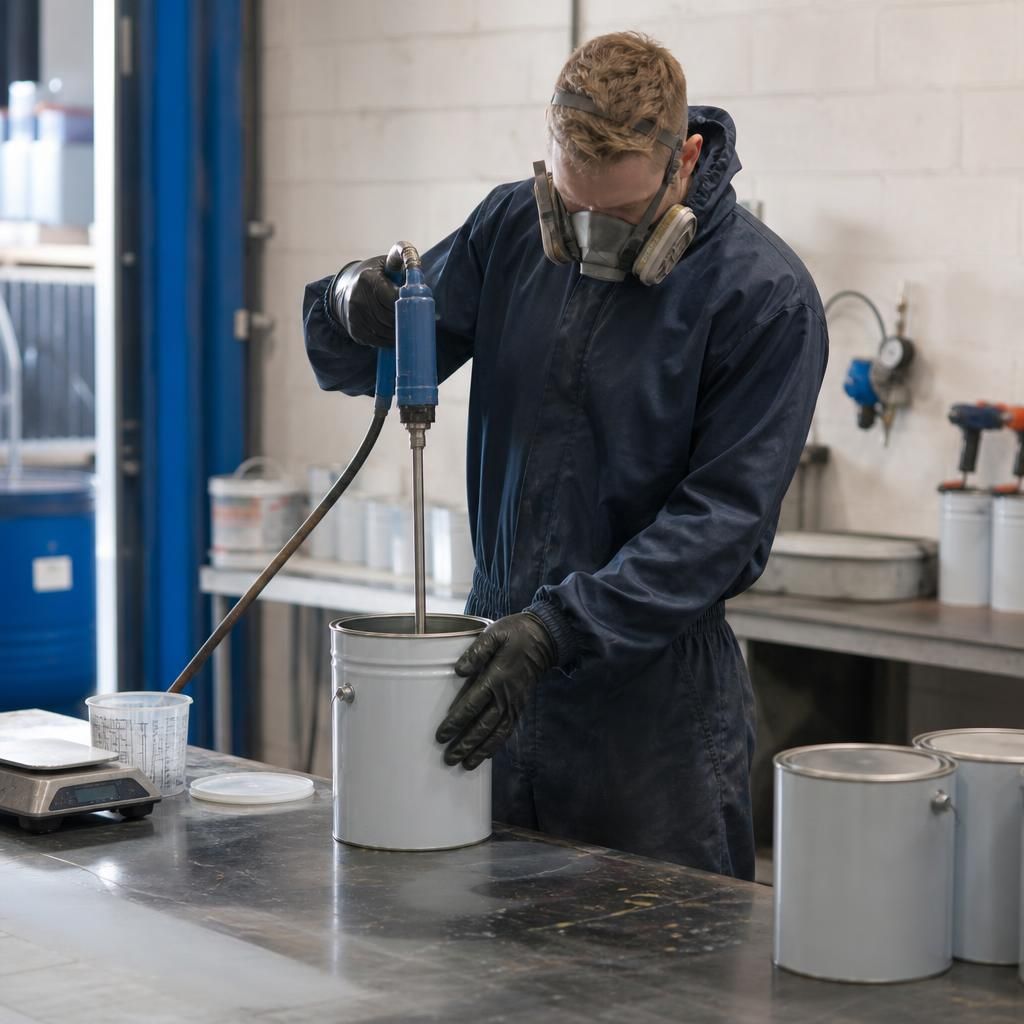
The application method must also suit the epoxy primer’s pot life, which is the usable period after its components have been mixed. If material remains in spray equipment, a roller or an open container for too long, its viscosity can change before it reaches the metal. This may reduce flow, create an uneven film or leave partially cured material in the coating.
For consistent performance, mix quantities that can be applied within the stated working period and organise the application sequence before combining the components. Equipment should be cleaned and material replaced in line with the product instructions rather than attempting to restore thickened primer with unapproved thinner. This is particularly important on industrial work, where interruptions or large batches can otherwise produce differences in adhesion and finish between parts.
Discuss the right epoxy primer application method for your metalwork
Discuss your metal components with the powder-coating.co.uk team to identify an epoxy primer application method suited to the substrate, geometry and intended coating system. Provide details of the parts and finish required so the coating requirements can be assessed before production.