

What specific benefits do black protective primers offer for enhancing the aesthetic quality of final coatings?
Black protective primers provide a uniform, dark base that helps minimise visible variation in the metal substrate, giving the final coating greater colour consistency and depth. They can also help create a smoother, more even appearance by reducing the visual impact of minor surface differences beneath the topcoat.
Black protective primers can improve the aesthetic quality of a final coating by providing a visually controlled underlayer, supporting clean coverage at edges and joints, and helping applicators identify surface or application defects before the topcoat is applied. Their main aesthetic benefit is not simply the colour itself; it is the way a correctly specified and prepared primer supports the appearance of the complete coating system.
On dark or black topcoats, a black primer helps maintain visual continuity at areas where the finish may be marginally thinner, such as sharp edges, corners, recesses and complex profiles. This can reduce noticeable contrast around difficult areas and help the finished component look more deliberate and complete. It does not replace correct powder coverage or edge preparation, but it gives the topcoat a more compatible visual foundation.
A black underlayer can also suit finishes where a strong, solid appearance is required. It is particularly relevant beneath opaque dark colours, textured black finishes and certain metallic or satin effects, where an unsuitable primer colour may show through small variations in coverage or alter the perceived character of the topcoat. The final result still depends on the topcoat’s opacity, film build, curing schedule and application method.
Protective primers may contribute to a cleaner-looking surface by helping the topcoat wet out and form a consistent film. When the primer is compatible with the substrate and topcoat, this can support an even transition across flat areas, formed sections and fabricated details. In contrast, poor compatibility, contamination or incorrect curing can lead to defects such as cratering, pinholing, blistering, gloss variation or poor intercoat adhesion. These are system and process issues rather than problems that black pigment can correct.
The dark colour also has a practical inspection advantage before final coating. Missed areas, incomplete coverage, excessive overspray and contamination can be easier to identify against a black primed surface, allowing rectification before the component receives its visible finish. This is important for fabricated metalwork containing welds, drilled sections, folded edges or areas that are difficult to coat uniformly.
For the best aesthetic result, the primer should be selected with the complete coating specification in mind. Important considerations include:
- the colour, opacity, gloss level and texture of the intended topcoat;
- the metal substrate and the preparation method used before priming;
- the required film thickness and curing conditions for both coating layers;
- the shape of the component, including edges, recesses, welds and assembled joints;
- compatibility between the protective primer and the chosen powder topcoat; and
- whether the finished component will be viewed under lighting that highlights gloss, texture or colour variation.
Black protective primer therefore offers the greatest aesthetic advantage when it forms part of a controlled two-coat specification. It can support coherent coverage, improve pre-finish inspection and complement dark or strongly pigmented topcoats, but it cannot conceal poor preparation, excessive surface roughness or incorrect application. Those factors must be addressed before coating if the final metalwork is to have a clean and professionally controlled appearance.
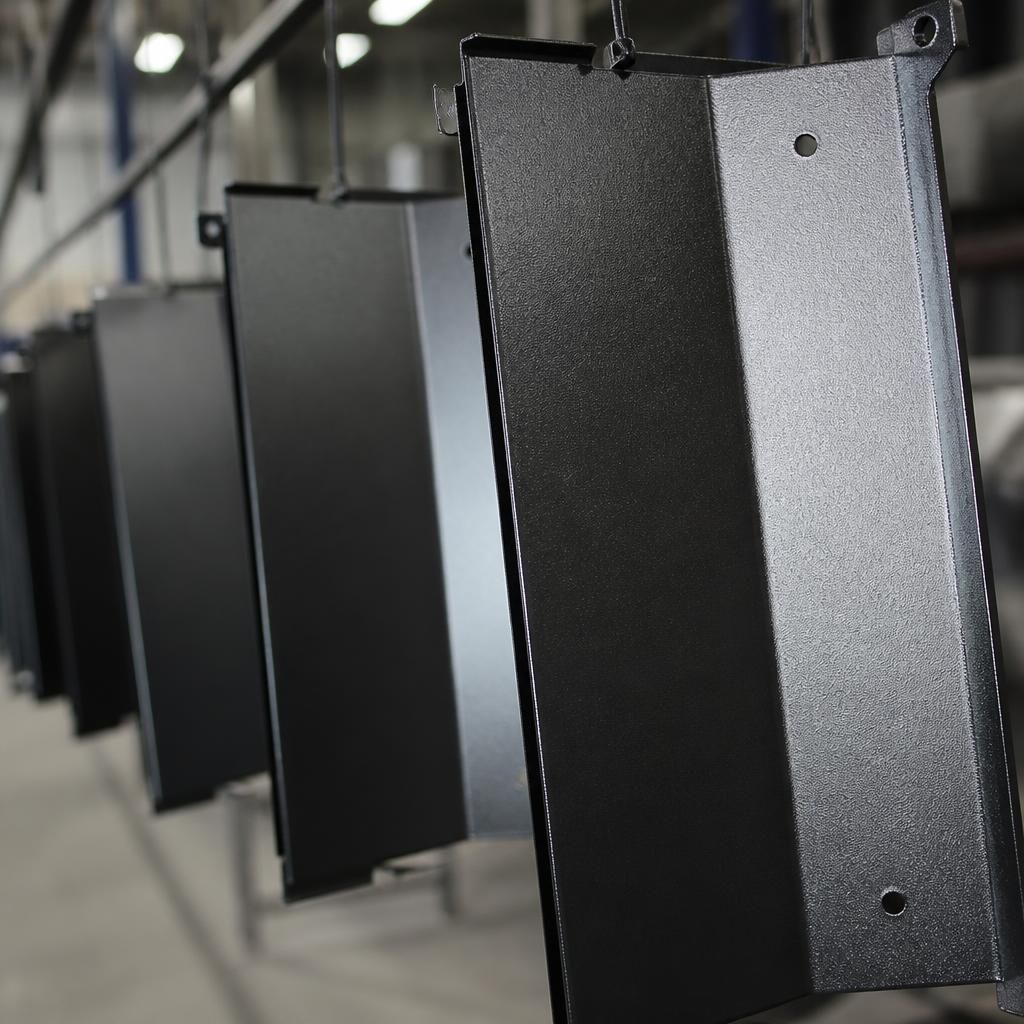
Black protective primers can also support sharper visual definition in two-tone or partially masked finishes. Where adjacent colours, bands or exposed detail need a clear boundary, a dark underlayer can help prevent the substrate from showing as a pale line beneath the topcoat. This is particularly useful on components with decorative breaks, recessed panels or defined edges, provided masking, film thickness and curing are properly controlled.